
Jmd Industries · Industrial Blog
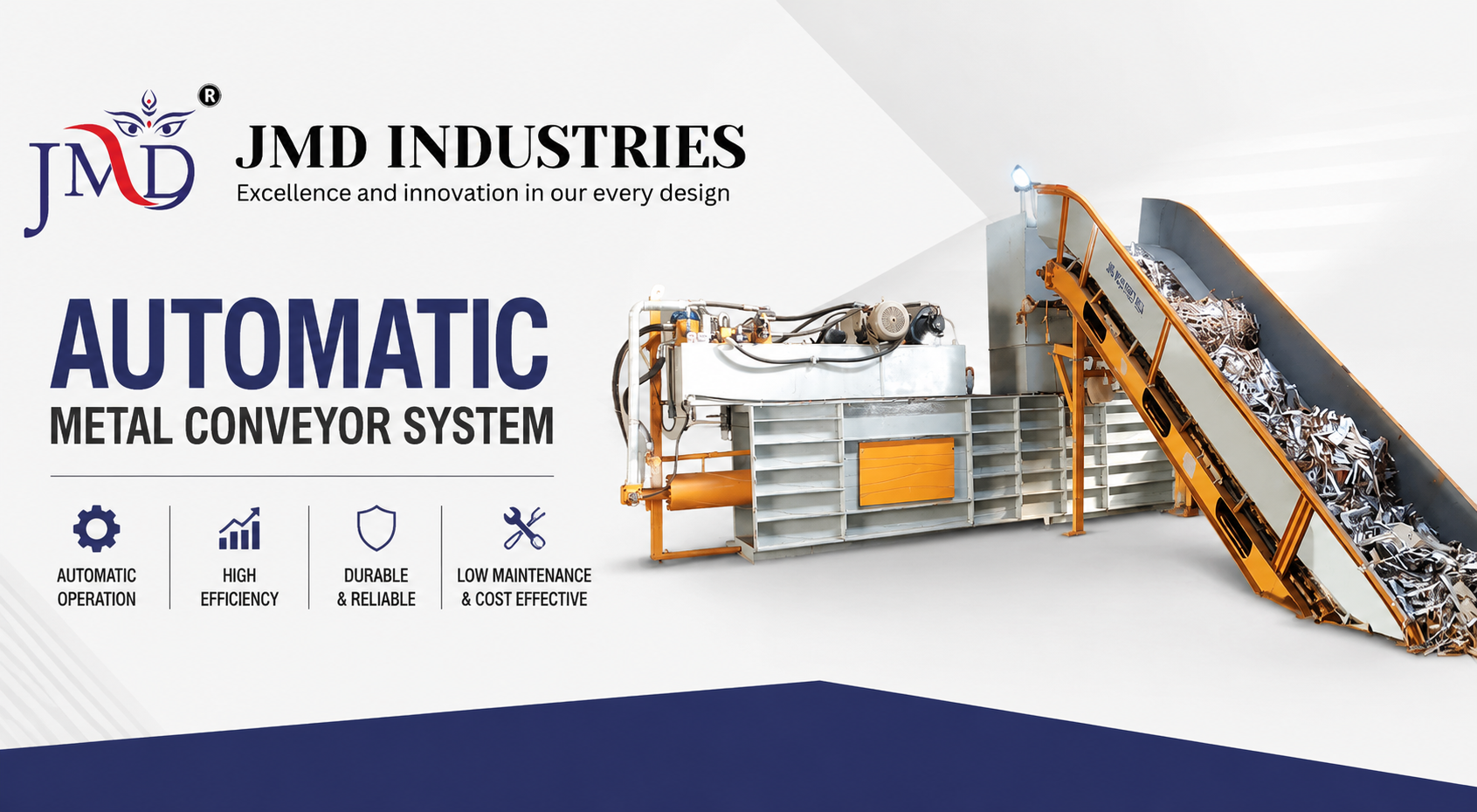
Automatic Metal Conveyor System
Discover efficient Automatic Metal Conveyor Systems in Ahmedabad. JMD Industries offers robust, custom solutions for material handling and waste management.
What is an Automatic Metal Conveyor System? — Overview
An automatic metal conveyor system is an engineered solution designed to move metal items from one point to another without direct human intervention. Typically, these systems utilize a continuous loop of belts, chains, or magnetic surfaces powered by an electric motor. They are constructed from durable materials, often steel, to withstand the weight and abrasive nature of metal. The "automatic" aspect refers to its ability to operate continuously and often integrate with other machinery, such as balers or shredders, to create a streamlined material flow.
Key Features and Technical Specifications
- Robust Construction: Built with heavy-duty steel frames and wear-resistant components to handle significant loads and continuous operation.
- Variable Speed Control: Allows for adjustment of material flow rate to match upstream or downstream processes.
- Customizable Length and Width: Designed to fit specific plant layouts and material handling requirements.
- Integrated Safety Features: Includes emergency stop buttons, guarding, and overload protection to ensure operator safety.
- High Load Capacity: Engineered to transport substantial weights of metal scrap, parts, or raw materials.
- Durable Drive System: Utilizes reliable electric motors and gearboxes for consistent power and longevity.
- Optional Magnetic or Vibratory Elements: Can incorporate specialized features for handling specific types of metal or ensuring even distribution.
Industrial Applications and Use Cases
- Scrap Metal Collection: Transporting ferrous and non-ferrous scrap from cutting, stamping, or machining operations to balers or collection bins.
- Component Transfer: Moving finished metal parts between workstations, assembly lines, or inspection areas.
- Raw Material Feeding: Supplying metal feedstock to furnaces, presses, or other processing equipment.
- Waste Sorting Facilities: Moving mixed metal waste for separation and further processing.
- Foundries and Metalworking Shops: Handling hot or cold metal castings and workpieces.
- Automotive Manufacturing: Conveying stamped metal body parts or engine components.
- Recycling Plants: Facilitating the movement of various metal fractions through the recycling process.
How to Choose the Right Automatic Metal Conveyor System
Selecting the appropriate conveyor system is crucial for optimal performance and longevity. Consider these factors:
- Material Type and Weight: Assess the specific metals (ferrous, non-ferrous), their form (scrap, parts, powder), and the maximum weight per item or per unit length.
- Throughput Requirements: Determine the volume of material that needs to be moved per hour or per shift.
- Conveyor Length and Incline: Measure the distance and any vertical elevation the conveyor needs to cover.
- Operating Environment: Consider factors like dust, moisture, temperature, and potential for impact or corrosion.
- Integration Needs: Will the conveyor need to interface with other machinery like balers, shredders, or compactors?
- Power Requirements: Ensure compatibility with your facility's electrical infrastructure.
- Maintenance and Support: Evaluate the availability of spare parts and technical assistance from the manufacturer.
- Customization Options: Determine if standard designs meet your needs or if specific modifications are required.
Quality Standards and Compliance
When selecting an automatic metal conveyor system, it's essential to ensure it meets relevant industrial quality standards and compliance requirements. Manufacturers should adhere to national and international standards for machinery safety and construction, such as those set by the Bureau of Indian Standards (BIS) or ISO certifications. Verifying that the system's electrical components comply with relevant electrical safety standards (like IEC) is also critical. A reputable manufacturer will be transparent about the standards they follow and can provide documentation to assure buyers of the equipment's safety, reliability, and adherence to industry best practices.
Why JMD Industries' Experience and Capability Matters
With over 15 years of experience in manufacturing industrial equipment, JMD Industries brings a deep understanding of material handling challenges to the design of automatic metal conveyor systems. Our manufacturing process emphasizes robust engineering and the use of high-quality materials, ensuring each conveyor is built for demanding industrial environments. Our technical team possesses the expertise to design and fabricate systems that precisely match client specifications, whether for simple scrap removal or complex integration into automated production lines.
We focus on delivering reliable, durable, and efficient solutions that enhance operational productivity. Our commitment extends beyond manufacturing, offering comprehensive support to ensure your conveyor system performs optimally throughout its lifespan. This dedication to quality and customer satisfaction makes JMD Industries a trusted partner for your material handling needs in Ahmedabad and beyond.
Installation, Maintenance, and Care Tips
Proper installation and regular maintenance are key to the longevity and efficient operation of your automatic metal conveyor system.
- Installation: Ensure the conveyor is installed on a stable, level surface. Align it correctly with upstream and downstream equipment to prevent material spillage or jamming. All electrical connections should be made by a qualified technician according to local codes.
- Regular Cleaning: Periodically clean the conveyor belt, frame, and drive components to remove accumulated debris, which can cause wear or imbalance.
- Lubrication: Follow the manufacturer's recommended lubrication schedule for all moving parts, such as bearings and drive chains.
- Belt/Chain Tension: Check and adjust belt or chain tension as needed to ensure proper tracking and prevent slippage or excessive wear.
- Component Inspection: Regularly inspect critical components like rollers, idlers, motors, and electrical connections for signs of wear, damage, or loose fittings.
- Safety Checks: Periodically test emergency stop buttons and ensure all safety guards are in place and secure.
Frequently Asked Questions
These systems are versatile and can handle a wide range of metals, including steel, aluminum, copper, brass, and cast iron, in various forms such as scrap, shavings, stampings, castings, and finished parts. The specific design, such as magnetic or belt type, will determine the optimal material handling capability.
By automating the movement of heavy or sharp metal materials, these systems significantly reduce the risk of manual handling injuries, such as strains, cuts, and crush injuries. They also minimize the need for personnel to work in proximity to moving machinery.
With proper installation, regular maintenance, and quality construction, an automatic metal conveyor system can have a lifespan of 10 to 20 years or more. Factors like the intensity of use, the nature of the materials handled, and adherence to maintenance schedules play a significant role.
Absolutely. Manufacturers like JMD Industries specialize in designing and fabricating custom conveyor systems. This includes adjusting dimensions, load capacities, speed, and incorporating specific features like magnetic separators or specialized belt materials to meet unique operational requirements.
Routine maintenance includes regular cleaning to remove debris, lubrication of moving parts, inspection of belts or chains for wear and tension, and checking electrical connections and safety features. A preventative maintenance schedule is highly recommended.
It enhances efficiency by ensuring continuous material flow, reducing downtime caused by manual transport, minimizing labor costs associated with material handling, and increasing throughput. This automation allows personnel to focus on higher-value tasks.
Conclusion
For industries in Ahmedabad seeking to streamline their material handling processes, an automatic metal conveyor system represents a significant investment in efficiency, safety, and productivity. By automating the movement of metal scrap and components, businesses can reduce operational costs, minimize workplace hazards, and ensure a consistent flow of materials. Choosing a system built with robust construction, tailored to specific application needs, and supported by an experienced manufacturer like JMD Industries is key to unlocking these benefits. A well-designed conveyor system is not just a piece of equipment; it's a critical component of a modern, efficient industrial operation.
Get In Touch
Jmd Industries