
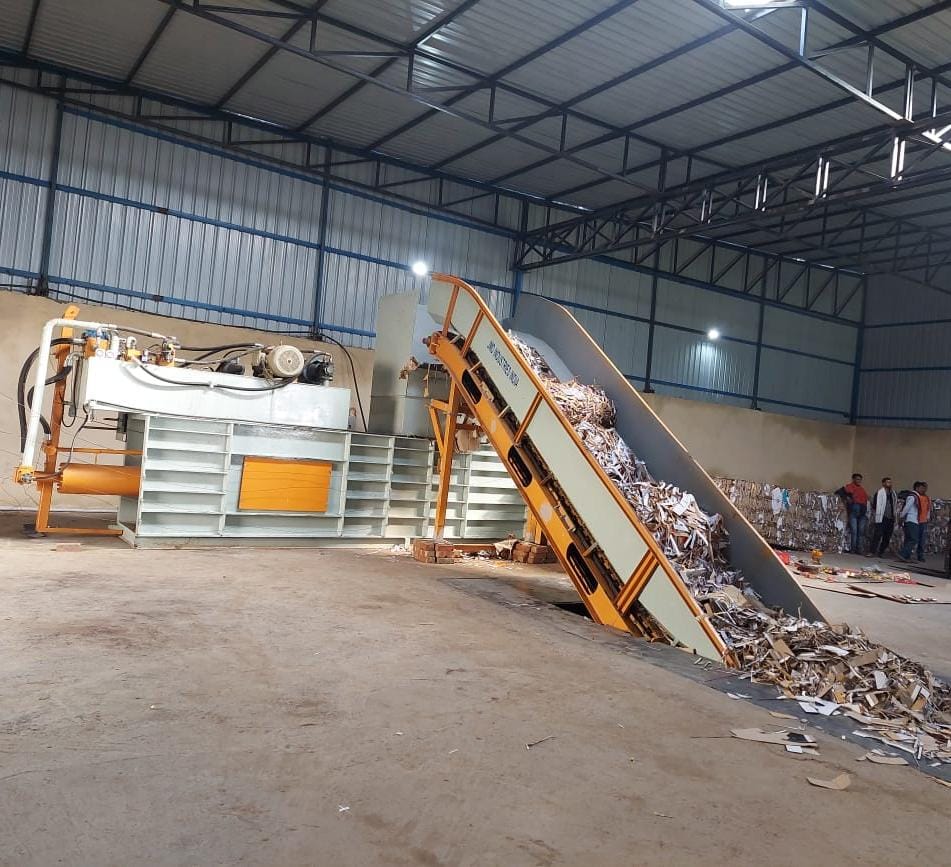
Baler Machine Cardboard Price
If you are searching for baler machine cardboard price, the most accurate way to evaluate cost is to match the baler type, daily cardboard volume, bale size, and automation level with your site needs. Cardboard balers are used in warehouses, retail chains, logistics hubs, printing units, FMCG packaging operations, and recycling yards to compress loose cartons into tight bales that are easy to store, load, and sell to recyclers.
What Affects Cardboard Baler Machine Price
Cardboard baler pricing is not one fixed number because every installation has different material flow and handling methods. A reliable quotation is based on capacity, chamber size, pressure, motor rating, operating cycle, safety systems, and the level of automation required. Choosing the right specification helps avoid overpaying for unnecessary features and also prevents undersizing that can increase downtime and labor.
Types of Cardboard Baler Machines and Typical Price Drivers
- Vertical Cardboard Baler – Usually preferred for shops, small warehouses, and moderate carton waste; price depends on chamber size, pressing force, and bale weight output.
- Horizontal Cardboard Baler – Suitable for high cardboard volume and continuous feeding; price depends on conveyor integration, automatic tying, and higher throughput design.
- Manual / Semi-Automatic Baler – Ideal when you want controlled investment and stable performance; price depends on manual tying setup, stroke time, and build thickness.
- Fully Automatic Cardboard Baler – Best for large recyclers and logistics hubs; price depends on auto feeding, auto tying, sensors, PLC controls, and ejection system.
Key Specifications That Change the Price Most
- Compression Force and Hydraulic System – Higher pressure and stable hydraulic circuits deliver denser bales and better resale handling.
- Bale Size and Bale Weight Output – Larger bales reduce transport cost per kg, but require stronger frame and more power.
- Motor Power and Duty Cycle – Continuous duty motors and efficient hydraulic designs influence long-term operating cost.
- Automation Level – Manual tying vs semi-automatic vs fully automatic tying and ejection directly impacts machine price.
- Safety and Build Quality – Emergency stop, interlocks, guarding, and heavy-gauge fabrication improve reliability and compliance.
Where Cardboard Balers Are Used Most
- Warehouses, distribution centers, and e-commerce hubs compressing cartons, corrugated boxes, and packaging waste daily.
- Retail stores and malls managing high carton disposal with limited storage area and a need for a clean back-end space.
- Manufacturing units handling packaging scrap, box offcuts, and incoming material cartons to reduce clutter and fire risk.
- Recycling and waste management facilities processing mixed cardboard with steady bale output for transport and resale.
Why the Right Price Selection Saves Money
- Better bale density improves logistics efficiency and reduces storage space used by loose cardboard.
- Correct capacity prevents overtime labor and keeps the disposal area clean and organized.
- Reliable hydraulics and strong structure reduce breakdowns and maintenance frequency.
- Automation options can cut manual tying time and speed up daily handling cycles.
- Right-sized machine improves payback by reducing hauling trips and improving recyclable value management.
How to Get an Accurate Quotation for Baler Machine Cardboard Price
For an accurate quotation, share your approximate cardboard quantity per day, space available, preferred bale size, feeding method (manual or conveyor), and whether you require semi-automatic or fully automatic operation. A proper requirement match ensures the baler is cost-effective and delivers long-term output without bottlenecks.
Maintenance & Operational Tips to Protect Your Investment
- Check hydraulic oil level, leakage points, and filter cleanliness at regular intervals to maintain consistent pressure.
- Keep the chamber clean and remove staples, metal pieces, or hard objects that can damage plates and guides.
- Lubricate moving points as per schedule to reduce wear and keep stroke movement smooth.
- Train operators for safe loading and safe tying practices to prevent jamming and unnecessary downtime.
- Use recommended consumables (straps, wire, oil grade) to maintain stable bale quality and machine performance.
FAQs – Baler Machine Cardboard Price
1. Why does cardboard baler machine price vary so much?
+
Price changes mainly due to baler type, compression force, chamber size, automation level, motor duty cycle, and safety features.
2. Which baler is best for small cardboard waste generation?
+
A vertical baler is usually preferred for smaller sites because it fits compact areas and offers practical bale output with simple operation.
3. Is a horizontal baler worth the cost for high volume sites?
+
For continuous cardboard flow, a horizontal baler can reduce labor, increase throughput, and deliver consistent bale output, making it cost-effective over time.
4. What details should I share to get a correct quotation?
+
Share daily cardboard volume, available space, required bale size, feeding method, power availability, and the preferred automation level.
5. Do suppliers provide installation and after-sales support?
+
Most established suppliers provide installation guidance, operator training, spare parts support, and optional maintenance plans depending on the model.
Contact Details
Talk to our specialists today for tailored solutions and fast assistance.
Company:
Jmd Baler
WhatsApp:
Chat on WhatsApp
Email:
jmdindustries9412@gmail.com
Website:
www.jmdbaler.com
Address:
PLOT NO 71/72 Avdhesh industrial hub, Bhavda - Bakrol, Bhavda patiya, Ahmedabad, Gujarat.