
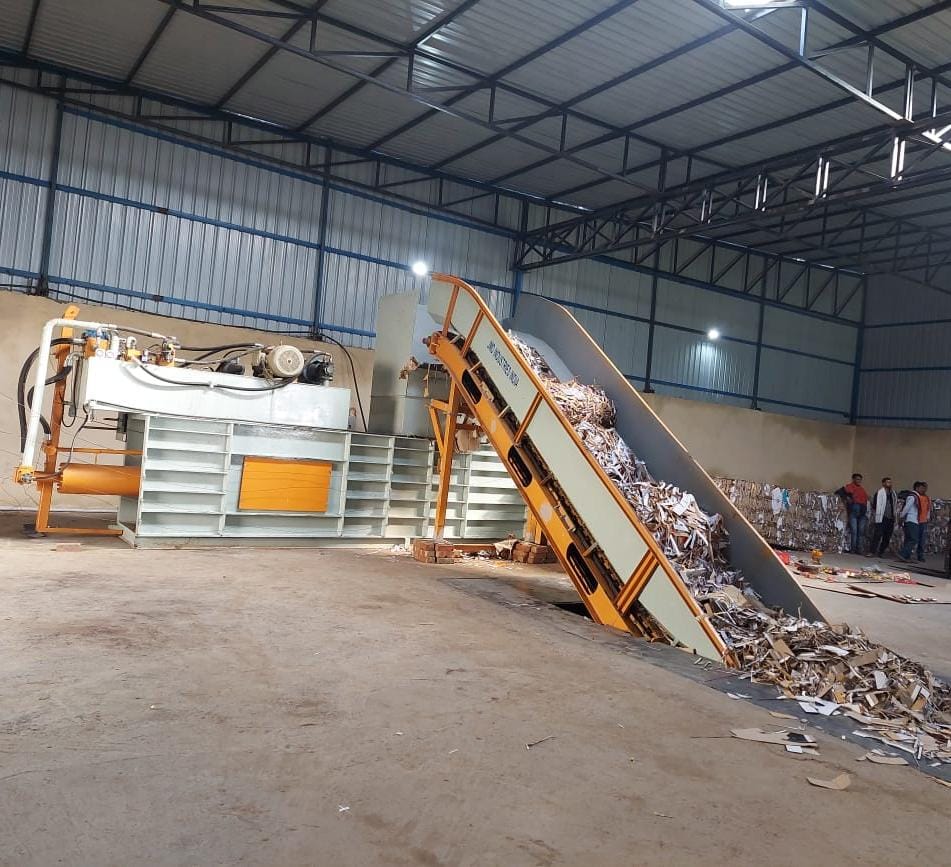
Baling Machine Uses & Supplier in India
Looking for a reliable baling machine use guide and a trusted supplier in India? This page explains what a baler does, where it’s used, and how the right partner helps you convert loose waste into dense, stackable bales for lower logistics cost and cleaner, safer facilities.
What Does a Baling Machine Do?
A baling machine compacts materials like cardboard, plastic, textile, and light metals into uniform bales using hydraulic force. This reduces volume, improves handling, and increases resale value for recyclables. With the correct feed method and tying system, balers streamline waste flow from shop floors, warehouses, MRFs, and factories into a predictable, monetizable output.
Main Uses of Baling Machines
- Cardboard/OCC consolidation for e-commerce, retail backrooms, and corrugation units.
- Plastic (PET/HDPE/LDPE film) baling to boost baleload density and reduce freight cost.
- Textile and fiber bale pressing in garment export houses and recycling mills.
- Aluminum cans/light metal scrap compaction at scrap dealers and MRFs.
How a Good Supplier Adds Value
- Correct Sizing – Matches bale chamber and tonnage to your throughput and material type.
- Process Integration – Conveyor/air-duct feeding, rufflers, perforators, and safety interlocks.
- Lower OPEX – Energy-efficient hydraulics, durable liners, and optimized tying systems.
- Service & Spares – Fast response, AMC options, and operator training for higher uptime.
Industries & Applications
- Warehouses, retail chains, and logistics hubs managing packaging waste (OCC, stretch film).
- Recycling centers/MRFs handling mixed plastics, paper grades, cans, and fibers.
- Manufacturing plants maintaining 5S by compacting production offcuts and trim waste.
- Municipal/commercial programs increasing collection efficiency and bale quality.
Operational Benefits
- 30–80% volume reduction for fewer trips and lower transport cost per ton.
- Uniform bale size improves stacking, storage, and downstream processing.
- Cleaner floors and safer aisles with structured waste handling.
- Better scrap realization due to higher density and consistent bale presentation.
- Data visibility (counters/alarms) supports preventive maintenance and OEE.
Implementation Tips Before You Buy
- Define material mix and hourly kg input; target bale size/density and shift pattern.
- Plan the feed path (manual, conveyor, air-duct) and hopper access for safe loading.
- Evaluate tying method: steel wire vs PET strap based on density and cost/ton.
- Confirm electrical, pit/civil, and layout constraints early to avoid rework.
- Ask for AMC terms, spare lead times, and training scope in the proposal.
FAQs – Baling Machine Use & Supplier
1. Which baler type should I pick for OCC vs plastics?
+
Vertical balers suit low volumes; horizontal auto-tie or channel balers suit high-volume OCC. Twin-ram machines handle diverse plastics and higher densities.
2. What KPIs indicate a good baling setup?
+
kWh/ton, cycle time, bale density, wire/strap per bale, and uptime. Track these to validate ROI and supplier performance.
3. Can I integrate my existing conveyor with a new baler?
+
Yes. Share conveyor width, height, speed, and controls. Suppliers match hopper design and interlocks for safe integration.
4. How do I reduce consumable costs?
+
Optimize bale size, use PET strap where suitable, and standardize settings to cut wire/strap per bale without compromising safety.
5. Do suppliers provide operator training?
+
Reputable suppliers include commissioning support and hands-on training for safe loading, alarms, and routine maintenance.
Contact Details
Talk to our specialists today for tailored solutions and fast assistance.
Company:
Jmd Baler
WhatsApp:
Chat on WhatsApp
Email:
jmdindustries9412@gmail.com
Website:
www.jmdbaler.com
Address:
PLOT NO 71/72 Avdhesh industrial hub, Bhavda - Bakrol, Bhavda patiya, Ahmedabad, Gujarat.