
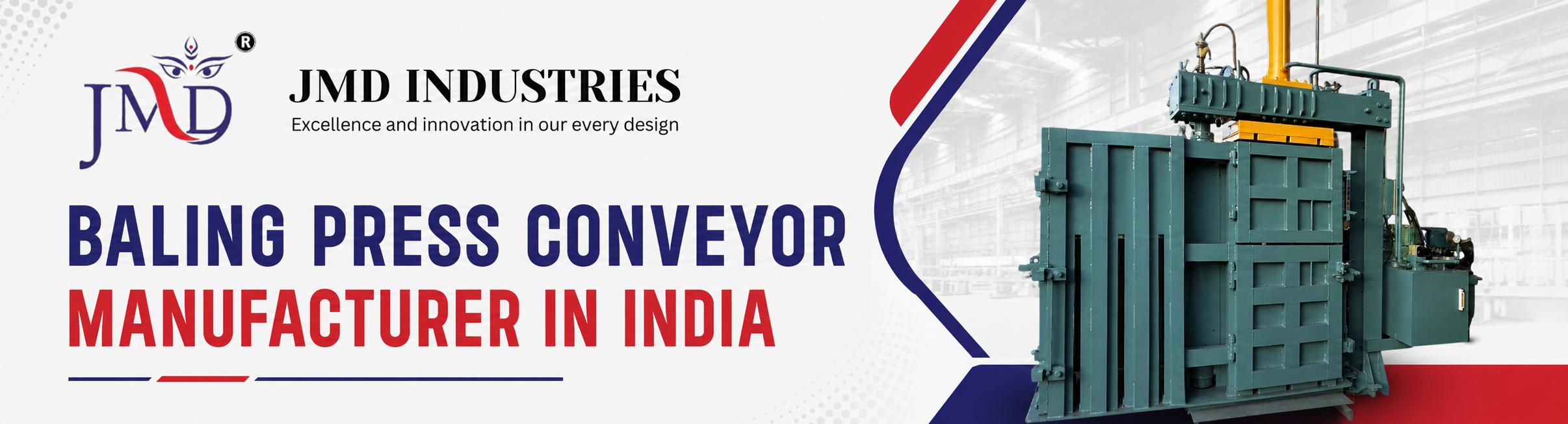
Jmd Industries · Industrial Blog
Baling Press Conveyor Manufacturer in India
Expert baling press conveyor solutions from JMD Industries in Ahmedabad. Enhance your waste management efficiency with our durable, custom-built systems.
What is a Baling Press Conveyor? — Overview
A baling press conveyor is an integral component of an automated waste management or recycling system. It's essentially a heavy-duty conveyor belt system designed to transport materials from a collection point or pre-processing stage directly into the feed opening of a baling press. These conveyors are engineered to handle a wide variety of materials, from loose paper and cardboard to plastics and even light metals, ensuring a consistent and controlled flow into the baler. This automation significantly boosts throughput and allows for continuous operation of the baling equipment.
Key Features and Technical Specifications
When selecting a baling press conveyor, several technical aspects are paramount for ensuring optimal performance and longevity. JMD Industries focuses on engineering these systems with robust features to handle demanding industrial environments:
- Heavy-Duty Construction: Built with robust steel frames and durable components to withstand continuous operation and heavy loads.
- Variable Speed Control: Allows operators to precisely adjust the material feed rate to match the baler's capacity and material type.
- Material-Specific Belt Options: Available with various belt materials (e.g., rubber, PVC, steel) to suit different types of waste and prevent slippage or damage.
- Integrated Safety Features: Includes emergency stop buttons, guarding, and interlocks to ensure operator safety.
- Customizable Length and Width: Designed to fit specific plant layouts and integrate seamlessly with existing baling equipment.
- High-Capacity Drive Systems: Powerful motors and gearboxes capable of moving large volumes of material efficiently.
- Easy Maintenance Access: Designed with accessibility in mind for routine cleaning, inspection, and part replacement.
Industrial Applications and Use Cases
Baling press conveyors are versatile and find application across numerous industries where material handling and compaction are essential:
- Paper and Cardboard Recycling: Feeding large volumes of OCC (Old Corrugated Containers) and mixed paper directly into balers for efficient processing.
- Plastic Recycling Facilities: Transporting PET bottles, plastic films, and other plastic waste to baling machines.
- Textile Manufacturing: Moving fabric scraps and waste materials for compaction and disposal or recycling.
- Warehousing and Distribution Centers: Handling packaging waste, cardboard, and other recyclables generated from shipping and receiving.
- Municipal Solid Waste (MSW) Processing: Conveying sorted recyclables or waste streams to baling equipment for volume reduction.
- Food Processing Plants: Transporting food waste or packaging materials for efficient disposal.
- Metal Scrap Yards: Moving lighter metal scraps to balers for compaction.
How to Choose the Right Baling Press Conveyor
Selecting the appropriate baling press conveyor is a critical decision that impacts your operational efficiency. Consider these factors when making your choice:
- Material Type and Volume: Assess the density, size, and volume of the materials you will be conveying to determine the required conveyor strength and capacity.
- Baler Integration: Ensure the conveyor's dimensions and feed height are compatible with your existing or planned baling press.
- Conveyor Length and Configuration: Measure the distance from your material source to the baler and consider any necessary inclines or turns.
- Durability and Construction: Opt for a robust build designed for continuous industrial use, especially in demanding environments.
- Safety Standards: Verify that the conveyor meets all relevant safety regulations and includes necessary protective features.
- Manufacturer's Support: Look for a supplier that offers reliable installation, maintenance, and after-sales service.
- Customization Needs: Determine if standard models will suffice or if custom modifications are required for your specific application.
Quality Standards and Compliance
For any industrial machinery, adherence to quality standards and compliance with regulations is non-negotiable. Reputable manufacturers like JMD Industries ensure their baling press conveyors are built to meet stringent industry benchmarks. This often includes compliance with relevant Indian Standards (IS) for material handling equipment, ensuring structural integrity, operational safety, and electrical safety. Buyers should always inquire about the certifications and compliance standards the equipment adheres to, such as ISO certifications for quality management systems. Verifying that the equipment is manufactured using quality materials and robust engineering practices provides assurance of its reliability and safety.
Why JMD Industries' Experience and Capability Matters
With over 15 years of experience in manufacturing industrial machinery, JMD Industries brings a deep understanding of waste management and material handling challenges. Our expertise in designing and fabricating baling press conveyors is rooted in a commitment to engineering excellence and customer satisfaction. We understand that each industrial setup in Ahmedabad and across India has unique requirements. Our manufacturing process emphasizes robust construction, utilizing high-grade steel and reliable hydraulic and electrical components. Our experienced technical team works closely with clients to ensure the conveyors are not only functional but also seamlessly integrated into their existing operations.
We pride ourselves on our quality control measures throughout the fabrication process, ensuring that every conveyor leaving our facility is built for durability and efficient performance. This hands-on experience allows us to offer tailored solutions, whether it's a specific length, width, or specialized material handling capability. Our focus is on delivering equipment that enhances productivity, reduces operational costs, and contributes to a safer working environment for our clients.
Installation, Maintenance, and Care Tips
Proper installation and regular maintenance are crucial for maximizing the lifespan and performance of your baling press conveyor.
Installation
Ensure the conveyor is installed on a level and stable surface. Proper alignment with the baling press feed opening is critical for smooth material transfer. Electrical connections should be made by qualified technicians, adhering to all safety codes.
Routine Maintenance:
- Daily Checks: Inspect the belt for wear, tears, or debris. Check for any loose components or unusual noises.
- Weekly Cleaning: Thoroughly clean the conveyor belt, frame, and drive components to prevent material buildup that can cause wear or jams.
- Monthly Lubrication: Lubricate all moving parts, including bearings and drive chains, as per the manufacturer's recommendations.
- Belt Tensioning: Periodically check and adjust belt tension to ensure optimal material grip and prevent slippage.
- Component Inspection: Regularly inspect the motor, gearbox, rollers, and idlers for signs of wear or damage.
Following these practices will help prevent unexpected breakdowns and ensure your conveyor operates efficiently for years to come.
Frequently Asked Questions
A baling press conveyor can typically handle a wide range of materials, including paper, cardboard, plastic films, PET bottles, textiles, and light metal scraps. The specific material handling capability depends on the conveyor's construction, belt type, and motor power.
It automates the feeding process into the baler, reducing the need for manual labor and minimizing downtime. This consistent material flow allows the baler to operate more continuously, significantly increasing throughput and overall productivity.
With proper installation, regular maintenance, and operation within its designed capacity, a well-built baling press conveyor can last for many years, often exceeding 10-15 years in industrial settings.
Yes, customization is a key aspect. Manufacturers like JMD Industries can tailor conveyors in terms of length, width, belt material, motor specifications, and additional features to perfectly match a client's unique operational requirements and plant layout.
Essential safety features include emergency stop buttons, protective guarding around moving parts, interlock systems that stop the conveyor if the baler is not ready, and robust structural integrity to prevent collapse.
Integration is crucial. The conveyor must feed material smoothly and at an appropriate rate into the baler's chamber without causing jams or damage. Proper alignment and synchronized operation ensure maximum efficiency and safety.
Conclusion
For businesses in Ahmedabad and across India looking to enhance their waste management and recycling operations, a robust and well-designed baling press conveyor system is an indispensable asset. It’s an investment that pays dividends through increased efficiency, reduced labor costs, and improved safety. By partnering with an experienced manufacturer like JMD Industries, you gain access to tailored solutions built on years of expertise and a commitment to quality. Evaluating your specific material handling needs and choosing a conveyor that integrates seamlessly with your baling equipment will pave the way for optimized operations and a more sustainable future.
Get In Touch
Jmd Industries