
Optimizing Waste Management with Industrial Efficiency
Efficient waste management has become a priority for industries seeking to reduce waste volume, improve storage efficiency, and support organized recycling systems. A cost-effective baler offers a practical solution for businesses looking for reliable compaction equipment without moving toward high-cost automated systems.
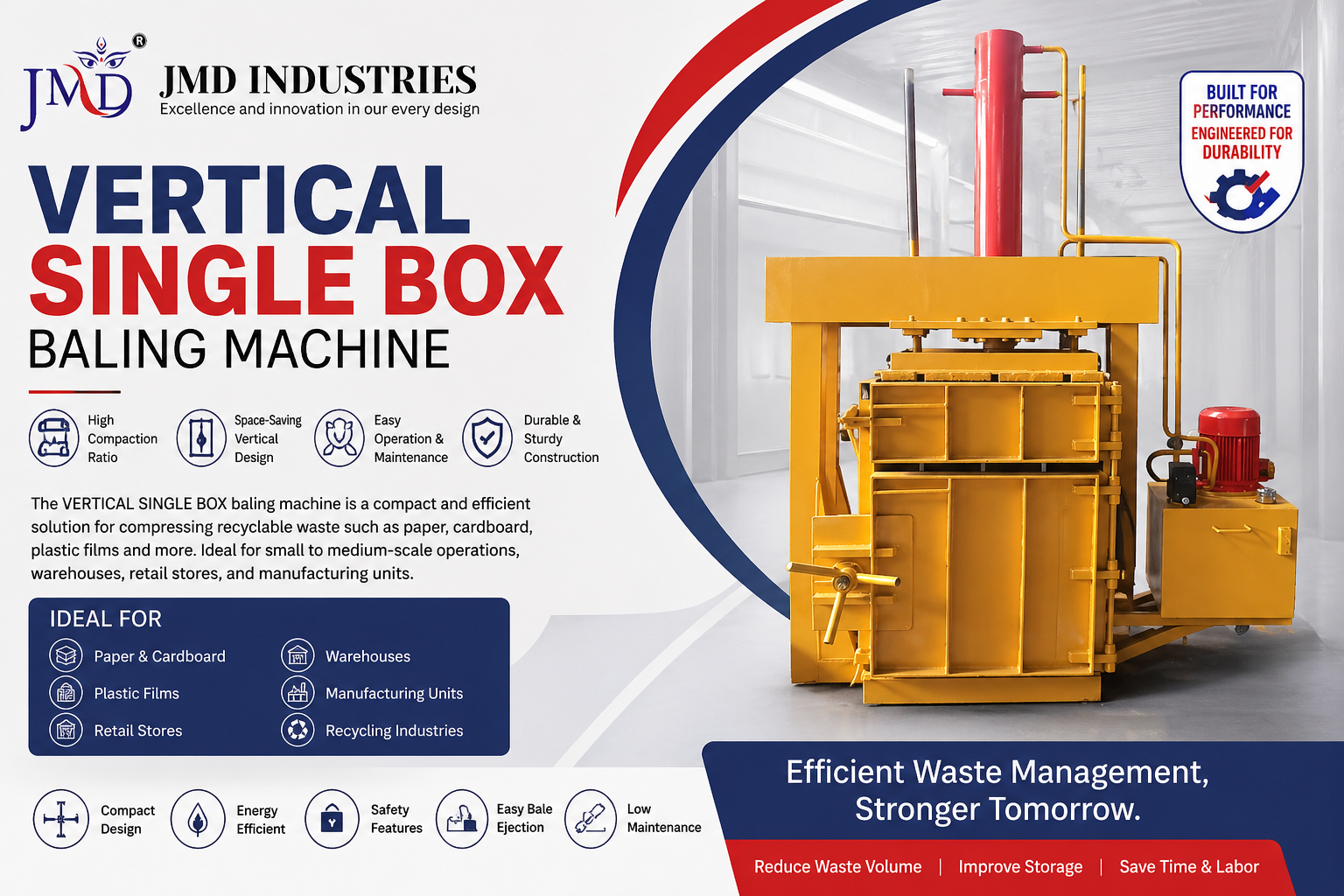
Designed to compress recyclable materials such as paper, cardboard, plastic films, and packaging waste into dense bales, these balers improve handling efficiency while reducing transportation and storage challenges. They are often preferred by small and medium recycling businesses, warehouses, retail operations, and manufacturing facilities where both performance and budget control are important.
With growing emphasis on sustainability and resource optimization, demand for affordable yet efficient baling equipment continues to rise across industries.
A cost-effective baler is generally a compact or mid-capacity waste compaction machine engineered to deliver dependable performance while maintaining manageable operating and maintenance costs. The term does not simply refer to lower investment value, but also to long-term efficiency, durability, and reduced operating expenses.
Many vertical single box balers fall into this category because they combine practical compaction capability with simple machine design and lower space requirements. These machines allow businesses to convert loose recyclable waste into compact, transport-friendly bales while improving workplace organization.
Many businesses prioritize machines that offer a balance between productivity and operating economy. A cost-effective baler supports this need by improving waste processing efficiency without unnecessary system complexity.
Common reasons businesses choose these systems include:
For many users, these advantages create long-term operational value while supporting more efficient waste management processes.
Modern balers designed for economical performance often include practical features that contribute to reliability and productivity. Important features may include:
These features help reduce downtime while supporting consistent day-to-day productivity.
Because recyclable waste is generated across many industries, these balers serve a wide range of applications. Typical use cases include:
Loose recyclable materials often create handling inefficiencies, consume storage space, and increase transportation costs. A baler helps solve these challenges by converting loose waste into organized, compact bales.
This can improve workflow, reduce clutter, and make recyclable materials easier to move into downstream recovery channels. For smaller recycling businesses in particular, these improvements can significantly influence operational efficiency.
Selecting the right baler depends on matching machine capability with operational requirements. Important factors often include:
Vertical single box systems are frequently associated with cost-effective baling because they provide strong compaction performance through a relatively simple machine design.
Their single chamber construction supports easy operation and maintenance, while the compact footprint allows installation in facilities with limited space. For many businesses, this combination supports practical waste handling along with controlled operating costs.
Even economical balers benefit from routine maintenance to sustain performance. Hydraulic inspection, lubrication, chamber cleaning, and electrical system checks are commonly part of preventive upkeep. Machines designed for simple maintenance access often help minimize downtime and support long-term reliability.
It generally refers to a baling machine that delivers reliable waste compaction performance while maintaining practical operating, maintenance, and ownership costs.
These machines commonly handle paper, cardboard, plastic films, packaging waste, and similar recyclable materials, depending on machine design.
Yes, they are often preferred by small and medium operations due to compact design, simpler controls, and practical compaction performance.
By compressing loose waste into dense bales, it can reduce storage requirements, improve transport efficiency, and simplify material handling.
Vertical balers often require less space, simpler maintenance, and lower operating complexity compared to larger automated systems.
Material type, waste volume, compaction needs, power usage, chamber size, and maintenance requirements are all important factors to review.
A cost-effective baler provides an efficient solution for businesses seeking reliable waste compaction while maintaining practical operating economics. For recycling operations, warehouses, and industrial facilities, these machines support organized waste handling, improved storage efficiency, and long-term utility.
JMD INDUSTRIES | All Rights Reserved.