
Jmd Industries · Industrial Blog
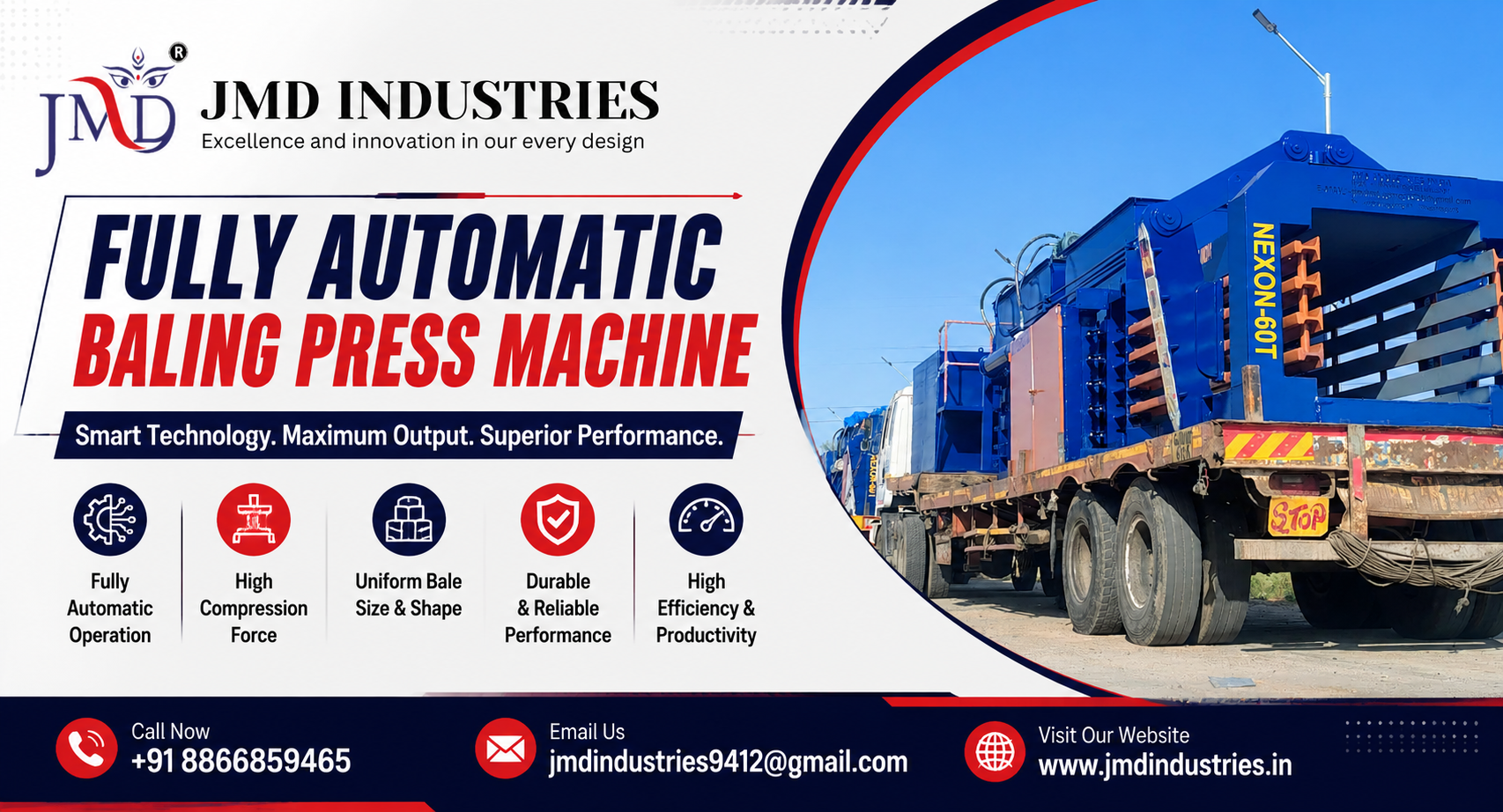
Fully Automatic Baling Press Machine
Discover the efficiency of a fully automatic horizontal baling press machine for your Ahmedabad recycling needs. Learn about applications, features, and choosin
What is a Fully Automatic Horizontal Baling Press Machine? — Overview
A Fully Automatic Horizontal Baling Press Machine is an industrial-grade piece of equipment designed to compress various recyclable materials into dense, uniform bales. Unlike semi-automatic or manual models, these machines operate with minimal human intervention. They feature integrated systems for automatic material feeding, hydraulic compaction, automated wire tying, and bale ejection. This automation ensures a continuous workflow, making them ideal for high-volume operations where efficiency and consistency are paramount.
Key Features and Technical Specifications
- Automated Feeding System: Reduces manual loading and ensures consistent material flow into the compaction chamber.
- High-Pressure Hydraulic Compaction: Delivers dense bales, maximizing material weight per bale and reducing storage space.
- Automatic Wire Tying: Employs automated mechanisms to securely tie bales with wire, eliminating manual tying labor.
- Programmable Logic Controller (PLC) System: Allows for precise control over cycle times, compaction force, and bale size.
- Robust Steel Construction: Ensures durability and longevity in demanding industrial environments.
- Integrated Safety Features: Incorporates emergency stops, safety interlocks, and guarding for operator protection.
- Energy-Efficient Design: Optimized hydraulic and electrical systems to minimize power consumption.
- Variable Bale Size and Weight Options: Can be configured to produce bales according to specific material and transport requirements.
Industrial Applications and Use Cases
- Cardboard and Paper Recycling: Compacting corrugated boxes, paper waste, and office paper for efficient storage and transport.
- Plastic Recycling Facilities: Baling PET bottles, HDPE containers, and plastic films to reduce volume.
- Textile Manufacturing: Compressing fabric scraps and offcuts from garment production.
- Warehousing and Distribution Centers: Managing large volumes of packaging waste generated from incoming and outgoing goods.
- Food Processing Units: Baling packaging materials and certain organic by-products (where applicable and safe).
- Manufacturing Plants: Handling production scrap from various materials like plastics, rubber, or textiles.
- Municipal Solid Waste (MSW) Processing: Preparing mixed recyclables for further sorting and processing.
- Logistics and Shipping Companies: Compacting dunnage, pallets, and packaging materials.
How to Choose the Right Fully Automatic Baling Press Machine
Selecting the appropriate baling press is crucial for operational success. Consider these factors:
- Material Type and Volume: Assess the primary materials you will be processing and the daily/hourly volume. This dictates the required throughput and compaction force.
- Bale Size and Weight Requirements: Determine the desired bale dimensions and weight for ease of handling, storage, and transportation.
- Automation Level: While you're looking for fully automatic, confirm the extent of automation in feeding, tying, and ejection meets your labor and efficiency goals.
- Power Requirements and Availability: Ensure the machine's power specifications are compatible with your facility's electrical infrastructure.
- Installation Space: Measure the available floor space, considering access for material loading and bale removal.
- Supplier Reputation and Support: Research the manufacturer's track record, warranty, and availability of spare parts and technical assistance.
- Safety Certifications: Verify that the machine complies with relevant industrial safety standards.
- Customization Options: If you have unique material types or operational needs, inquire about the possibility of custom modifications.
Quality Standards and Compliance
When investing in a Fully Automatic Horizontal Baling Press Machine, verifying adherence to quality standards is paramount. Reputable manufacturers will ensure their machines meet stringent industry benchmarks. Look for compliance with relevant Indian Standards (IS) for industrial machinery, electrical safety (like IEC standards), and potentially ISO certifications for quality management systems. These certifications indicate a commitment to reliable performance, safety, and durability, assuring you that the equipment is built to last and operate efficiently within regulatory frameworks.
Why JMD Industries' Experience and Capability Matters
At JMD Industries, our extensive experience in designing and manufacturing industrial baling equipment sets us apart. We understand the unique challenges faced by businesses in Ahmedabad and across Gujarat. Our manufacturing process is driven by a deep technical capability, ensuring each Fully Automatic Horizontal Baling Press Machine is built for robust performance and longevity. Our team comprises experienced engineers and technicians dedicated to quality control at every stage, from material selection to final assembly.
We pride ourselves on our ability to deliver reliable, energy-efficient solutions tailored to specific client needs. Our commitment extends beyond manufacturing; we focus on providing dependable after-sales support and ensuring timely delivery, making JMD Industries a trusted partner for your waste management and recycling operations.
Installation, Maintenance, and Care Tips
Proper installation and regular maintenance are key to maximizing the lifespan and performance of your Fully Automatic Horizontal Baling Press Machine.
- Installation: Ensure the machine is installed on a level, stable surface with adequate clearance for operation and maintenance. Connect it to a reliable power source that meets its specifications. Professional installation by JMD Industries or a certified technician is highly recommended.
- Daily Checks: Before operation, visually inspect the machine for any loose parts, leaks, or obstructions. Check hydraulic fluid levels.
- Lubrication: Regularly lubricate all moving parts as per the manufacturer's manual to prevent wear and ensure smooth operation.
- Cleaning: Keep the machine clean, especially the compaction chamber and sensors, to prevent material buildup that can hinder performance.
- Hydraulic System: Monitor hydraulic fluid quality and change it at recommended intervals. Check for leaks and address them promptly.
- Wire Tying Mechanism: Ensure the wire feeding and tying system is clear of debris and functioning correctly.
- Routine Inspections: Schedule periodic inspections by qualified personnel to identify and address potential issues before they become major problems.
- Operator Training: Ensure all operators are thoroughly trained on the machine's functions, safety procedures, and basic maintenance tasks.
Frequently Asked Questions
A fully automatic horizontal baling press machine is versatile and can effectively process a wide range of recyclable materials. This typically includes paper, cardboard, plastic films (like LDPE, LLDPE), PET bottles, aluminum cans, textiles, and other similar waste streams. The specific material compatibility often depends on the machine's configuration and power.
The space requirement varies based on the model's size and capacity. Generally, these machines require a significant footprint for the main unit, plus additional space for material feeding, bale ejection, and operator access. It's essential to consult the machine's specifications and plan for adequate clearance around the unit for safe and efficient operation.
Bale size and weight can be customized to some extent, but standard configurations often produce bales ranging from 700x700x1200 mm to 1000x1000x1500 mm. The weight can range from 300 kg to over 1000 kg, depending on the material density and compaction force applied by the machine.
The automatic tying system uses mechanical arms and wire feeders to securely wrap and tie the bale with wire loops without human intervention. This is significantly faster, more consistent, and labor-saving compared to manual tying, which requires operators to manually thread and secure the wire around the bale.
Fully automatic horizontal baling presses are industrial machines and typically require a three-phase power supply. The voltage and amperage requirements vary depending on the machine's motor size and hydraulic system capacity. It's crucial to match the machine's power needs with your facility's electrical infrastructure.
Routine maintenance includes regular lubrication of moving parts, cleaning of the compaction chamber, checking hydraulic fluid levels and quality, inspecting wear parts, and ensuring safety features are operational. Periodic professional servicing is also recommended to maintain optimal performance and prevent breakdowns.
Conclusion
For businesses in Ahmedabad seeking to enhance their waste management efficiency and embrace sustainable practices, the Fully Automatic Horizontal Baling Press Machine offers a powerful solution. By automating the entire baling process, these machines significantly reduce labor costs, increase throughput, and produce consistent, dense bales. When selecting a machine, carefully consider your material types, volume, desired bale specifications, and the manufacturer's expertise. Partnering with an experienced provider like JMD Industries ensures you receive a reliable, high-performance machine backed by dedicated support, helping you optimize operations and contribute to a cleaner environment.
Get In Touch
Jmd Industries