
Jmd Industries · Industrial Blog
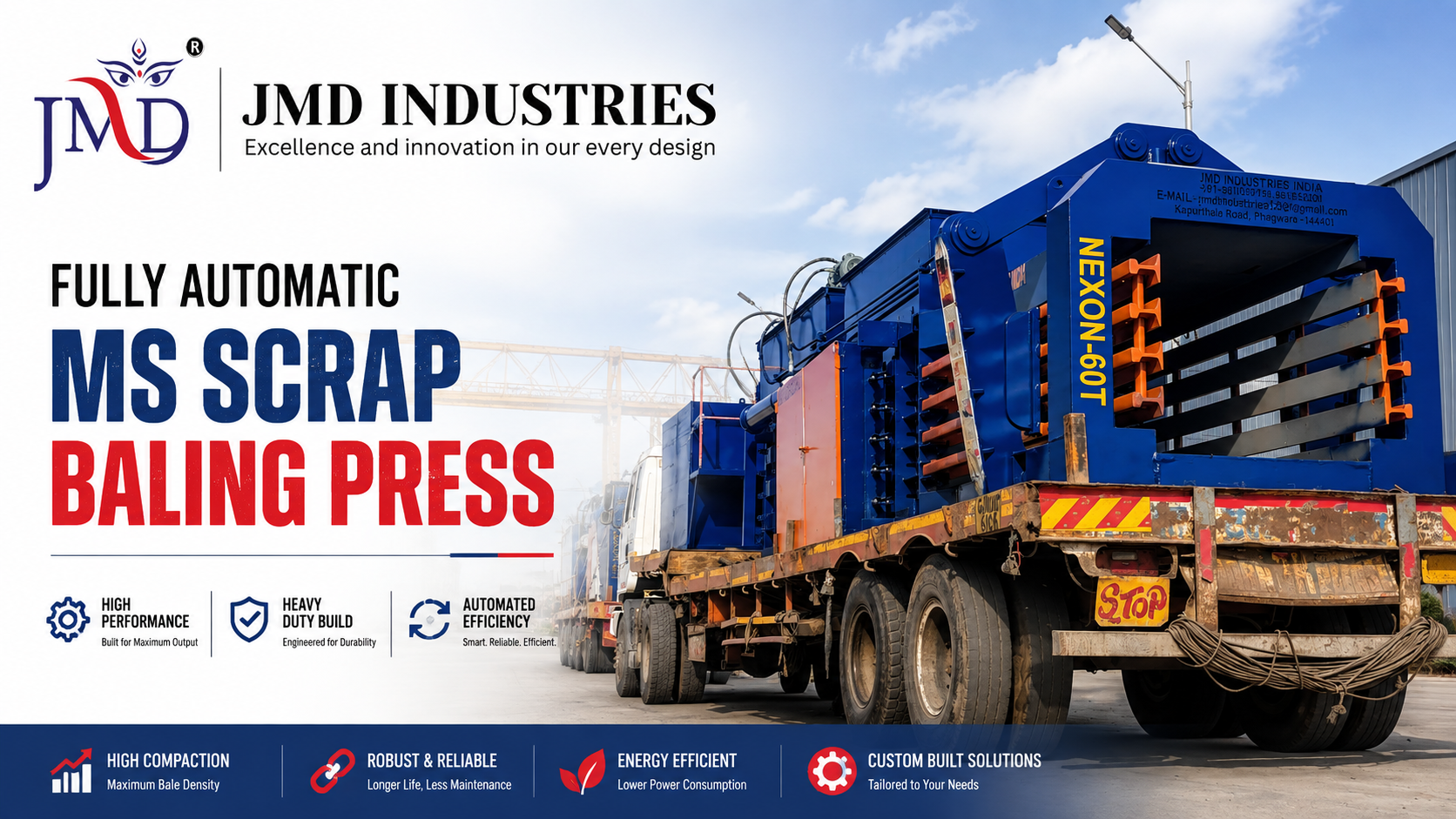
Fully Automatic MS Scrap Baling Press
Expert insights on Fully Automatic MS Scrap Baling Presses in Ahmedabad. Discover features, applications, and selection criteria from JMD Industries.
Key Features and Technical Specifications
When evaluating a fully automatic MS scrap baling press, several technical aspects are crucial for optimal performance and longevity:
- Bale Size and Density: Customizable bale dimensions and high compaction ratios ensure efficient storage and transportation.
- Hydraulic System: Robust, high-pressure hydraulic pumps and cylinders for consistent, powerful compaction.
- PLC Control System: Advanced Programmable Logic Controller for precise operation, safety interlocks, and ease of programming.
- Automated Tying Mechanism: Reliable wire or strap feeding and tying system for secure bale formation.
- Heavy-Duty Construction: Robust steel frame and wear-resistant components designed to withstand continuous operation and abrasive materials.
- Safety Features: Integrated safety guards, emergency stops, and interlocks to protect operators.
- Power Efficiency: Optimized motor and hydraulic design to minimize energy consumption.
- Material Handling: Options for integrated conveyors or grabbers for automated loading.
Industrial Applications and Use Cases
The versatility of a fully automatic MS scrap baling press makes it invaluable across numerous industrial sectors:
- Metal Recycling Facilities: Processing ferrous and non-ferrous scrap for resale to foundries and mills.
- Automotive Manufacturing: Compacting scrap metal generated from stamping, machining, and vehicle dismantling.
- Shipbreaking Yards: Baling large volumes of steel from decommissioned vessels.
- Fabrication Shops: Handling offcuts and waste from metal cutting, bending, and welding operations.
- Construction and Demolition: Processing structural steel, rebar, and other metal debris from sites.
- Electronics Recycling: Baling metal components from discarded electronics.
- Foundries: Preparing metal scrap for melting and reprocessing.
- General Manufacturing: Managing metal waste from various production processes.
How to Choose the Right Fully Automatic MS Scrap Baling Press
Selecting the appropriate baling press is a significant investment. Consider these factors to ensure you choose a machine that meets your specific operational needs:
- Scrap Material Type and Volume: Assess the types of metal you process (e.g., light gauge steel, heavy steel, aluminum) and the daily volume to determine required capacity and power.
- Bale Size Requirements: Confirm that the machine can produce bales of a size that is convenient for your internal handling and meets the specifications of your scrap buyers.
- Automation Level: Decide on the degree of automation needed, from fully automatic tying to manual bale ejection, balancing efficiency with initial cost.
- Power Source and Electrical Requirements: Ensure compatibility with your facility's existing power infrastructure.
- Manufacturer's Reputation and Experience: Look for a manufacturer with a proven track record in building durable and reliable baling equipment.
- After-Sales Support and Service: Verify the availability of installation, training, maintenance, and spare parts.
- Customization Options: Determine if the manufacturer can tailor the machine to specific site constraints or material handling needs.
- Compliance and Certifications: Ensure the machine meets relevant safety and operational standards.
Quality Standards and Compliance
For any industrial machinery, especially those involving high pressures and moving parts, adherence to quality standards and compliance with regulations is paramount. Manufacturers of fully automatic MS scrap baling presses should demonstrate a commitment to robust engineering and safety. Look for machines built to international standards such as ISO 9001 for quality management. Compliance with local safety regulations and electrical standards is also essential.
Verifying a manufacturer's quality control processes, material sourcing, and testing procedures provides confidence in the machine's durability and operational safety. A well-built baling press not only performs efficiently but also minimizes the risk of accidents and costly downtime.
Why JMD Industries' Experience and Capability Matters
At JMD Industries, our extensive experience in manufacturing hydraulic baling press machines, including fully automatic MS scrap baling presses, sets us apart. We understand the unique challenges faced by industries in Ahmedabad and across Gujarat. Our manufacturing process is driven by a deep understanding of hydraulic engineering and material science, ensuring each machine is built for robust performance and longevity.
Our technical team possesses the expertise to design and fabricate machines that meet stringent operational demands. We focus on precision engineering, utilizing high-quality components and rigorous quality control at every stage of production. This commitment allows us to offer reliable, efficient, and safe baling solutions tailored to your specific requirements, backed by comprehensive after-sales support.
Installation, Maintenance, and Care Tips
Proper installation, regular maintenance, and careful operation are key to maximizing the lifespan and efficiency of your fully automatic MS scrap baling press.
- Installation: Ensure the machine is installed on a level, solid foundation capable of withstanding its operating weight and vibrations. Connect all electrical and hydraulic lines according to the manufacturer's specifications. Professional installation by JMD Industries' technicians is recommended.
- Daily Checks: Before operation, inspect hydraulic fluid levels, check for leaks, ensure all safety guards are in place, and verify the wire/strap supply.
- Lubrication: Regularly lubricate all moving parts, including pivot points, cylinders, and guides, as per the maintenance schedule.
- Hydraulic Fluid: Monitor hydraulic fluid quality and level. Replace or filter the fluid as recommended to prevent contamination and ensure optimal system performance.
- Wire/Strap System: Keep the automatic tying mechanism clean and free from debris. Ensure the correct gauge and type of wire or strap are used.
- Cleaning: Regularly clean the press chamber and surrounding areas to prevent scrap buildup, which can impede operation and cause damage.
- Scheduled Maintenance: Adhere to the manufacturer's recommended maintenance schedule for inspections, component checks, and fluid changes.
Frequently Asked Questions
These presses are designed to handle a wide range of ferrous and non-ferrous metal scrap, including steel turnings, punch press scrap, aluminum cans, copper wire, and light gauge steel offcuts. The specific capacity depends on the model and its design specifications.
The automatic tying system typically uses a programmable logic controller (PLC) to guide a mechanism that feeds wire or strapping around the compacted scrap. It then tensions and secures the tie, ensuring the bale remains intact during handling and transport.
Bale density can vary significantly based on the scrap material and the press's compaction force. However, fully automatic MS scrap baling presses are engineered to achieve high densities, often ranging from 500 kg/m³ to over 1000 kg/m³ for specific materials, making them highly efficient for transport.
Modern fully automatic MS scrap baling presses are designed with energy efficiency in mind. They often feature variable displacement pumps and optimized hydraulic circuits to reduce power consumption during operation, contributing to lower running costs.
Routine maintenance includes daily checks of fluid levels and safety features, regular lubrication of moving parts, keeping the machine clean, and periodic inspection of hydraulic components and the tying mechanism. Scheduled preventive maintenance by qualified technicians is also crucial.
Safety is paramount. These machines are equipped with emergency stop buttons, safety interlocks on doors and access points, overload protection for the hydraulic system, and robust guarding around moving parts to prevent operator injury.
Conclusion
For industries in Ahmedabad seeking to optimize their metal scrap management, a fully automatic MS scrap baling press represents a significant advancement in efficiency, safety, and cost-effectiveness. By transforming bulky waste into dense, manageable bales, these machines streamline operations, reduce storage needs, and facilitate easier transport and sale of scrap materials. Investing in a high-quality, reliable baling press from an experienced manufacturer like JMD Industries ensures a robust solution that supports both your operational goals and your commitment to sustainable waste management practices.
Get In Touch
Jmd Industries