
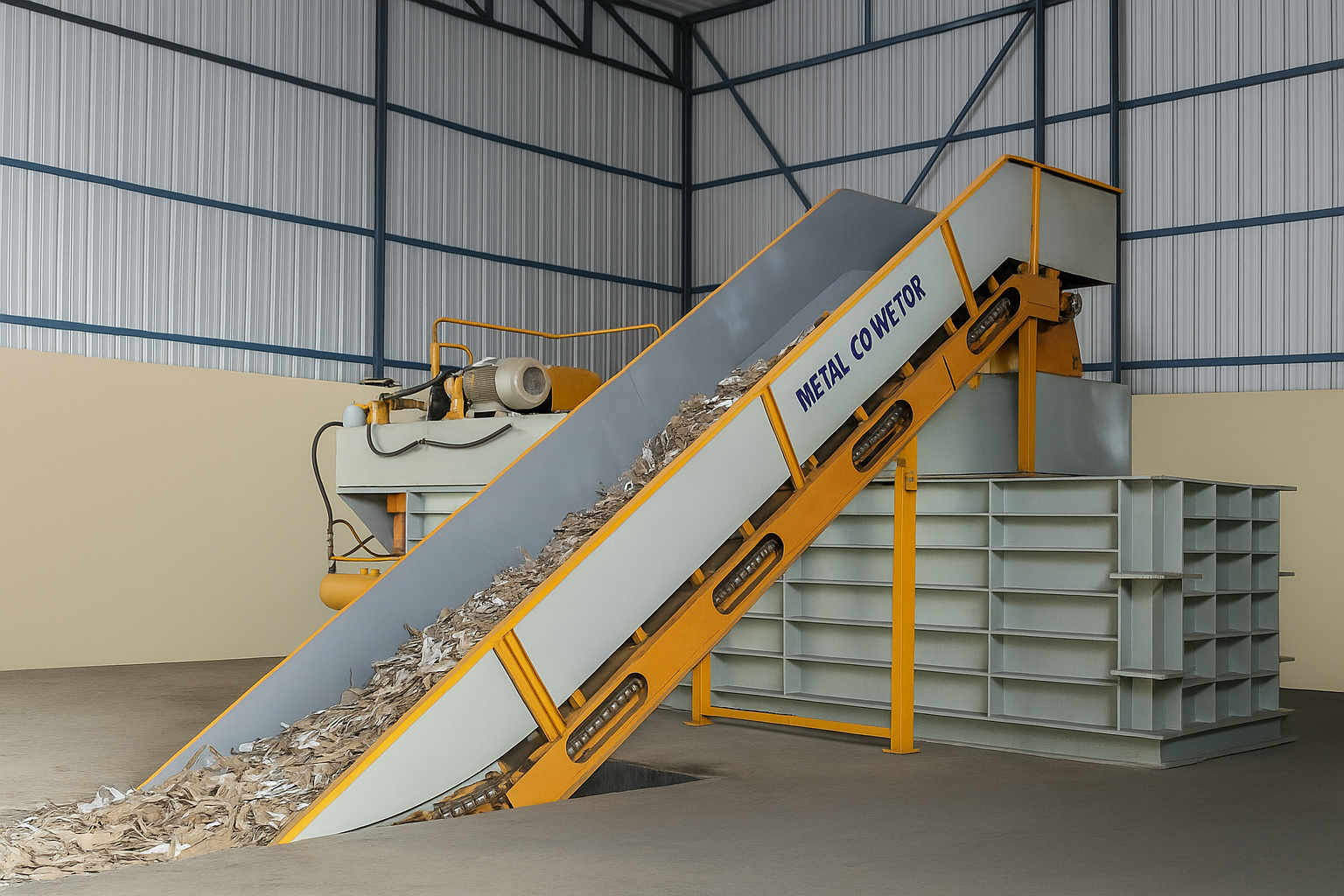
Hydraulic Baling Press Machine
A hydraulic baling press machine is a high-performance waste compaction solution that compresses loose recyclable materials into tight, transport-ready bales. It is widely used to manage cardboard, paper, plastic film, PET bottles, textile waste, and dry packaging scrap—helping industries reduce storage space, improve housekeeping, and increase recycling value. Jmd Baler supplies durable baling press machines built for reliable compression, safer operation, and consistent bale density across daily industrial use.
How a Hydraulic Baling Press Machine Works
The machine uses a hydraulic power pack to generate controlled pressure that drives a pressing ram inside the chamber. Waste material is loaded into the chamber, compressed layer-by-layer, and then tied using strapping or wire to form a stable bale. Depending on the model, the bale is ejected manually or automatically. This process creates uniform bales that are easy to store, stack, and dispatch for recycling.
Types of Hydraulic Baling Press Machines
- Vertical Hydraulic Baling Press – Compact, space-saving solution for small to medium waste volume generators.
- Horizontal Hydraulic Baling Press – Best for continuous feeding and high-output recycling operations.
- Semi-Automatic Baling Press – Manual loading with automated compression and easier bale tying workflow.
- Fully Automatic Hydraulic Baler – Conveyor-fed, automated tying and ejection for large recycling plants.
- Customized Baling Press – Designed as per material type, bale size requirement, and site layout.
Key Features of Our Hydraulic Baling Press
- High-pressure hydraulic system for uniform, dense bale formation and better recycling value.
- Heavy-duty frame and chamber built for continuous industrial operation and long service life.
- Operator-friendly controls with safety features for smooth, controlled compression cycles.
- Efficient bale tying arrangement for stable bales during handling and transportation.
- Energy-efficient power pack design to reduce electricity usage without compromising output.
- Low-maintenance design with easy service access and dependable performance on daily use.
Industries & Applications
- Warehouses and logistics centers compacting cardboard cartons, stretch film, and packaging waste.
- Recycling units and scrap yards handling paper, plastic film, PET bottles, and mixed dry waste.
- Retail chains, malls, and supermarkets managing backroom waste to keep operations clean and organized.
- Manufacturing plants baling production scrap, trimming waste, and packing material for dispatch.
- Textile and garment units compacting fabric scraps, threads, and offcuts for efficient waste handling.
- Printing and packaging industries compressing paper trim and corrugated waste to improve storage flow.
Benefits of Using a Hydraulic Baling Press Machine
- Reduces waste volume significantly, freeing up storage space and improving site cleanliness.
- Creates neat, uniform bales that are easy to stack, handle, and transport.
- Improves recycling value by producing consistent bale density preferred by buyers.
- Reduces frequent waste movement and minimizes manual handling time and labor cost.
- Supports safer waste management with organized handling and controlled compression cycles.
- Helps businesses maintain cleaner working areas and better compliance with waste management practices.
Selection Guide: Choose the Right Baling Press
Selecting the right hydraulic baling press depends on your daily waste volume, material type, desired bale size, and available space. Vertical balers are ideal for limited space and moderate waste generation, while horizontal balers suit high-volume sites with continuous waste flow. If you share your material type (cardboard, paper, film, PET, textile), approximate daily quantity, and preferred bale dimensions, we can suggest the most suitable model for your operation.
Maintenance & Operational Tips
- Check hydraulic oil level and maintain oil cleanliness for stable compression and smoother cycles.
- Inspect hoses, seals, and fittings regularly to avoid leakage and prevent unexpected downtime.
- Keep the chamber clean and load material evenly to achieve better bale shape and density.
- Lubricate guide rails and moving parts periodically to reduce wear and maintain smooth motion.
- Train operators on safe loading, tying, and ejection steps to ensure consistent and secure daily operation.
FAQs – Hydraulic Baling Press Machine
1. Which materials can a hydraulic baling press compress?
+
Cardboard, paper, plastic film, PET bottles, textile scraps, packaging waste, and many types of dry recyclable materials can be baled, depending on the model and chamber design.
2. What is the difference between vertical and horizontal balers?
+
Vertical balers are compact and ideal for limited space, while horizontal balers are designed for continuous feeding and higher output recycling operations.
3. How do I choose the right bale size?
+
Bale size is selected based on your storage space, handling method (manual, pallet, forklift), and recycler pickup preference. We can recommend an ideal bale dimension after a quick requirement check.
4. Is operator training required for safe operation?
+
Yes. Basic training helps operators load material correctly, follow safe compression cycles, tie bales securely, and use emergency controls properly.
5. What maintenance does a hydraulic baler need?
+
Routine checks include hydraulic oil level, hose fittings, seal condition, lubrication of moving parts, and keeping the chamber and guides clean for consistent performance.
Contact Details
Talk to our specialists today for tailored solutions and fast assistance.
Company:
Jmd Baler
WhatsApp:
Chat on WhatsApp
Email:
jmdindustries9412@gmail.com
Website:
www.jmdbaler.com
Address:
PLOT NO 71/72 Avdhesh industrial hub, Bhavda - Bakrol, Bhavda patiya, Ahmedabad, Gujarat.