
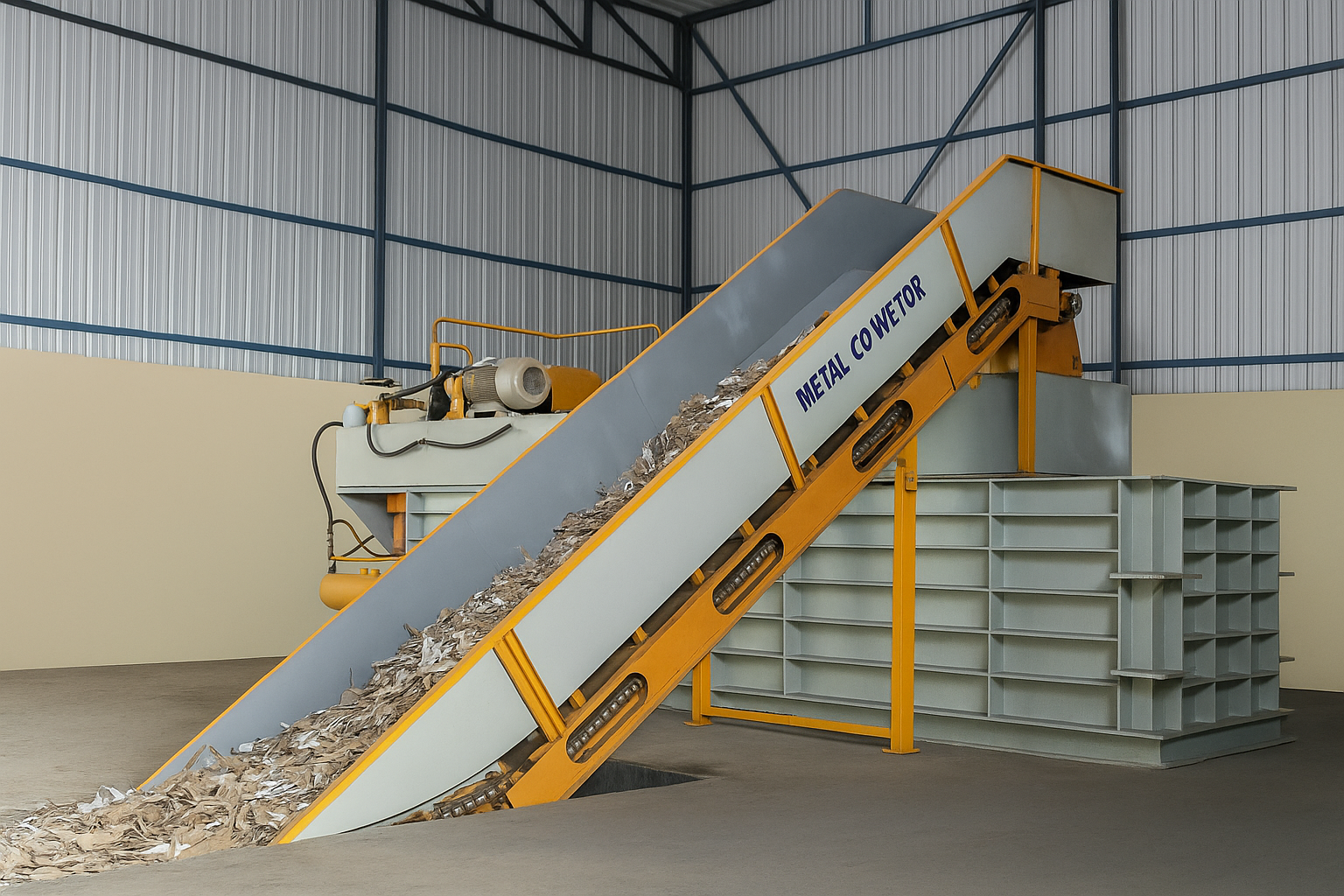
Hydraulic Baling Press Machine for Waste Paper
A hydraulic baling press machine for waste paper compacts OCC cartons, newspapers, magazines, and mixed office scrap into dense, tied bales for easy storage and transport. This guide explains working principle, configurations, key specs, applications, benefits, and a practical procurement checklist to help you select the right baler for your throughput and budget.
How a Waste Paper Hydraulic Baler Works
Hydraulic cylinders drive a ram that compresses loose paper inside a reinforced chamber. After reaching the set pressure/density, the machine allows manual, semi-automatic, or automatic strapping/tying. Bale is then ejected and weighed. Options like shear blades improve feeding, while oil coolers & filtration keep cycles consistent in heavy-duty, multi-shift operations.
Types of Hydraulic Baling Press Machines for Waste Paper
- Mini/Vertical Balers (5–10 Ton): Compact for small stores and offices; bale ~60–100 kg; 1–2 person operation.
- Standard Vertical (15–30 Ton): Most popular for OCC & duplex; bale ~120–250 kg; reliable daily cycles.
- Heavy Vertical (40–60 Ton): Higher density bales ~250–400 kg; faster cycle for moderate throughput.
- Horizontal Closed-Door (Semi-Auto): Suited to MRFs/warehouses; bale ~350–500 kg; manual tying, powered ejection.
- Automatic Horizontal (Conveyor + Auto Tying): 5–12 TPH lines for high-volume mixed paper with PLC + HMI controls.
- Twin-Ram High Density: Multi-material, export-grade bale densities; ideal for professional recyclers.
Key Specifications & Options to Compare
- Compression Tonnage & Chamber Size—governs density, bale dimensions, and hourly output.
- Motor HP & Pump Flow—affects cycle time and energy efficiency across shifts.
- Shear Blades & Feed Opening—improve loading of bulky cartons; reduce pre-cutting.
- Automation Level—conveyors, photo-eyes, bale length control, auto tying, and PLC reports.
- Cooling, Filtration & Oil Capacity—critical for long duty cycles in warm climates.
- Safety Interlocks & Guards—door switches, e-stop, emergency relief; audit-friendly.
- Wear Liners & Steel Thickness—longer life, steadier bale quality, lower maintenance.
Typical Uses & Sites
- MRFs and scrap dealers consolidating OCC, duplex board, and mixed paper for densified transport.
- Warehouses, 3PLs, and e-commerce hubs managing daily carton returns and repackaging waste.
- Printers, corrugators, and packaging units handling trim waste, rejects, and offcuts.
- Retail, hospitality, hospitals, and campuses keeping back-areas clean, safe, and audit-ready.
Benefits of the Right-Sized Waste Paper Baler
- Better Scrap Realization: Dense, uniform bales fetch improved rates and reduce pilferage.
- Logistics Savings: More kg per trip and fewer pickups—cut fuel, time, and CO₂.
- Space & Safety: Fewer loose stacks, tidier aisles, lower fire risk, cleaner audits.
- Labor Productivity: Faster cycles with semi/auto systems reduce manual handling.
- Consistency & Compliance: Traceable batches, interlocks, and reports support ESG goals.
Procurement Checklist
Selection & Installation Tips
- Share daily/peak throughput, material mix, and target bale size/density for accurate sizing.
- Plan for electricals, foundation/civil, and conveyor pit (if required) in advance.
- Ask for sample bale test on your paper mix and a density/throughput guarantee.
- Budget consumables (strap/wire), hydraulic oil, and filter intervals in TCO.
- Evaluate AMC, spare kits, training, and response times; confirm scope in writing.
FAQs — Hydraulic Baling Press for Waste Paper
1. Which model is best for 1–2 tons/day?
+
A 15–30 ton vertical baler usually fits 1–2 TPD with 120–250 kg bales. If peaks are higher or loading is continuous, consider a small horizontal unit.
2. Can the same baler handle corrugated, newspaper, and mixed office paper?
+
Yes—set pressure/length controls per material. Shear blades and larger feed openings help with bulky OCC; auto tying adds speed for mixed streams.
3. What maintenance matters most?
+
Keep oil clean and cool; follow filter and seal schedules; grease moving points; check strap/wire systems and safety interlocks regularly for reliable cycles.
4. Do I need a conveyor?
+
For manual feeds up to ~2–3 TPD, verticals are fine without conveyors. For higher volumes or continuous operations, a conveyor-fed horizontal raises throughput and safety.
5. What about finance, warranty, and training?
+
Leading suppliers offer installation & operator training, standard warranty with AMC options, and can connect you with financing partners. Confirm inclusions before order.
Contact Details
Talk to our specialists today for tailored solutions and fast assistance.
Company:
Jmd Baler
WhatsApp:
Chat on WhatsApp
Email:
jmdindustries9412@gmail.com
Website:
www.jmdbaler.com
Address:
PLOT NO 71/72 Avdhesh industrial hub, Bhavda - Bakrol, Bhavda patiya, Ahmedabad, Gujarat.