
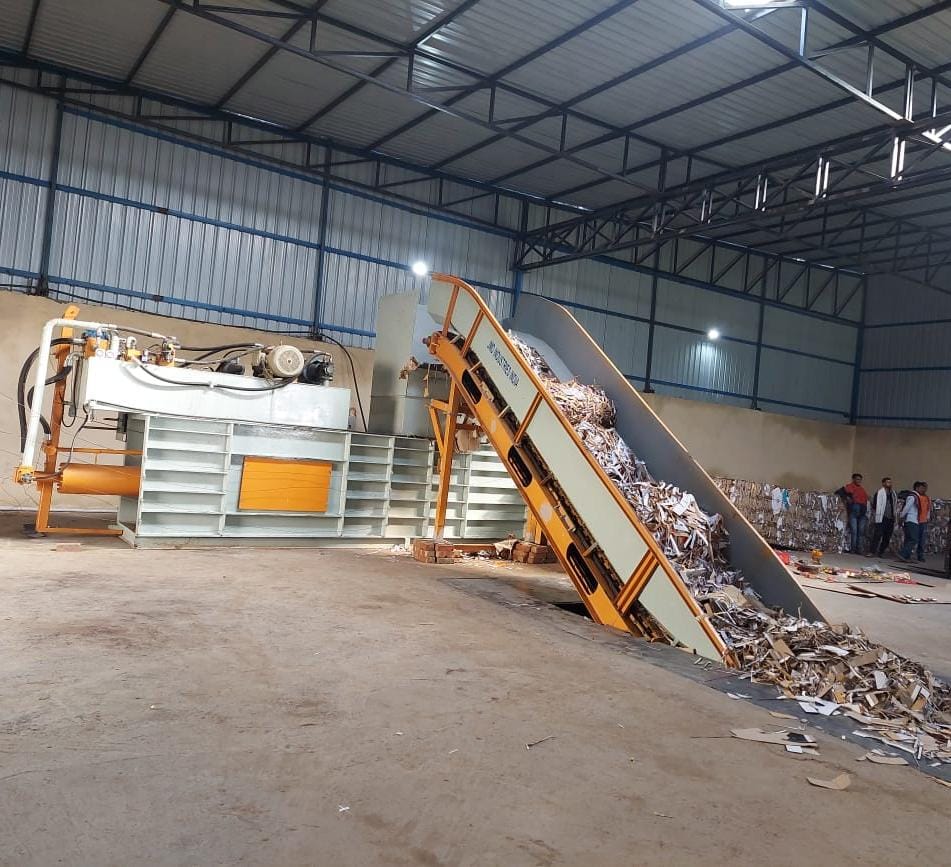
Hydraulic Baling Press Machine for Waste Paper Manufacture
Introduction
Choose a purpose-built Hydraulic Baling Press Machine for waste paper manufacture to convert loose paper and cartons into tight, transport-ready bales. Ideal for mills, recyclers, converters, warehouses, and e-commerce hubs, these presses cut logistics costs, free floor space, and standardize bale density for better scrap value.
Why Hydraulic Baling for Waste Paper?
Modern hydraulic circuits deliver high compression with lower energy draw, while interlocked doors and two-hand operation improve operator safety. With configurable chamber sizes, bale tying (steel/PP straps), and automation levels, manufacturers can match throughput targets and quality KPIs without sacrificing reliability or maintenance simplicity.
Types of Hydraulic Baling Press Machines
- Vertical Baling Press – Compact footprints for shops, print houses, and warehouses managing mixed paper/cardboard.
- Horizontal Baling Press – Higher continuous throughput, suited to recycling yards and paper processors with conveyor feed.
- Semi-Automatic Press – Manual loading with automated compression/ejection; a balanced choice for growing volumes.
- Fully Automatic Press – Auto feeding, tying, and bale ejection to maximize OEE in round-the-clock operations.
Key Features for Waste Paper Manufacture
- High-pressure hydraulics for dense, uniform bales that optimize transport loads.
- Energy-efficient motors, smart hydraulics, and auto-idle to reduce power consumption.
- Safety compliance: interlocked doors, e-stops, overload protection, and guarded pinch points.
- Configurable bale size, strap type, and discharge for paper trims, cartons, and OCC.
- Serviceable design: accessible filters, wear parts, and nationwide spares/AMC support.
Applications Across Waste Paper Operations
- Paper mills and converters compacting trims and reel ends for reuse or dispatch.
- Recycling MRFs and aggregators consolidating OCC, magazines, and mixed paper streams.
- E-commerce/retail DCs handling carton offcuts and returns packaging.
- Print houses and publishers baling rejected sheets and bindery scrap.
Benefits You Can Expect
- Lower freight cost per ton via higher bale density and consistent dimensions.
- Cleaner, safer shop floors with faster waste evacuation and stacking.
- Reduced manual handling and downtime through ergonomic loading and quick cycles.
- Audit-friendly operations with documented maintenance and safety interlocks.
- Scalable capacity—from vertical presses to fully automatic horizontal lines.
Selection Tips for Manufacturers
- Size by daily tonnage and peak hourly inflow; match chamber volume and ram force accordingly.
- Confirm bale tying (PP strap or steel wire) based on downstream handling and buyer specs.
- Evaluate electrical load, duty cycle, and hydraulic oil cooling for your climate and runtime.
- Check spare parts availability, AMC terms, and service SLAs in your region.
- Consider conveyor feeds, rufflers, and auto-tying when moving beyond manual workflows.
FAQs – Hydraulic Baling Press for Waste Paper
1. Which press type is best for continuous waste paper manufacture?
+
Horizontal presses with conveyor feed and auto-tying provide higher throughput and lower labor per ton, ideal for mills and MRFs.
2. How do I estimate the required ram force?
+
Base it on material bulk density, target bale size, and desired bale weight. Your OEM can simulate cycle times and energy demand for your mix.
3. Are PP straps strong enough for OCC bales?
+
Yes for many cases; heavy bales or long transports may require steel wire—choose per buyer specs and handling conditions.
4. What reduces power consumption in balers?
+
Efficient pumps, auto-idle, correct motor sizing, and preventive maintenance (filters/oil) keep loads low and cycles consistent.
5. What documents should I ask for during purchase?
+
GA drawings, electrical schematics, O&M manuals, spares list, safety checklist, and a recommended maintenance schedule/AMC offer.
Contact Details
Talk to our specialists today for tailored solutions and fast assistance.
Company:
Jmd Baler
WhatsApp:
Chat on WhatsApp
Email:
jmdindustries9412@gmail.com
Website:
www.jmdbaler.com
Address:
PLOT NO 71/72 Avdhesh industrial hub, Bhavda - Bakrol, Bhavda patiya, Ahmedabad, Gujarat.