
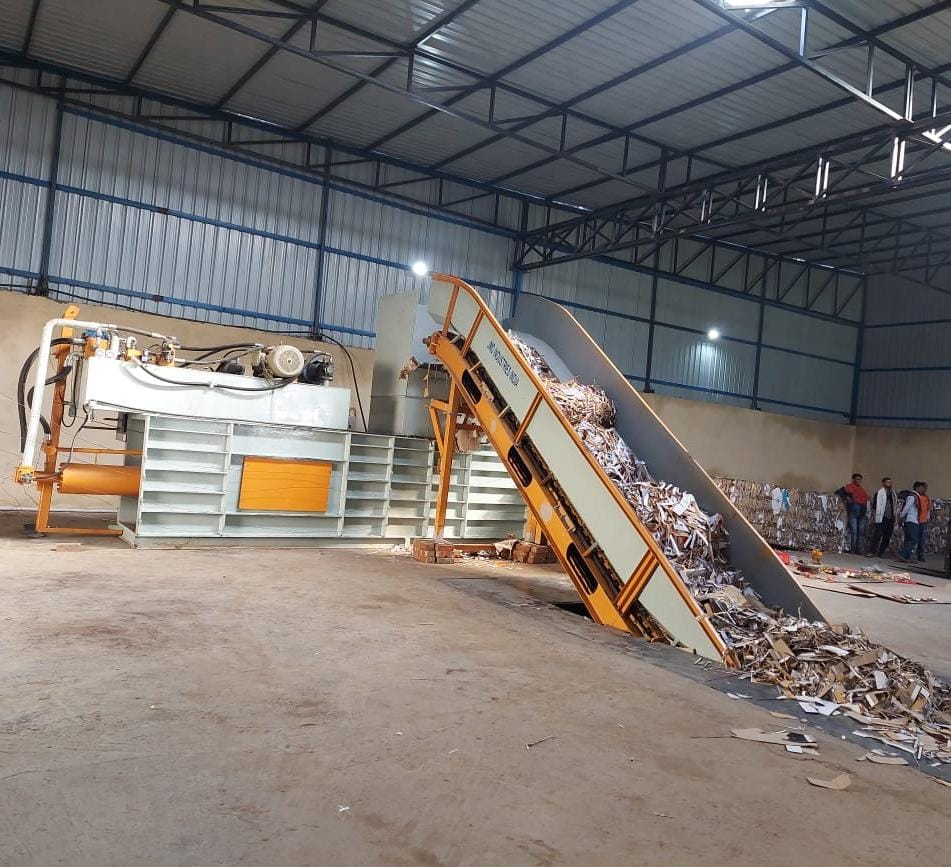
Hydraulic Baling Press Machine Manufacturer for Recycling and Industrial Waste Handling
Manufacturing Heavy-Duty Hydraulic Baling Press Machines for Reliable Compaction
As a Hydraulic Baling press machine manufacturer, we design and build robust balers engineered to compact loose recyclable and industrial waste into uniform, transport-ready bales. These machines help facilities reduce storage space, improve housekeeping, and streamline material handling in recycling yards, warehouses, factories, and logistics hubs. Built with rigid frames, stable hydraulic systems, and operator-friendly controls, our baling presses deliver consistent compression for materials such as cardboard, OCC, paper, PET bottles, plastic film, textile scraps, and mixed dry waste. Each machine is developed with a focus on safety, uptime, and repeatable bale density to support efficient downstream transport and recycling operations.
How a Hydraulic Baling Press Works in Daily Operations
The baling process begins with loading loose material into the chamber. A hydraulic power pack drives a compression ram that applies controlled pressure to reduce volume and form dense bales. After compaction, the bale is tied using suitable strapping and then ejected for stacking or dispatch. Proper cylinder sizing, hydraulic flow balance, and chamber geometry ensure stable force distribution, reduced cycle loss, and consistent bale finish. This manufacturing approach supports predictable output, smoother handling, and lower breakage during transport and storage.
Types of Hydraulic Baling Press Machines Manufactured
- Vertical Hydraulic Balers: Space-saving machines ideal for warehouses, retail backrooms, and small recycling units handling cardboard and plastic waste.
- Horizontal Hydraulic Balers: Higher throughput balers suited for recycling plants, packaging units, and distribution centers with continuous waste flow.
- Manual Tie Balers: Practical for facilities seeking stable compaction with simple tying and easy operation.
- Automatic or Semi-Automatic Balers: Designed for faster cycles and improved productivity where higher daily bale output is required.
Core Features That Matter in a Manufacturer-Grade Baler
- Stable Hydraulic Power Pack: Reliable pump and valve design for smooth pressure build-up and repeatable compression cycles.
- Heavy Fabricated Frame: Thick steel construction minimizes flexing and improves long-term durability in industrial environments.
- Optimized Chamber Geometry: Better material packing, uniform bale formation, and easier strapping alignment.
- Safety-Focused Operation: Interlocks, emergency stop support, and guarded moving areas for operator protection.
- Easy Maintenance Access: Practical layout for servicing hoses, filters, seals, and wear components to reduce downtime.
Applications of Hydraulic Baling Press Machines
- Cardboard and paper recycling operations converting loose material into dense bales for transport and resale.
- Plastic waste handling including PET bottles, HDPE, LDPE film, and packaging scrap for recycling streams.
- Warehouses, FMCG units, and e-commerce hubs managing daily packaging waste efficiently.
- Textile and garment units compacting fabric cuttings, yarn waste, and production scrap.
Benefits of Buying Directly from a Manufacturer
- Better build reliability and consistent performance because machines are engineered and tested under controlled manufacturing standards.
- Correct machine selection based on material type, desired bale density, and operational workflow.
- Support for customization in chamber size, bale size, and control preference aligned with site conditions.
- Stronger long-term support through parts availability and technical guidance for service teams.
Guidelines for Choosing the Right Baling Press for Your Waste Stream
- Match the baler type to your daily waste volume and material handling method to maintain smooth loading and output.
- Confirm the chamber size and compression force based on the material compressibility and required bale density.
- Plan adequate space for loading, bale tying, and bale movement to avoid operational bottlenecks.
- Maintain hydraulic oil cleanliness and filter health to protect pumps and valves and sustain stable pressure output.
FAQs – Hydraulic Baling Press Machine Manufacturer
1. Which materials can a hydraulic baling press compact?
+
Hydraulic balers commonly compact cardboard, paper, PET bottles, plastic film, textile scrap, and similar dry recyclables into dense bales.
2. What is the difference between vertical and horizontal balers?
+
Vertical balers are compact and suitable for small to medium waste volumes, while horizontal balers handle higher throughput and continuous feeding operations.
3. How do I select the right bale size for my business?
+
Bale size should be selected based on storage capacity, transport method, and buyer requirements for handling and recycling processes.
4. What maintenance is typically required for a hydraulic baler?
+
Routine maintenance includes checking hydraulic oil, replacing filters, inspecting hoses and seals, and keeping the chamber clean for smooth operation.
Contact Details
Talk to our specialists today for tailored solutions and fast assistance.
Company:
Jmd Baler
WhatsApp:
Chat on WhatsApp
Email:
jmdindustries9412@gmail.com
Website:
www.jmdbaler.com
Address:
PLOT NO 71/72 Avdhesh industrial hub, Bhavda - Bakrol, Bhavda patiya, Ahmedabad, Gujarat.