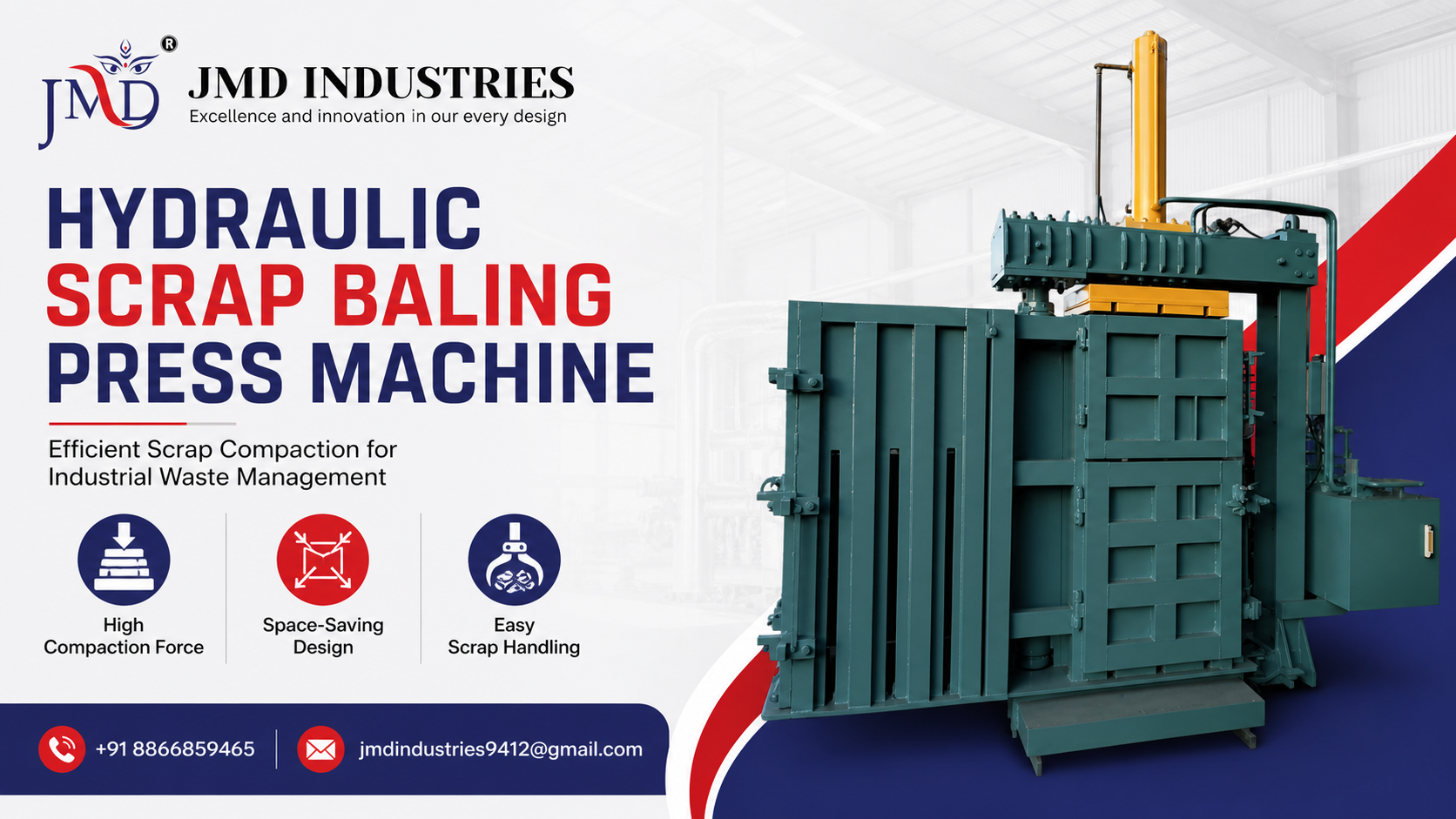

A Hydraulic Scrap Baling Press Machine is an important industrial solution for businesses that need efficient scrap handling, waste compaction, and recycling support. In manufacturing units, fabrication workshops, recycling facilities, warehouses, packaging units, and scrap processing areas, loose scrap can create serious storage and handling challenges. A hydraulic baling press helps convert loose scrap and recyclable materials into compact, manageable bales that are easier to store, move, load, and transport.
JMD Industries offers baling press solutions designed for practical industrial use. The machine is built to support durability, easy operation, and reliable performance in demanding working environments. A hydraulic scrap baling press machine is especially useful where regular scrap generation needs to be managed without affecting floor space, workflow, or material movement.
Scrap management is not only about keeping the workplace clean. It also supports safety, productivity, storage planning, logistics, and recycling efficiency. When scrap is compressed into dense bales, it becomes easier to stack and handle. This makes the overall waste management process more systematic, controlled, and efficient.
A hydraulic scrap baling press machine is used to compress different types of scrap and recyclable materials into compact bales using hydraulic force. The machine applies controlled pressure through a hydraulic system, reducing the volume of loose materials and forming them into a defined bale shape.
This machine can be used for materials such as paper, cardboard, plastic waste, PET bottles, packaging waste, metal scrap, and other compressible recyclable materials. Depending on the application requirement, the machine may be designed in vertical or horizontal formats.
A vertical baling press is widely preferred where space-saving operation is required. It allows easy loading and compact installation while delivering strong hydraulic compaction. This makes it suitable for industries that need regular waste reduction but have limited floor space.
The main purpose of a hydraulic baling press is to make scrap handling easier, safer, and more organized. Instead of storing loose scrap in open areas, businesses can convert it into neat bales that support better workplace management.
Many industrial operations generate scrap on a daily basis. This may include metal cuttings, rejected packaging, cardboard boxes, plastic waste, PET bottles, and other recyclable materials. If this scrap is not managed properly, it can occupy valuable space and create unnecessary handling difficulties.
A hydraulic scrap baling press machine helps reduce the bulk volume of waste materials. Once compressed, the bales are easier to store, stack, and transport. This improves housekeeping and supports smoother movement inside the workplace.
For recycling businesses, baled scrap is easier to weigh, stack, load, and process. Loose scrap requires more space and effort, while compact bales simplify the complete recycling workflow. This makes baling machines useful for both industrial waste management and recycling operations.
Organized scrap handling also improves safety. A clean and structured work area reduces obstruction, improves movement, and helps create a more disciplined industrial environment.
The working of a hydraulic scrap baling press machine is based on hydraulic pressure. The operator loads scrap or recyclable material into the machine chamber. After loading, the hydraulic system activates the pressing plate or ram, which applies strong pressure to compress the material.
Once the material is compressed into a compact shape, the bale is tied or secured and then removed from the machine. The finished bale can be stored, stacked, transported, or sent for recycling.
Basic working steps include:
This process helps industries reduce material volume and manage scrap in a more controlled and efficient manner.
A well-designed hydraulic scrap baling press machine includes practical features that support daily industrial use. These features help improve performance, usability, safety, and long-term reliability.
Important features include:
These features make the machine suitable for businesses that need a dependable solution for scrap compaction and recycling support.
A hydraulic scrap baling press machine can be used in many industries where scrap or recyclable material needs to be compressed. Its application depends on the material type, working volume, and operational requirement.
Common applications include:
Because of its flexible use, the machine is suitable for both small and large industrial setups. It helps reduce material volume and makes waste handling more efficient.
The biggest benefit of using a hydraulic scrap baling press machine is better scrap control. Loose scrap takes up more space and is difficult to move. Compact bales are easier to store, stack, load, and transport.
Key benefits include:
These benefits make the machine valuable for businesses that generate regular scrap and need a cleaner, safer, and more organized operation.
A vertical baling press is a practical option for businesses that need a compact machine design. It is suitable for facilities where floor space is limited but waste compaction is required regularly. The vertical structure allows easy loading, while the hydraulic system provides strong pressure for bale formation.
Vertical baling presses are commonly used for cardboard, paper, plastic waste, PET bottles, and other compressible recyclable materials. Their compact structure makes them easier to install and operate in different industrial environments.
For businesses with limited storage areas, a vertical hydraulic baling press can help manage waste without occupying excessive space. It supports clean storage, easy handling, and better material movement.
Loose scrap is difficult to manage because it spreads across the workplace and occupies more space than necessary. It may also create handling delays and reduce operational efficiency. A hydraulic scrap baling press machine solves this problem by converting loose scrap into compact bales.
Once baled, the material can be stacked more neatly. This improves storage efficiency and makes loading easier when the material is sent for recycling or further processing. Compact bales also reduce clutter and create better movement space inside the facility.
Improved storage efficiency directly supports productivity. Workers can move materials more easily, floor space can be used more effectively, and scrap handling becomes a structured process instead of a continuous workplace challenge.
Choosing the right hydraulic scrap baling press machine depends on the type of material, daily scrap volume, available space, and required bale size. A machine suitable for cardboard or plastic may not be the same as one required for heavier metal scrap. Therefore, businesses should understand their actual usage before selecting a machine.
Important selection factors include:
Selecting the right machine helps ensure better performance, safer operation, and long-term value.
A hydraulic scrap baling press machine requires regular maintenance for smooth and safe operation. Basic care helps improve machine life and reduces the chances of unexpected downtime. Operators should avoid overloading the chamber and should follow correct loading practices.
Hydraulic oil levels, hoses, seals, electrical controls, pressing components, and moving parts should be checked periodically. Proper lubrication and timely inspection help keep the machine in good working condition.
If any leakage, unusual sound, pressure drop, or operational issue is noticed, it should be checked before continuing regular use. A well-maintained baling press provides consistent compaction and supports reliable daily performance.
JMD Industries provides industrial baling press and waste handling machinery solutions designed for practical use. The company offers machines that support durability, hydraulic performance, and easy operation for different scrap and recyclable material handling needs.
A hydraulic scrap baling press machine from JMD Industries helps businesses manage recyclable materials in a more organized way. The machine is suitable for industries that need compact bale output, reliable operation, and better scrap control.
For businesses looking for an efficient baling solution, important factors include machine strength, usability, maintenance support, and application suitability. JMD Industries focuses on providing functional machines that support long-term industrial waste management requirements.
A Hydraulic Scrap Baling Press Machine is a practical solution for industries that want to manage scrap, recyclable waste, and storage space more efficiently. By converting loose materials into compact bales, the machine supports cleaner operations, easier handling, safer storage, and better recycling workflows.
For manufacturing units, recycling centers, packaging industries, warehouses, and fabrication businesses, hydraulic baling machines provide a structured approach to waste management. With the right machine selection and regular maintenance, businesses can improve workplace organization, reduce material volume, and support smoother industrial operations.
JMD Industries provides hydraulic baling press solutions designed for industrial use, helping businesses handle scrap materials in a more organized and efficient way.
JMD INDUSTRIES | All Rights Reserved.