
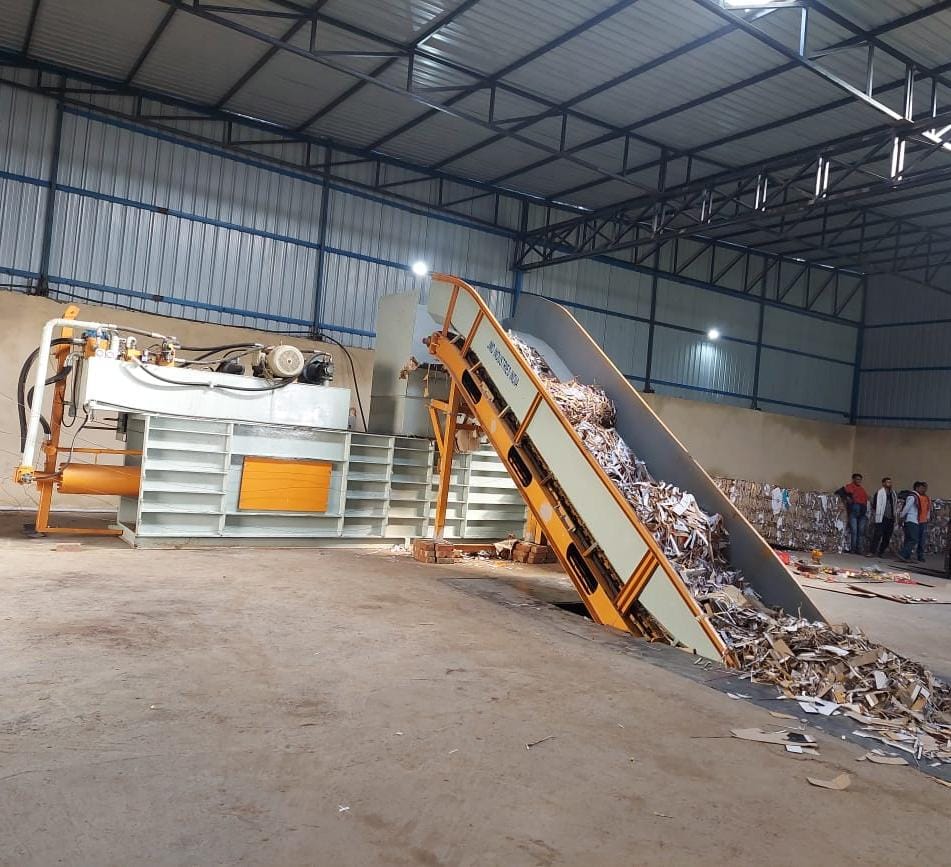
Hydraulic Scrap Baling Press Machines
Introduction -
Upgrade your metal recycling with a Hydraulic Scrap Baling Press Machine engineered to compress light and heavy metal scrap into dense, furnace-ready bales. Ideal for MS/SS, aluminium, copper, brass, CRC/HR trimmings, and turnings, these presses reduce volume, cut handling costs, and streamline logistics for scrap yards, steel plants, foundries, and auto dismantlers.
Why Choose a Hydraulic Scrap Baler for Your Facility
Hydraulic balers deliver consistent compaction force, safer operations, and faster throughput compared to manual handling. With options like triple-action compression, shear/door types, and automatic tying/ejection, you can match output, bale size, and material flow to your production targets—while maintaining compliance and maximising ROI.
Types of Hydraulic Scrap Baling Press Machines
- Triple-Action Scrap Baler – Main press + side press + top press for high-density bales of mixed or heavy scrap.
- Shear Baler / Door Type – Integrated cutting for long profiles and plates before baling; reduces pre-processing.
- Horizontal Continuous Baler – Conveyor feeding and automatic ejection for high-volume yards and steel service centers.
- Vertical Scrap Baler – Compact footprint for light metals, aluminium foils, and small workshops.
- Briquetting Type (Turnings/Chips) – Converts oily turnings into compact briquettes for clean remelting.
Key Features & Engineering Highlights
- Heavy-Duty Welded Frame – Stress-relieved structure with wear plates for long service life.
- High-Pressure Hydraulics – Cartridge valves, hard-chrome pistons, and quality seals for leak-free performance.
- Smart Controls – PLC/HMI with selectable cycles, bale length control, and fault diagnostics.
- Flexible Feeding – Loader/conveyor/hopper options to suit loose scrap, bundles, and turnings.
- Safety & Compliance – Two-hand controls, e-stops, interlocks, light curtains (as applicable) and guarding.
Industries & Applications
- Scrap yards & aggregators compressing mixed ferrous/non-ferrous scrap for profitable dispatch.
- Steel mills & foundries preparing furnace-ready charge with uniform high-density bales.
- Automotive dismantlers handling body shells, frames, and stamping offcuts.
- Aluminium & copper recyclers processing profiles, wires, radiators, and utensil scrap.
Top Benefits for Your Operation
- Up to 5–8× volume reduction for lower transport, storage, and handling cost.
- Consistent bale integrity for easier stacking, inventory, and melting efficiency.
- Higher throughput with automated cycles, ejectors, and tying options.
- Cleaner yard and safer workflows with enclosed pressing chambers and interlocks.
- Custom bale sizes to meet buyer specifications and container loading plans.
Selection Guide: How to Choose the Right Scrap Baler
Define your material mix (light scrap, HMS, profiles, turnings), target bale weight and hourly output, available power, and feeding method. Consider maintenance access, spare support, and digital controls for uptime. Ask for trial runs with your scrap sample to validate density and cycle time before finalising.
Maintenance & Operational Tips
- Monitor oil health—temperature, viscosity, and contamination; change filters on schedule to protect valves.
- Inspect wear plates, liners, and chamber clearances; replace before metal-to-metal contact develops.
- Check cylinder rods and seals for scoring or leaks; maintain correct packing and torque.
- Calibrate limit switches and bale length sensors to keep density consistent.
- Train operators on safe feeding, jam clearing, and emergency procedures.
FAQs – Hydraulic Scrap Baling Press Machine
1. Which materials can be baled?
+
Ferrous and non-ferrous scraps including MS/SS, aluminium, copper, brass, CRC/HR trimmings, profiles, wires, and oily turnings (with briquetting).
2. What bale sizes are available?
+
Bale sizes are configurable; common chambers produce bales in the ~300×300 mm to 600×600 mm range or as per requirement.
3. Do I need a shear baler?
+
If you handle long sections, plates, or profiles, a shear/door type saves pre-cutting time by cropping lengths before compaction.
4. How much power does a baler consume?
+
Depends on cylinder sizes and cycle speed; high-efficiency pumps and optimized hydraulics reduce kWh per tonne. Ask for a duty-cycle estimate.
5. What about after-sales service and spares?
+
Local support, AMC options, and stocked consumables (seals, filters, hoses) ensure uptime and predictable maintenance costs.
Contact Details
Talk to our specialists today for tailored solutions and fast assistance.
Company:
Jmd Baler
WhatsApp:
Chat on WhatsApp
Email:
jmdindustries9412@gmail.com
Website:
www.jmdbaler.com
Address:
PLOT NO 71/72 Avdhesh industrial hub, Bhavda - Bakrol, Bhavda patiya, Ahmedabad, Gujarat.