
Jmd Industries · Industrial Blog
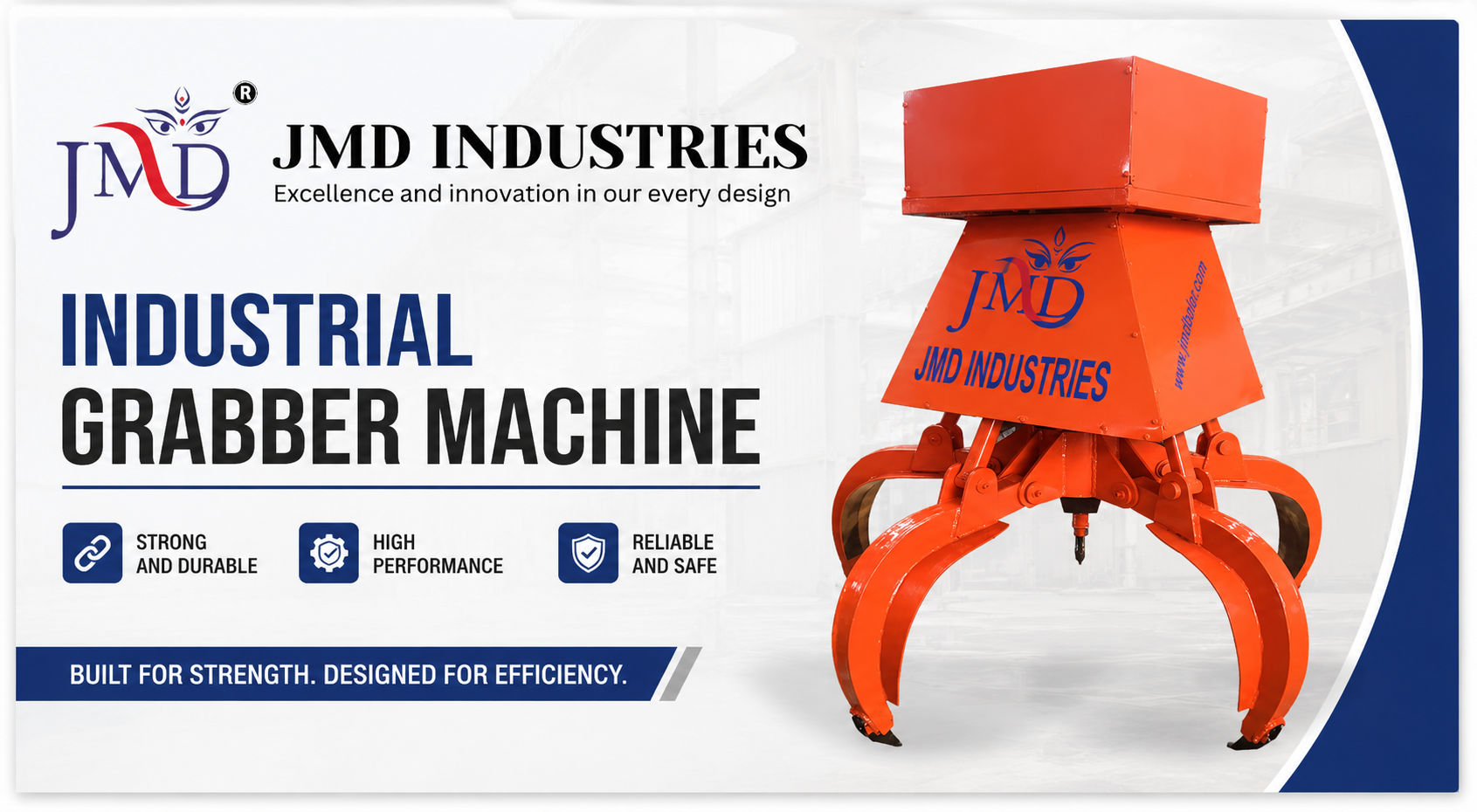
Industrial Grabber Machine
Expertly designed industrial grabber machines for efficient material handling in Ahmedabad. Discover durable, high-performance solutions from JMD Industries.
What is an Industrial Grabber Machine? — Overview
An industrial grabber machine, often referred to as a material handler or grapple, is a heavy-duty piece of equipment designed for picking up, moving, and loading loose or irregularly shaped materials. It typically consists of a powerful hydraulic arm or boom mounted on a mobile base, such as a wheeled or tracked vehicle, or sometimes a stationary pedestal. At the end of the arm is a specialized attachment – the grabber or grapple – which uses multiple powerful jaws or claws to securely grip and lift materials. These machines are engineered for strength, precision, and durability, allowing them to handle demanding tasks in challenging environments.
Key Features and Technical Specifications
When evaluating industrial grabber machines, several key features and specifications are critical for ensuring optimal performance and suitability for your specific application.
- Hydraulic System: High-pressure, robust hydraulic systems for powerful and precise jaw actuation.
- Grapple Design: Various grapple types available (e.g., orange peel, clam shell, multi-tine) to suit different material densities and shapes.
- Reach and Lift Capacity: Defined maximum horizontal reach and vertical lift capacity, crucial for operational scope.
- Rotation Capability: 360-degree continuous rotation of the boom and grapple for efficient material manipulation.
- Material Strength: Constructed from high-strength steel alloys to withstand heavy loads and abrasive conditions.
- Operator Cab: Ergonomically designed operator cab with excellent visibility and intuitive controls for safety and comfort.
- Power Source: Options for diesel, electric, or PTO (Power Take-Off) driven hydraulic pumps.
- Mobility Options: Available on wheeled chassis, tracked undercarriages, or stationary bases depending on site requirements.
Industrial Applications and Use Cases
The versatility of industrial grabber machines makes them essential across a broad spectrum of industries, particularly in environments dealing with bulk and scrap materials.
- Scrap Metal Yards: Sorting, loading, and unloading ferrous and non-ferrous scrap metal.
- Recycling Facilities: Handling and processing recyclable materials like plastic, paper, and general waste.
- Demolition and Construction: Clearing debris, loading rubble, and sorting construction waste on-site.
- Port and Terminal Operations: Loading and unloading bulk cargo such as coal, ore, and timber.
- Forestry: Handling logs, timber, and wood waste.
- Waste Management: Moving and compacting municipal solid waste.
- Foundries and Steel Mills: Transporting raw materials and handling hot metal scrap.
- Agricultural Operations: Moving large volumes of hay bales or other bulk agricultural products.
How to Choose the Right Industrial Grabber Machine
Selecting the correct industrial grabber machine is a critical decision that impacts productivity, safety, and long-term operational costs. Consider these factors carefully.
- Material Type and Density: What specific materials will you be handling? Their size, shape, and density will determine the required grapple type and machine power.
- Required Reach and Lift Height: Assess the maximum distance and height you need to reach for loading, unloading, or stacking.
- Operating Environment: Will the machine operate on stable ground, uneven terrain, or in confined spaces? This influences the choice between wheeled, tracked, or stationary models.
- Throughput Requirements: How much material do you need to move within a given timeframe? This dictates the machine’s cycle time and overall capacity.
- Power Source Availability: Consider the availability and cost of fuel (diesel) versus electricity at your site.
- Operator Skill and Training: Ensure your operators are trained to safely and efficiently operate the chosen machine.
- Supplier Support and Service: Look for a manufacturer with a strong reputation for after-sales support, spare parts availability, and technical assistance.
- Customization Needs: Does your application require specific modifications to the grapple, boom, or base?
Quality Standards and Compliance
For any industrial machinery, especially those involved in heavy-duty material handling, adherence to quality standards and regulatory compliance is paramount. Manufacturers like JMD Industries prioritize robust engineering and manufacturing processes to ensure their industrial grabber machines meet stringent industry benchmarks. Buyers should always inquire about the materials used, the welding standards, hydraulic component quality, and any relevant certifications. Compliance with safety regulations, such as those pertaining to hydraulic systems, operator protection, and load capacities, is non-negotiable. Verifying that the equipment is built to withstand demanding operational conditions and meets local safety norms ensures reliability and minimizes operational risks.
Why JMD Industries' Experience and Capability Matters
At JMD Industries, our extensive experience in manufacturing industrial equipment, including specialized grabber machines, forms the bedrock of our commitment to our clients. With over 15 years in the field, we have developed a deep understanding of the practical challenges faced by industries in material handling. Our manufacturing process integrates advanced hydraulic technology with robust structural design, ensuring each industrial grabber machine is built for durability and performance. Our team comprises experienced engineers and technicians dedicated to quality control at every stage, from material selection to final assembly.
We pride ourselves on our capability to not only deliver standard models but also to offer customized solutions tailored to unique operational requirements. This flexibility, combined with a proven track record of successful installations and a focus on providing reliable after-sales support, makes JMD Industries a trusted partner for your material handling needs in Ahmedabad and beyond. Our commitment is to provide equipment that enhances your productivity and operational safety.
Installation, Maintenance, and Care Tips
Proper installation, regular maintenance, and diligent care are essential for maximizing the lifespan and operational efficiency of your industrial grabber machine.
- Installation: Ensure the machine is installed on a stable, level surface. For mobile units, verify that the ground can support the machine's weight. Connect hydraulic lines and electrical systems according to manufacturer specifications. Conduct thorough pre-operation checks.
- Routine Inspections: Daily checks should include inspecting hydraulic fluid levels, checking for leaks, examining hoses and fittings, and verifying the integrity of the grapple jaws and structure.
- Lubrication: Regularly lubricate all pivot points, boom sections, and grapple joints as per the maintenance schedule to prevent wear and ensure smooth operation.
- Hydraulic System Care: Monitor hydraulic fluid quality and change it at recommended intervals. Keep the hydraulic system clean to prevent contamination, which can damage components.
- Grapple Maintenance: Inspect grapple teeth or jaws for wear and tear. Replace worn parts promptly to maintain gripping efficiency and prevent damage to the main structure.
- Operator Training: Ensure operators are well-trained on the machine's capabilities and limitations, as well as safe operating procedures.
- Environmental Protection: Clean the machine regularly, especially after operating in dusty or corrosive environments, to prevent premature wear and corrosion.
Frequently Asked Questions
Industrial grabber machines are designed to handle a wide variety of loose, bulk, and irregularly shaped materials. This includes scrap metal, construction debris, demolition waste, logs, wood chips, municipal solid waste, recyclable plastics, paper, and agricultural products like hay bales. The specific grapple attachment will determine the optimal material suitability.
The grapple attachment uses hydraulic cylinders to open and close powerful jaws or tines. When the jaws close, they encircle or clamp onto the material, allowing the machine's boom to lift and transport it. Different grapple designs, such as multi-tine, clam shell, or orange peel, are optimized for specific material types and densities.
The lifespan of an industrial grabber machine can vary significantly based on factors like build quality, maintenance practices, operating hours, and the severity of the working environment. With proper maintenance, regular servicing, and adherence to operational guidelines, these machines can provide reliable service for many years, often exceeding 10,000 to 20,000 operating hours.
Yes, industrial grabber machines can be equipped with various power sources to suit different operational needs and site infrastructure. Common options include diesel engines for mobility and power, electric motors for stationary applications where power is readily available, and sometimes Power Take-Off (PTO) systems driven by a host vehicle.
Regular maintenance is crucial and typically involves daily visual inspections for leaks and damage, checking hydraulic fluid levels and quality, lubricating all moving parts and pivot points, and inspecting the grapple jaws for wear. Periodic maintenance includes hydraulic fluid changes, filter replacements, and thorough system checks as per the manufacturer's schedule.
Absolutely. JMD Industries specializes in understanding unique client requirements and can engineer custom-designed industrial grabber machines. This includes tailoring the boom length, grapple type, lifting capacity, and base configuration to precisely match specific material handling challenges and operational environments.
Conclusion
For businesses in Ahmedabad and across Gujarat facing the complexities of bulk material handling, an industrial grabber machine is a vital investment. It offers a powerful, efficient, and safer alternative to manual methods, directly impacting operational throughput and cost-effectiveness. When selecting a machine, carefully consider your specific material types, operational reach, and site conditions. Partnering with an experienced manufacturer like JMD Industries ensures you receive not only a robust, high-performance machine but also the technical expertise and support necessary for long-term operational success.
Get In Touch
Jmd Industries