
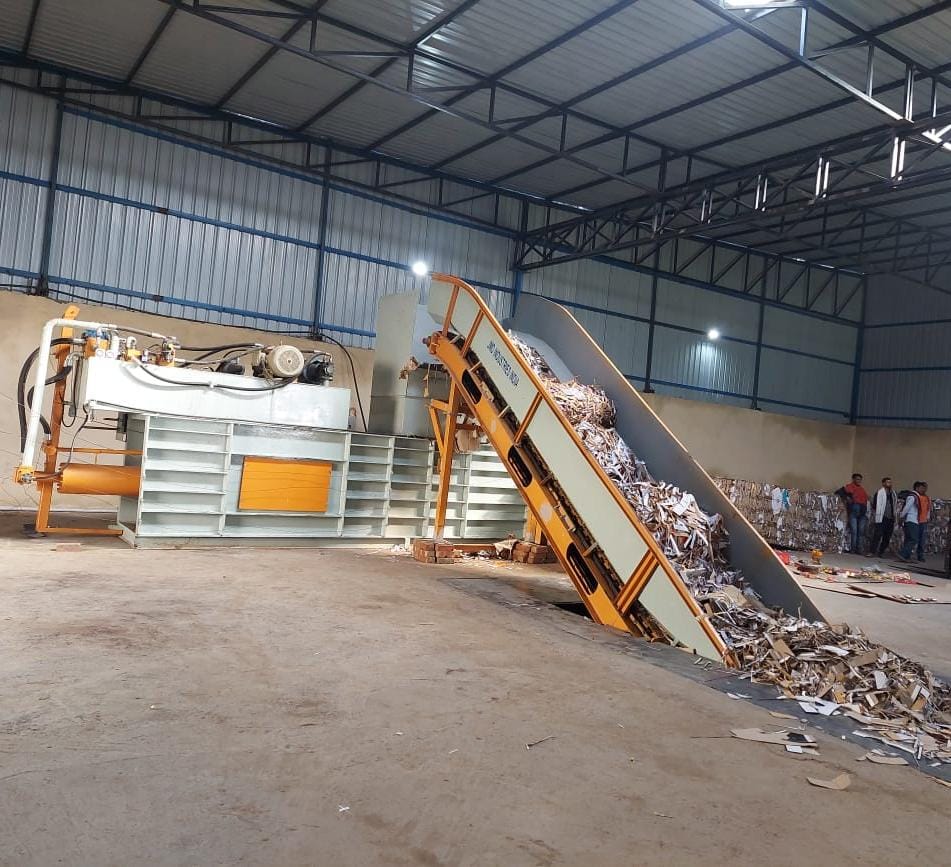
Industrial Waste Paper Baling Machine Suppliers
Introduction
Find trusted industrial waste paper baling machine suppliers who deliver rugged, energy-efficient balers for corrugated cartons, OCC, newsprint, office paper, and mixed recyclables. From compact vertical units to high-throughput auto-tie balers, leading Indian vendors engineer systems that reduce waste volume, slash logistics costs, and streamline back-end recycling.
Why Choose Expert Waste Paper Baler Suppliers
Experienced suppliers combine application engineering, robust fabrication, and responsive service. Expect configurable feed openings, bale weights, and tying options; adherence to safety norms; and fast spares/AMC support. The result is higher uptime, cleaner yards, and a faster payback through optimized bale density and freight efficiency.
Types of Industrial Waste Paper Balers
- Vertical Balers — Space-saving machines for warehouses, retail backrooms, and MSMEs; simple operation and reliable compaction.
- Horizontal Closed-Door Balers — Higher throughput, manual tying; ideal for logistics hubs and material recovery facilities (MRFs).
- Automatic Channel/Auto-Tie Balers — Continuous feeding with automatic wire tying; built for large recyclers and mills.
- Semi-Automatic Balers — Balanced CAPEX/OPEX with powered ejection; great for medium-scale operations.
Key Features Offered by Suppliers
- High-pressure hydraulics for dense, uniform bales that reduce freight costs.
- Custom bale size/weight (e.g., 80–450 kg vertical; 400–800+ kg horizontal).
- Energy-optimized power packs, oil cooling, and auto-idle for lower consumption.
- Safety interlocks, E-stop, shear blades, and overload protection.
- Conveyor/air-duct feeding, bale counters, and remote diagnostics options.
Industries & Applications
- E-commerce and 3PLs compacting OCC and dunnage at fulfillment centers.
- Retail chains, supermarkets, and warehouses managing steady paper waste streams.
- Printing/Packaging units handling trimmings, reels, and sheet offcuts.
- Municipal MRFs and scrap dealers aggregating mixed paper/cardboard.
Benefits of Partnering with the Right Supplier
- Higher bale density → fewer trips, lower transport and handling costs.
- Cleaner operations and safer storage areas with stacked bales.
- Fast installation, operator training, and preventive maintenance plans.
- Local spares and service reduce downtime and lifetime ownership costs.
- Scalable options for future capacity increases and integrated lines.
Choosing a Supplier: What to Evaluate
Match throughput (kg/hr), material mix, and available floor space to the baler type. Review steel thickness, cylinder specs, pump size, and bale tying (wire/PP). Verify references, warranty, AMC terms, and site readiness (power, pit/conveyor, clearances). A clear URS ensures the machine meets your density and logistics targets.
Maintenance & Operational Tips
- Monitor hydraulic oil health and filters every ~500 hours; top up/replace per OEM schedule.
- Grease hinges/guides, check shear blades, and tighten tying systems regularly.
- Train operators on safe loading patterns and interlock checks before every shift.
- Keep a basic spares kit (seals, hoses, wire/PP straps) for quick turnarounds.
- Record bale weights/density to fine-tune pressure settings and maximize ROI.
FAQs – Industrial Waste Paper Baling Machines
1. Which baler type is best for OCC and mixed paper?
+
For low to medium volumes, vertical balers work well. For continuous loads and mill-grade bales, choose horizontal or auto-tie balers with conveyor feeding.
2. What bale weights can I expect?
+
Typical vertical bales range 80–450 kg; horizontal/auto-tie units can exceed 800 kg depending on feed, pressure, and bale dimensions.
3. Is automation worth it for my site?
+
If you have steady inflow and labor constraints, auto-tie balers reduce manual tying time, improve consistency, and increase throughput—often with faster payback.
4. What electrical and floor requirements should I plan for?
+
Plan for 3-phase power, adequate clearances for feeding/ejection, and—if using conveyors—pit or ramp arrangements per layout. Your supplier will share a GA drawing.
5. Do suppliers provide AMC and training?
+
Yes—reputed suppliers offer operator training, preventive maintenance schedules, and AMC packages to maintain density targets and uptime.
Contact Details
Talk to our specialists today for tailored solutions and fast assistance.
Company:
Jmd Baler
WhatsApp:
Chat on WhatsApp
Email:
jmdindustries9412@gmail.com
Website:
www.jmdbaler.com
Address:
PLOT NO 71/72 Avdhesh industrial hub, Bhavda - Bakrol, Bhavda patiya, Ahmedabad, Gujarat.