
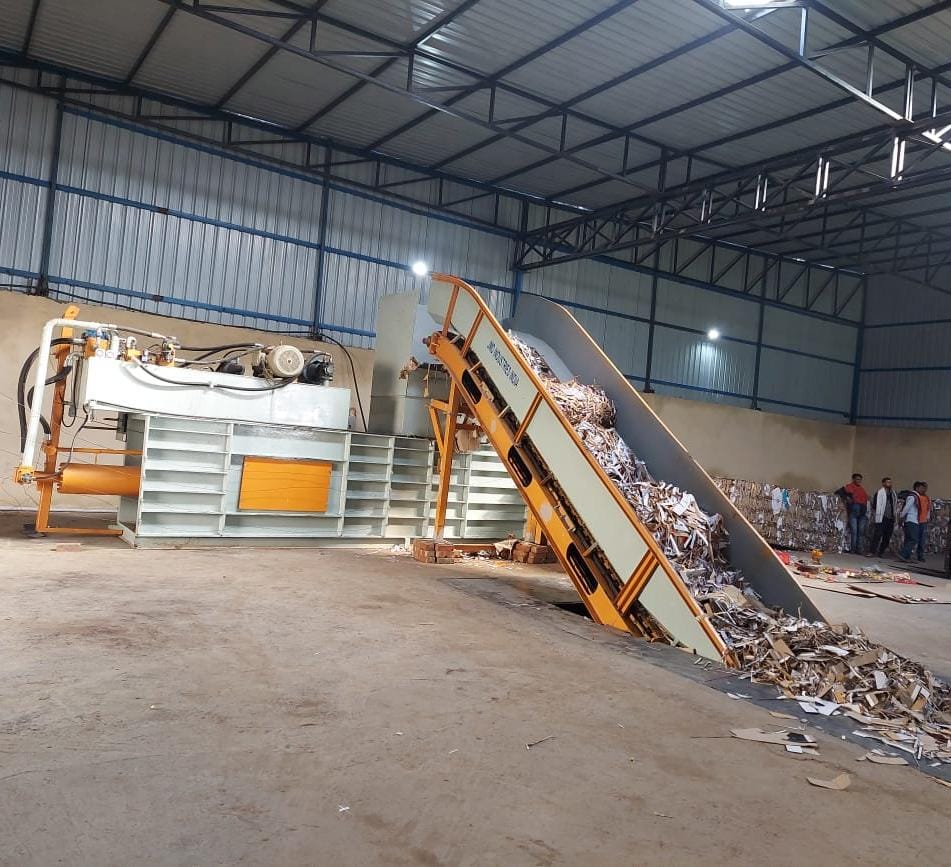
Vertical Baler Machine
Introduction
A Vertical baler machine is a compact, space-saving baling solution designed to compress recyclable and waste materials into dense, easy-to-handle bales. Commonly used for cardboard, paper, plastic film, PET bottles, textile waste, and packaging scrap, vertical balers help businesses reduce waste volume, improve workplace cleanliness, and streamline material handling. With strong hydraulic compression, user-friendly controls, and reliable safety systems, these machines are ideal for warehouses, retail chains, printing units, manufacturing plants, and recycling centers.
Why Choose a Vertical Baler Machine
Vertical balers are preferred for their small footprint, straightforward operation, and efficient bale formation. They support organized storage and faster dispatch of recyclable material, helping businesses cut down transportation frequency and improve waste segregation. For operations with limited space and batch-wise waste generation, a vertical baler machine provides an effective way to create consistent bales without complex automation, while still ensuring high compression and dependable performance.
Types of Vertical Baler Machines Available
- Manual Vertical Baler Machine – Suitable for low to medium waste volumes, with simple controls and manual tying for cost-effective baling.
- Semi-Automatic Vertical Baler – Offers smoother operation with optimized hydraulic cycles and improved bale ejection for faster turnaround.
- Heavy-Duty Vertical Baler – Built for higher compression needs and tougher materials, featuring stronger frames and durable hydraulic components.
- Multi-Material Vertical Baler – Designed to handle cardboard, plastic, textile, and mixed recyclables with flexible bale sizing and strapping.
Key Features of Vertical Baler Machines
- High-Pressure Hydraulic Compression – Produces dense, uniform bales for better handling and storage efficiency.
- Space-Saving Vertical Design – Ideal for facilities with limited floor space and indoor installation requirements.
- Safe and Easy Operation – Operator-friendly controls with emergency stop, safety interlocks, and stable chamber structure.
- Reliable Bale Tying and Ejection – Supports consistent bale formation with secure strapping and smooth ejection mechanism.
- Low Maintenance Build – Strong steel construction and quality components for long service life and reduced downtime.
Industries & Applications of Vertical Baler Machine
- Warehouses and logistics hubs compacting corrugated boxes, stretch film, and packaging waste for cleaner operations and faster dispatch.
- Retail stores and shopping malls managing daily cardboard and plastic waste efficiently with minimal storage requirements.
- Manufacturing units baling scrap from packaging, trimming, and production residues to improve material handling and recycling value.
- Printing, paper, and carton industries compressing paper waste and offcuts into bales for organized storage and transport.
Benefits of Using a Vertical Baler Machine
- Reduces waste volume significantly, helping free up storage space and keep work areas organized.
- Improves recycling efficiency by producing manageable bales that are easy to stack, store, and transport.
- Supports better waste segregation and cleaner handling of cardboard, plastic, textile, and mixed recyclables.
- Minimizes transportation frequency and improves overall waste logistics by increasing load efficiency.
- Enhances workplace safety and hygiene by reducing loose waste and clutter across operational zones.
How to Select the Right Vertical Baler Machine
Selecting the correct vertical baler depends on your waste type, daily volume, available space, and bale handling preferences. Consider chamber size, compression force, bale weight target, strapping method, and ease of loading. Facilities with higher volumes or tougher materials should opt for heavy-duty builds and stronger hydraulics, while retail and small warehouses can benefit from compact manual or semi-automatic models designed for convenience and reliable bale output.
Maintenance & Operational Tips
- Check hydraulic oil level and filtration routinely to maintain consistent compression performance.
- Inspect door locks, safety interlocks, and emergency stop function regularly for safe operation.
- Keep the baling chamber clean and remove material residue to avoid uneven bale formation.
- Grease moving joints and guide points as recommended to reduce wear and improve cycle smoothness.
- Use correct strapping material and follow proper tying procedures to ensure stable bale transport.
FAQs – Vertical Baler Machine
1. What materials can a vertical baler machine handle?
+
Vertical balers commonly handle cardboard, paper, plastic film, PET bottles, textile waste, foam, and general packaging scrap depending on model capacity.
2. Is a vertical baler suitable for small facilities?
+
Yes, vertical balers are ideal for small to medium facilities due to compact installation, simple operation, and efficient batch-wise waste compression.
3. How do I decide the right bale size?
+
Bale size depends on your storage space, transport method, and recycler requirements. Many suppliers can recommend or customize bale dimensions accordingly.
4. What safety features should a vertical baler have?
+
Essential safety features include door safety interlocks, emergency stop, overload protection, stable frame design, and secure locking mechanisms.
5. How often does a vertical baler require maintenance?
+
Basic checks should be done routinely, while periodic servicing depends on operating hours and material load. Regular oil checks and safety inspections help ensure long life.
Contact Details
Talk to our specialists today for tailored solutions and fast assistance.
Company:
Jmd Baler
WhatsApp:
Chat on WhatsApp
Email:
jmdindustries9412@gmail.com
Website:
www.jmdbaler.com
Address:
PLOT NO 71/72 Avdhesh industrial hub, Bhavda - Bakrol, Bhavda patiya, Ahmedabad, Gujarat.