
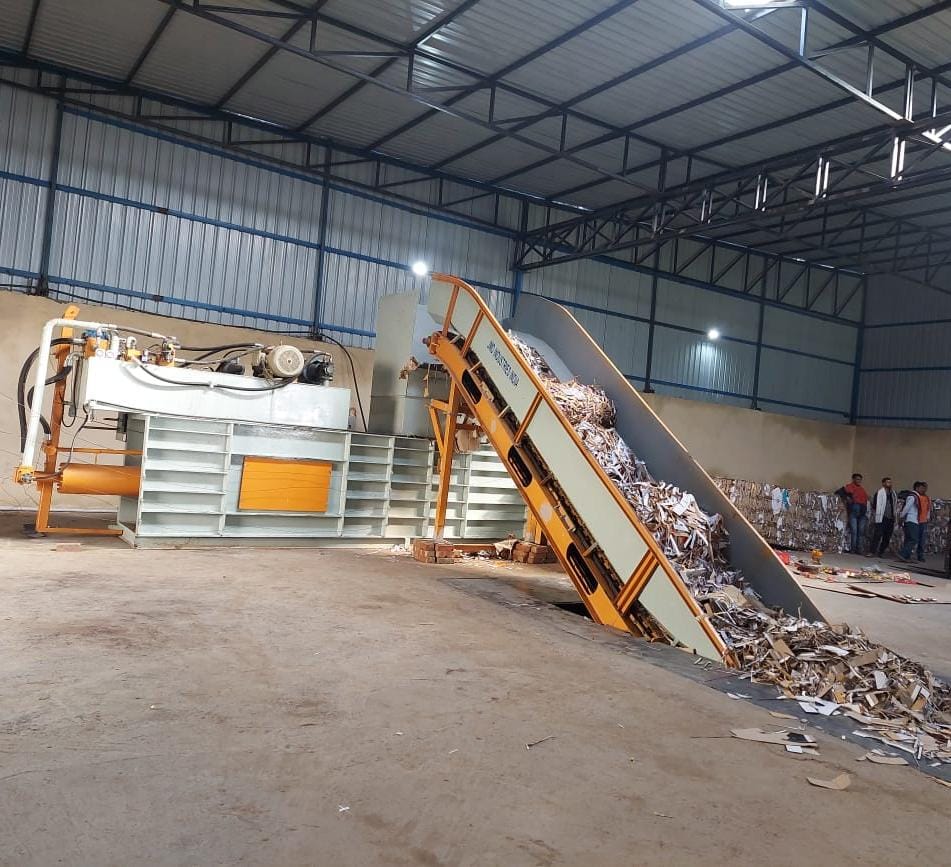
Manual Paper Press Machine
Introduction
A manual paper press machine is a compact, hand-operated solution designed to apply uniform pressure on paper stacks, book blocks, pads, cartons, and craft work. It is widely used in binding houses, print shops, stationery units, schools, and small manufacturing setups where clean creasing, flattening, or pressing is required without complex automation or large power consumption.
Why Industries Prefer Manual Paper Press Machines
Manual paper press machines offer simple operation, low maintenance, and excellent control over pressure. They are ideal for start-ups and small businesses that need dependable finishing quality with minimal investment. From binding and lamination to packaging and prototyping, these presses help keep documents straight, glued products firmly bonded, and craft items consistently finished in a controlled, repeatable way.
Types of Manual Paper Press Machines
- Tabletop manual paper press used for bookbinding, diary making, and note-book pressing in compact spaces like studios and office print rooms.
- Heavy-duty floor-mounted paper press for higher stack heights, thicker materials, and continuous use in commercial printing and binding houses.
- Screw-type manual press that uses a threaded spindle and hand wheel for precise pressure control, suitable for art prints and archival work.
- Toggle and lever-type manual press that offers quick clamping and release for frequent short-run jobs and multi-shift operations.
Key Features of a Manual Paper Press Machine
- Rigid steel frame and machined plates that provide even pressure across the entire paper stack for flat, wrinkle-free results.
- Manual screw, wheel, or lever mechanism that allows the operator to increase or release pressure smoothly as per job requirement.
- Adjustable opening height to accommodate various paper sizes, book thicknesses, cartons, or laminated boards without extra tools.
- Compact footprint and simple construction that fit easily into small workshops, schools, or office finishing departments.
- Low power dependency since the machine is hand operated, reducing operating costs and allowing use in areas with limited electricity.
Applications of Manual Paper Press Machine
- Bookbinding and notebook manufacturing where glued or stitched blocks are pressed to achieve firm bonding, uniform thickness, and professional finishing before final trimming or cover fitting.
- Commercial printing units that need to flatten printed sheets, laminated covers, brochures, or cartons after gluing to avoid bubbles, warping, or misalignment in the finished product.
- Stationery, diary, and calendar manufacturers that press sets of papers, pads, and cover assemblies to ensure neat edges and long-lasting binding performance.
- Art, craft, and educational institutions where handmade paper, prints, and craft models are pressed to maintain shape, remove trapped air, and improve surface quality.
Benefits of Using a Manual Paper Press Machine
- Lower initial investment compared to fully automatic presses, making it suitable for start-ups, job work units, and small-scale enterprises.
- Easy-to-learn operation that requires minimal training, allowing multiple team members to handle pressing tasks without complex controls.
- Precise, operator-controlled pressure that helps avoid over-compression or damage to printed sheets, artwork, or delicate paper products.
- Quiet, clean operation without heavy electrical loads or hydraulic systems, ideal for indoor environments and noise-sensitive spaces.
- Long service life due to simple mechanical design, with reduced downtime and straightforward replacement of wear parts like bushes and bearings.
Manual Paper Press Machine Suppliers in India
In India, trusted suppliers provide manual paper press machines in different sizes, capacities, and plate dimensions to match binding and printing workloads. Many manufacturers also offer custom designs for specific formats such as ledgers, school notebooks, premium diaries, and craft boards. When selecting a supplier, focus on build quality, alignment accuracy, after-sales service, and availability of spares to ensure smooth, long-term operation in demanding production environments.
Maintenance and Operating Tips for Manual Paper Press Machines
- Keep the top and bottom plates clean from glue, dust, and paper particles to avoid impressions or marks on the pressed paper surfaces.
- Lubricate screw threads, pivots, and moving joints at recommended intervals so that the hand wheel or lever operates smoothly under load.
- Check alignment of plates regularly to ensure uniform contact across the job area, especially after shifting the machine or handling heavy stacks.
- Train operators to increase pressure gradually and avoid sudden force that may misalign paper stacks or damage delicate printed material.
- Inspect fasteners, handles, and safety stops, tightening them whenever necessary and replacing worn components before they cause downtime.
FAQs – Manual Paper Press Machine
Frequently Asked Questions
1. What is a manual paper press machine used for?
+
A manual paper press machine is used to apply even pressure on paper stacks, book blocks, cartons, and crafted material for flattening, bonding, and finishing in printing, binding, and stationery applications.
2. Which industries commonly use manual paper presses?
+
Typical users include bookbinders, commercial printers, notebook manufacturers, stationery units, educational institutions, and craft studios that need reliable pressing without large automatic equipment.
3. How do I select the right size of manual paper press machine?
+
Choose plate size and opening height based on maximum paper size, block thickness, and daily workload. Consider future growth, available floor space, and operator convenience before finalizing the model with your supplier.
4. Is a manual paper press suitable for continuous production?
+
For small and medium batch work, manual presses perform reliably throughout the day. For very high volumes or heavy boards, you may combine manual presses with additional units or explore semi-automatic solutions as production grows.
5. What kind of maintenance does a manual paper press require?
+
Basic maintenance includes periodic cleaning, lubrication of moving parts, checking alignment, and tightening fasteners. With simple care, a good-quality manual paper press machine can serve for many years in daily use.
Contact Details
Talk to our specialists today for tailored solutions and fast assistance.
Company:
Jmd Baler
WhatsApp:
Chat on WhatsApp
Email:
jmdindustries9412@gmail.com
Website:
www.jmdbaler.com
Address:
PLOT NO 71/72 Avdhesh industrial hub, Bhavda - Bakrol, Bhavda patiya, Ahmedabad, Gujarat.