
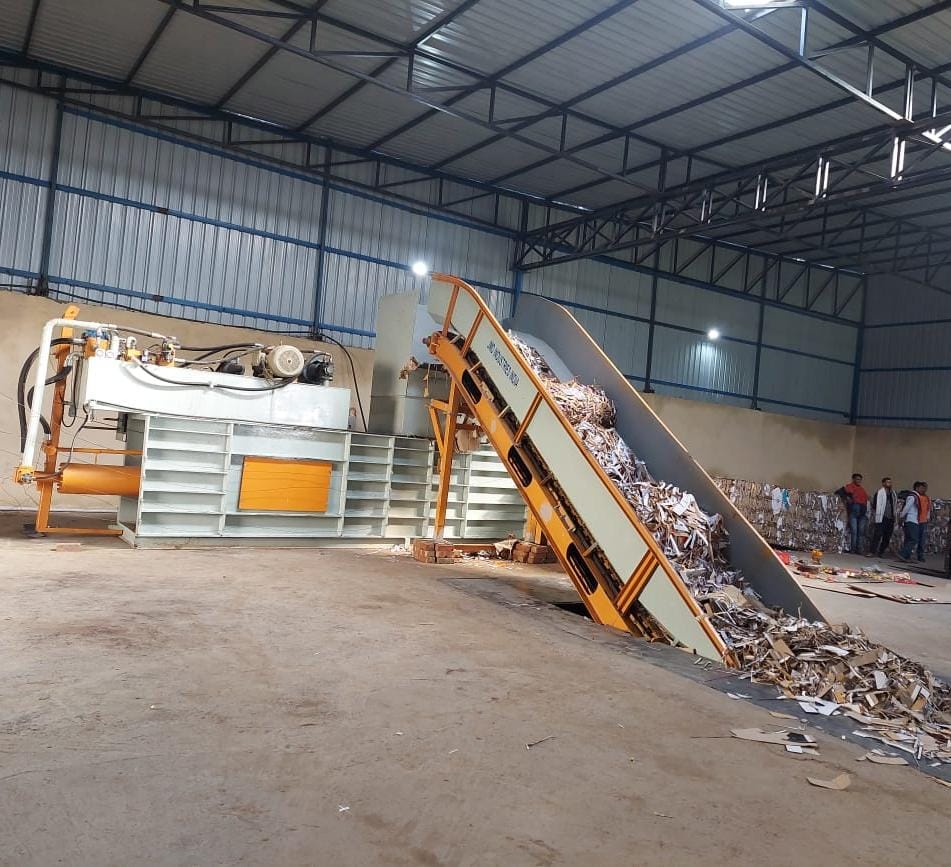
Scrap Baling Machine Manufacturer for Metal and Industrial Waste Compaction
High-Performance Scrap Balers Built for Recycling Yards and Heavy Industries
A scrap baling machine is designed to compress loose scrap into dense, uniform bales that are easier to store, transport, and process. As a Scrap Baling Machine manufacturer, we build robust hydraulic balers that support day-to-day scrap handling in recycling yards, fabrication units, foundries, engineering plants, and large warehouses. These machines help reduce scrap volume significantly while improving safety and material management. With optimized pressing geometry and reliable hydraulic power, scrap balers deliver consistent bale density for better loading efficiency and faster downstream recycling operations.
Working Principle of a Hydraulic Scrap Baler
Scrap is loaded into the baling chamber through manual feeding, conveyors, or cranes depending on site workflow. A hydraulic system drives heavy-duty rams that compress the scrap in multiple stages to form a tight bale. Once the bale reaches the required compaction level, it is tied or held as per design and then ejected for stacking or dispatch. Proper pressure control, guided ram movement, and durable chamber construction ensure stable performance for mixed scrap and variable material thickness. This compression process improves recovery logistics and creates standardized bales for recycling buyers.
Types of Scrap Baling Machines Used in Industry
- Hydraulic Metal Scrap Baler: Suitable for MS scrap, SS scrap, fabrication offcuts, and mixed industrial scrap.
- Aluminum Can and Light Scrap Baler: Designed for lighter materials where high bale count and quick cycles are needed.
- Horizontal Scrap Baler: Supports continuous feeding and high throughput for medium to large scrap processing facilities.
- Vertical Scrap Baler: A compact solution for smaller yards, workshops, and facilities with limited space.
Key Features of Our Scrap Baling Machines
- High Compaction Force: Produces dense bales for improved transport loading and reduced storage footprint.
- Rugged Chamber Construction: Heavy structure and wear-resistant plates support long working life in tough conditions.
- Stable Hydraulic Performance: Optimized hydraulic circuit improves pressing consistency and cycle reliability.
- Operator Safety Focus: Reliable guarding, controls, and practical safety features reduce risk during operation.
- Consistent Bale Output: Uniform bale shape supports easier stacking, weighing, and dispatch planning.
Applications of Scrap Baling Machines
- Metal Recycling Yards: Compaction of mixed metal scrap to improve storage organization and dispatch efficiency.
- Fabrication and Engineering Units: Pressing of cutting scrap, sheet offcuts, and process waste into manageable bales.
- Automotive and Component Plants: Handling of production scrap and reject parts for controlled recycling flow.
- Foundries and Casting Units: Scrap consolidation for better inventory control and cleaner yard management.
Benefits of Using a Scrap Baler in Daily Operations
- Reduces Scrap Volume: Enables cleaner premises and more effective yard space utilization.
- Improves Transport Efficiency: Dense bales reduce trips and maximize truck or container loading.
- Enhances Safety and Handling: Organized bales reduce scattered scrap hazards and simplify movement.
- Supports Better Recycling Value: Standardized bales are preferred by many recyclers for processing and logistics.
Choosing the Right Scrap Baler for Your Material Flow
The right baler depends on scrap type, throughput, feeding method, and required bale size. Facilities handling high daily volume typically choose horizontal balers for continuous operation. Smaller sites with periodic scrap generation may benefit from vertical balers. For heavy metal scrap, a reinforced chamber and robust ram design are essential. A proper selection ensures stable compaction, consistent output, and smooth integration with cranes, conveyors, or forklifts.
Maintenance and Safe Operating Practices
- Check hydraulic oil level and cleanliness at regular intervals to maintain smooth pressing cycles.
- Inspect hoses, fittings, and seals for leakage and replace worn components before failure.
- Keep the baling chamber free from hard obstructions that can damage wear plates or rams.
- Train operators on loading methods, safe distance, and emergency stop procedures.
FAQs – Scrap Baling Machine Manufacturing and Selection
1. What scrap materials can be processed in a scrap baling machine?
+
Scrap balers can handle MS and SS offcuts, mixed metal scrap, aluminum cans, packaging scrap, and various industrial waste streams depending on model and chamber design.
2. How does a scrap baler improve recycling operations?
+
By compressing loose scrap into dense bales, it simplifies storage, reduces transport volume, and creates standardized bundles that are easier to process and dispatch.
3. Should I choose a vertical or horizontal scrap baler?
+
Vertical balers suit smaller facilities with limited space, while horizontal balers are preferred for higher throughput and continuous scrap feeding in larger recycling operations.
4. What are the common safety considerations for scrap balers?
+
Key considerations include safe loading practices, proper guarding, emergency stop access, regular hydraulic inspection, and operator training to reduce handling and pressing risks.
Contact Details
Talk to our specialists today for tailored solutions and fast assistance.
Company:
Jmd Baler
WhatsApp:
Chat on WhatsApp
Email:
jmdindustries9412@gmail.com
Website:
www.jmdbaler.com
Address:
PLOT NO 71/72 Avdhesh industrial hub, Bhavda - Bakrol, Bhavda patiya, Ahmedabad, Gujarat.