
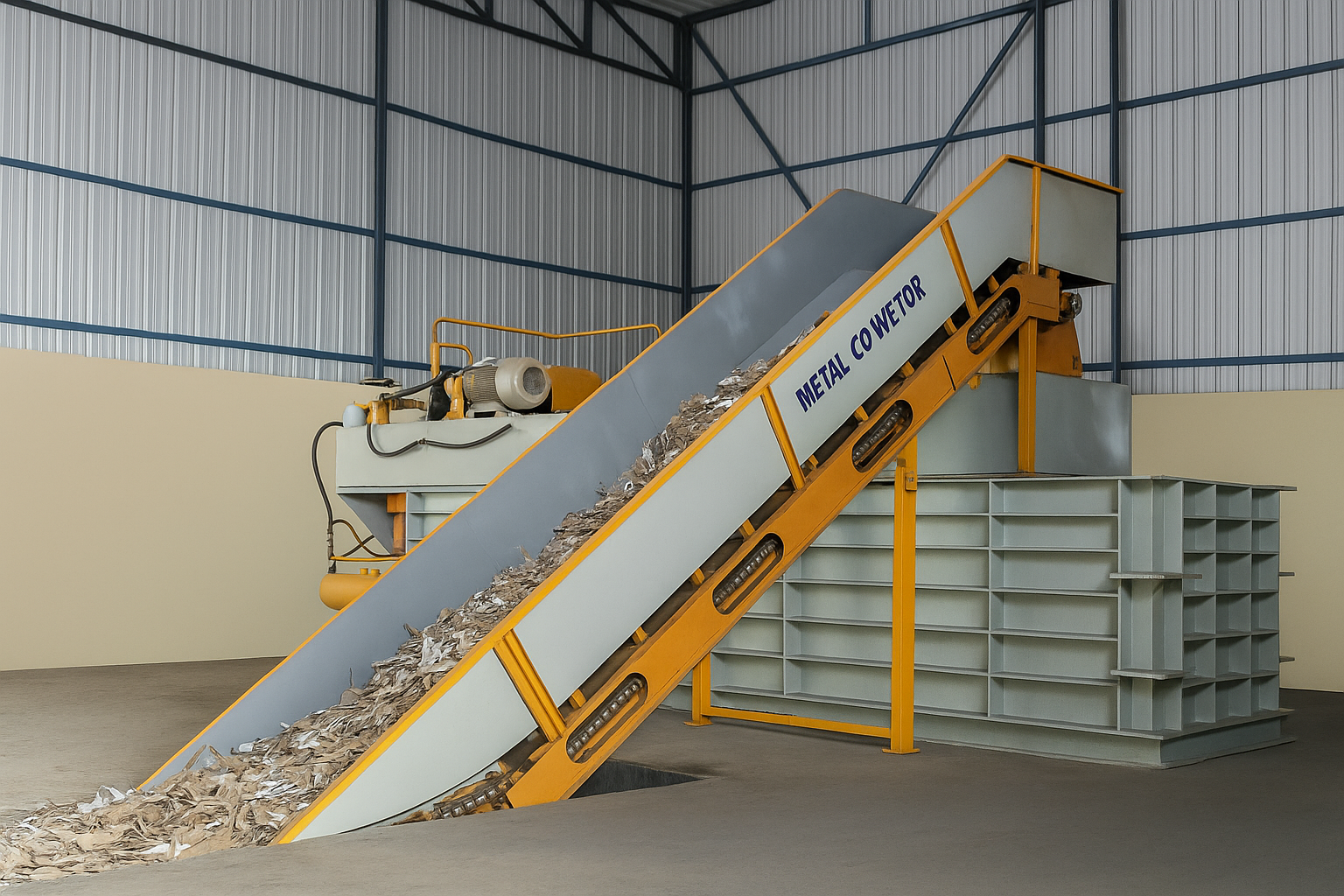
Small Hydraulic Vertical Baling Press
A small hydraulic vertical baling press is the best compact solution for compressing recyclables into neat, high-density bales where space is limited. These machines are widely used by warehouses, retail outlets, offices, printing units, and small manufacturing facilities that generate regular cardboard, paper, plastic film, and soft dry waste. Jmd Baler supplies durable small vertical balers engineered for stable compression, safer operation, and uniform bale shape—so waste handling becomes easier, cleaner, and more cost-effective.
What Makes a Small Vertical Baling Press Ideal
Small vertical balers are designed with a compact chamber and efficient hydraulic power pack, delivering consistent force for daily waste compaction. They reduce loose waste volume drastically, helping you free up valuable floor area and avoid messy storage. With simple loading, controlled compression, and secure tying, these balers produce uniform bales that are easier to stack, move, and dispatch for recycling—improving housekeeping and overall workflow.
Types of Small Hydraulic Vertical Balers
- Compact Entry-Level Vertical Baler – Best for light waste like cartons, paper, packaging trim, and soft plastic wrap.
- Small Semi-Automatic Vertical Baler – Enhanced safety controls and quicker cycles for busy warehouses and retail backrooms.
- Compact Heavy-Duty Vertical Baler – Reinforced chamber for higher bale density and longer continuous daily operation.
- Custom Small Vertical Baling Press – Designed for specific waste streams such as film, textile scrap, or mixed dry recyclables.
Key Features You Get
- Space-saving footprint suitable for tight sites, backrooms, and small waste collection corners.
- Hydraulic compression for consistent bale density and reliable daily performance.
- Rugged steel structure for long service life in industrial and commercial environments.
- Operator-friendly control system for smooth operation with reduced training requirement.
- Efficient bale tying arrangement for better bale stability during storage and transport.
- Low maintenance design with easy access to routine inspection points and service support.
Applications & Industries
- Retail stores, supermarkets, and malls compacting cardboard boxes and plastic wrap for clean backroom management.
- Warehouses, logistics hubs, and e-commerce units handling packaging waste daily and needing quick compaction.
- Offices, schools, and institutions compressing paper waste into manageable bales for organized disposal.
- Printing and packaging units baling paper trim, cartons, and corrugated waste for resale and transport efficiency.
- Small manufacturing units compacting plastic scrap, film, and dry recyclables to reduce clutter and improve housekeeping.
- Scrap aggregators and local recyclers creating uniform bales for easier loading, dispatch, and sale.
Benefits of a Small Hydraulic Vertical Baling Press
- Reduces waste volume significantly, freeing up storage space and improving workplace cleanliness.
- Produces uniform bales that are easier to stack, handle, and transport with reduced labor effort.
- Improves recycling value because buyers prefer compact, well-shaped, and consistent bales.
- Minimizes frequent waste pickups by compressing more material into less space.
- Supports safer waste handling with controlled compression and organized tying procedures.
- Delivers a cost-effective solution for small-to-medium waste generators seeking reliable compaction.
How to Choose the Right Small Vertical Baler
The right model depends on your waste type (cardboard, paper, film, sacks), daily volume, available floor space, and the bale size you need for transport. For retail and office waste, compact models are usually sufficient, while warehouses and recyclers may prefer a more robust chamber for higher density. If you share your material type, estimated daily waste, and preferred bale dimensions, our team can recommend the best-fit solution for efficient, long-term use.
Maintenance & Safe Operation Tips
- Check hydraulic oil level and keep it clean for stable compression force and smoother cycle performance.
- Inspect hoses, fittings, and seals regularly to prevent leakage and avoid unexpected downtime.
- Load materials evenly inside the chamber for consistent bale shape and better tying results.
- Keep guide rails and moving parts lubricated to reduce wear and ensure smooth platen movement.
- Train operators on tying and ejection steps to avoid handling risks and ensure safe daily operation.
FAQs – Small Hydraulic Vertical Baling Press
1. Which waste materials can a small vertical baler compress?
+
Small vertical balers commonly compress cardboard, paper, cartons, plastic film (LDPE/HDPE), fabric scraps, and selected dry recyclables depending on the model and chamber size.
2. Is a small vertical baler suitable for limited space areas?
+
Yes. Small vertical balers are designed for compact installation, making them ideal for backrooms, warehouses, and work areas where space is limited.
3. How do I decide the correct size and capacity?
+
Consider the daily waste volume, type of material, and preferred bale size for transport. Sharing this information helps us recommend the best-fit model.
4. What are the advantages of baling waste instead of loose storage?
+
Baling reduces waste volume, improves storage cleanliness, reduces handling labor, and produces uniform bales that are easier to move, stack, and sell to recyclers.
5. What routine maintenance is required?
+
Routine maintenance includes checking hydraulic oil, inspecting hoses and seals, lubricating moving parts, and keeping the chamber clean for consistent and safe performance.
Contact Details
Talk to our specialists today for tailored solutions and fast assistance.
Company:
Jmd Baler
WhatsApp:
Chat on WhatsApp
Email:
jmdindustries9412@gmail.com
Website:
www.jmdbaler.com
Address:
PLOT NO 71/72 Avdhesh industrial hub, Bhavda - Bakrol, Bhavda patiya, Ahmedabad, Gujarat.