
Jmd Industries · Industrial Blog
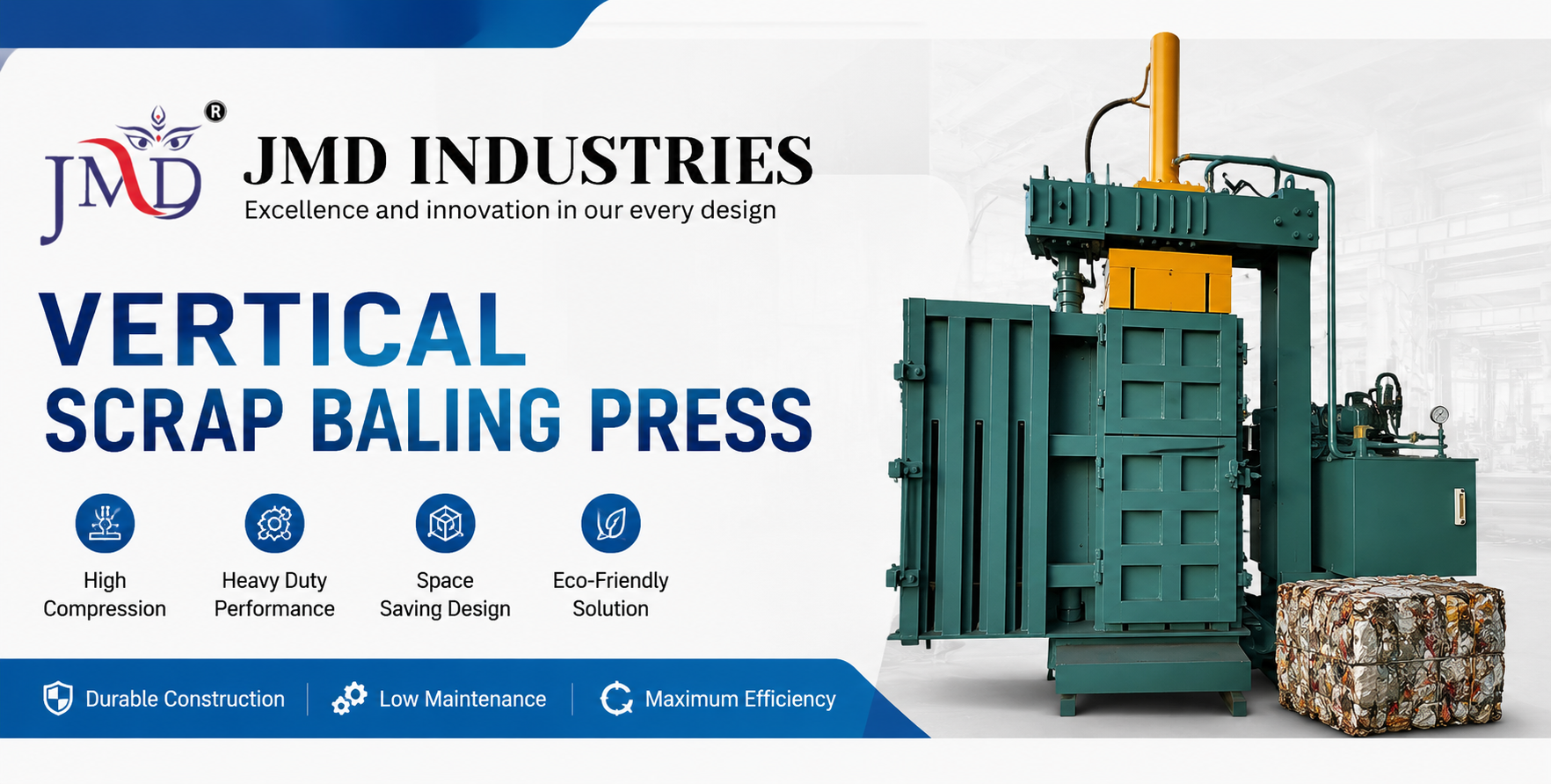
Vertical Scrap Baling Press
Jmd Industries offers robust Vertical Scrap Baling Presses in Ahmedabad, Gujarat. Optimize waste management, reduce costs, and enhance recycling efficiency for
Why This Matters in Ahmedabad, Gujarat
Ahmedabad, a prominent industrial and commercial hub in Gujarat, experiences continuous growth in manufacturing, textiles, packaging, and various service industries. This expansion naturally leads to an increased volume of recyclable waste materials such as paper, cardboard, plastics, and PET bottles. Local businesses face pressure to optimize their waste handling processes to comply with environmental regulations, reduce operational footprints, and contribute to the circular economy. Implementing effective baling solutions directly addresses these local demands, supporting sustainable practices within the region's dynamic industrial landscape.
What is a Vertical Scrap Baling Press — Overview
A vertical scrap baling press is a hydraulic machine designed to compress various loose waste materials into compact, uniform bales. Unlike horizontal balers, vertical models operate with a smaller footprint, making them suitable for facilities with limited space. Materials are loaded into the chamber from the top, and a powerful hydraulic ram descends vertically to compact the waste. Once the desired bale density is achieved, the bale is tied off and ejected, ready for storage, transport, or further processing. These machines are fundamental tools in modern waste management and recycling operations.
Key Features and Technical Specifications
- Robust Hydraulic Compaction System: Utilizes high-pressure hydraulics to achieve dense, stable bales, reducing material volume significantly.
- Compact Vertical Design: Occupies minimal floor space, ideal for smaller warehouses, retail backrooms, or manufacturing facilities.
- User-Friendly Control Panel: Intuitive controls for easy operation, including start, stop, and emergency shut-off functions.
- Safety Interlocks and Guards: Incorporates multiple safety mechanisms to protect operators during loading and baling cycles.
- Efficient Bale Ejection: Designed for straightforward and safe removal of finished bales, often with semi-automatic or automatic ejection options.
- Durable Steel Construction: Built with heavy-duty steel frames and components to withstand continuous industrial use and demanding materials.
- Adjustable Bale Size and Weight: Allows for customization of bale dimensions to meet specific transport or recycling facility requirements.
- Energy-Efficient Motor: Optimized motor and pump configurations to provide necessary power while minimizing electricity consumption.
Industrial Applications and Use Cases
- Paper and Cardboard Recycling: Compacting corrugated boxes, newspapers, magazines, and mixed paper from retail stores, offices, and printing houses.
- PET Bottle Compaction: Reducing the volume of plastic beverage bottles for easier storage and transport to recycling plants.
- Plastic Film and Packaging: Baling stretch film, shrink wrap, and other plastic packaging materials generated in logistics and manufacturing.
- Textile Waste Management: Compressing fabric scraps, discarded clothing, and other textile by-products from garment factories.
- Aluminum Can Recycling: Efficiently baling used beverage cans (UBCs) from collection centers and commercial establishments.
- Small Metal Scraps: Handling light metal offcuts or shavings from fabrication shops, making them safer and more manageable.
- Agricultural Waste: Compacting certain types of agricultural by-products, such as hay or straw, for storage or biomass processing.
How to Choose the Right Vertical Scrap Baling Press
Selecting an appropriate vertical scrap baling press requires careful consideration of several operational factors. The right machine will align with your specific waste stream, operational scale, and long-term sustainability goals. Evaluating these points ensures a sound investment that delivers consistent performance and value.
- Material Type and Volume: Assess the primary materials you need to bale and their daily or weekly volume. Different materials require varying compaction forces and chamber sizes.
- Bale Size and Weight Requirements: Determine the optimal bale dimensions and weight for your logistics, storage capacity, and the specifications of your chosen recycling partner.
- Available Space: Measure the exact footprint available for the baler, including clearance for loading, operation, and bale ejection, given the vertical design.
- Hydraulic Power and Pressure: Understand the machine's hydraulic capabilities, as this directly impacts bale density and the range of materials it can effectively process.
- Safety Features: Prioritize balers equipped with comprehensive safety interlocks, emergency stops, and protective guarding to ensure operator well-being.
- Ease of Operation and Maintenance: Look for intuitive controls and designs that simplify loading, tying, and routine maintenance tasks, reducing training time and downtime.
- Supplier Experience and Support: Choose a manufacturer with a proven track record, offering reliable after-sales service, spare parts availability, and technical assistance.
- Customization Options: Inquire about potential modifications for specific material types, power requirements, or integration into existing waste handling systems.
Quality Standards and Compliance
Ensuring a vertical scrap baling press meets relevant quality standards and compliance benchmarks is crucial for operational safety, reliability, and longevity. Buyers should verify that the equipment adheres to established manufacturing and safety norms. This often includes compliance with ISO 9001 for quality management systems, which indicates a manufacturer's commitment to consistent product quality. Additionally, machines should meet local electrical and mechanical safety regulations, such as those outlined by Indian Standards (IS) where applicable, to prevent accidents and ensure safe operation. Always request documentation and certifications from the supplier to confirm these standards are met.
Why Company Experience and Capability Matters
The long-term performance and reliability of a vertical scrap baling press are directly linked to the experience and capability of its manufacturer. Jmd Industries, with over 15 years in the industry and more than 250 successful installations, brings a deep understanding of waste management challenges. Our manufacturing process emphasizes robust structural design and advanced hydraulic technology, ensuring each machine delivers consistent compaction force and operational stability. We focus on precise engineering and rigorous quality control at every stage, from material selection to final assembly. This commitment allows us to offer customization options that precisely match specific material types and operational demands, providing solutions that are both effective and durable. Our experienced team also provides essential after-sales support, ensuring reliable operation and maximizing the lifespan of the equipment.
Installation, Maintenance and Care Tips
Proper installation and consistent maintenance are key to maximizing the lifespan and efficiency of any vertical scrap baling press. Begin by ensuring the installation site has a level, reinforced concrete foundation capable of supporting the machine's weight and operational forces. Professional installation by qualified technicians is highly recommended to ensure correct electrical connections, hydraulic setup, and safety system calibration.
For ongoing care, regular checks of hydraulic fluid levels and quality are essential, along with scheduled filter replacements to prevent system contamination. Lubricate all moving parts, such as hinges and ram guides, according to the manufacturer's recommendations to reduce wear. Keep the baling chamber and surrounding areas clean, removing any material buildup that could impede operation or pose a fire hazard. Always conduct pre-operation safety checks, including verifying emergency stop functionality and the integrity of safety guards. Proper operator training on safe loading procedures, bale tying, and emergency protocols is also critical for preventing accidents and ensuring efficient use.
Frequently Asked Questions
Vertical balers are versatile machines capable of processing a wide range of recyclable materials. Common materials include cardboard, various types of paper (newsprint, mixed paper), plastic films, PET bottles, aluminum cans, and certain textile wastes. The specific capacity and compaction force of the machine determine its effectiveness with denser or more rigid materials.
Baling scrap materials offers several key advantages for businesses. It significantly reduces the volume of waste, saving valuable floor space and lowering transportation costs. Bales are easier and safer to handle, store, and transport, improving operational efficiency. Furthermore, baling enhances the value of recyclable materials, making them more attractive to recycling facilities.
One of the main advantages of a vertical baler is its compact footprint compared to horizontal models. While dimensions vary by model and capacity, they are designed to fit into smaller spaces, often against a wall. It's important to consider not just the machine's footprint but also adequate clearance for loading, operation, and bale ejection.
Crucial safety features include emergency stop buttons that are easily accessible, safety interlocks on loading doors to prevent operation when open, and protective guarding around moving parts. Hydraulic pressure relief valves and robust structural design also contribute to safe operation. Always ensure the machine complies with relevant industrial safety standards.
The frequency of maintenance depends on usage intensity and the type of materials processed. Generally, daily visual inspections for wear and tear, weekly cleaning of the chamber, and monthly checks of hydraulic fluid and lubrication points are recommended. Annual professional servicing is advisable to inspect critical components, recalibrate systems, and replace worn parts.
Many manufacturers, including Jmd Industries, offer customization options for vertical baling presses. This can include variations in bale size and weight, specific motor power requirements, different loading mechanisms, or specialized coatings for corrosive materials. Customization ensures the machine perfectly aligns with a business's unique waste stream and operational environment.
Conclusion
Efficient management of scrap and recyclable materials is a cornerstone of sustainable business operations, particularly in industrial centers like Ahmedabad, Gujarat. A vertical scrap baling press provides a robust and space-saving solution for compacting diverse waste streams, leading to reduced operational costs, improved logistics, and a smaller environmental footprint. Choosing the right equipment involves a careful assessment of material types, volume, and available space, alongside a thorough evaluation of the manufacturer's experience and commitment to quality. Partnering with a knowledgeable and capable supplier ensures access to reliable machinery and essential support, contributing to a more streamlined and environmentally responsible waste management process.
Get In Touch
Jmd Industries