
Jmd Industries · Industrial Blog
Vertical Waste Baling Machine
Find robust vertical waste baling machines in Ahmedabad. JMD Industries offers efficient, durable solutions for recycling and waste management.
What is a Vertical Waste Baling Machine? — Overview
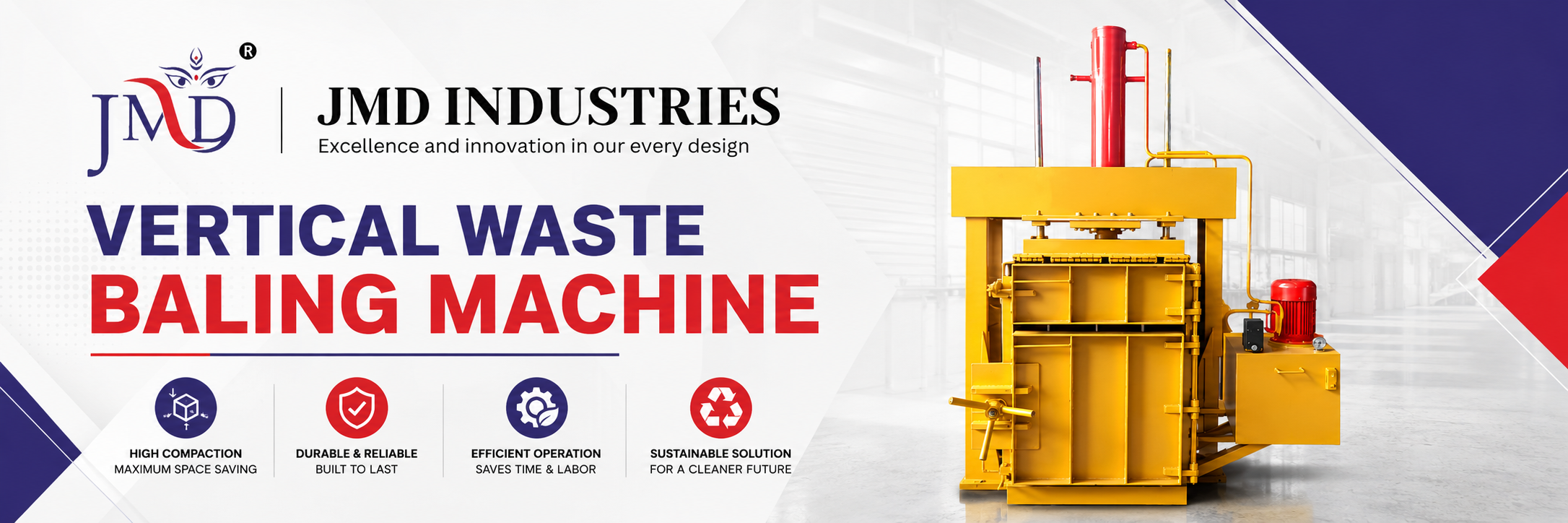
A vertical waste baling machine, often referred to as a vertical baler, is a piece of industrial equipment designed to compress various types of waste materials into compact bales. Unlike horizontal balers, these machines operate with a vertical ram that presses down into a chamber, compacting the material. They are particularly suited for businesses with limited space or lower volumes of waste that still require efficient compaction. The process typically involves loading loose waste into the chamber, closing the door, and activating the hydraulic system to compress the material. Once a desired bale size or density is achieved, the bale is tied off and ejected.
Key Features and Technical Specifications
- Compact Footprint: Designed to fit into smaller operational areas, ideal for businesses with space constraints.
- Hydraulic Power System: Utilizes robust hydraulic cylinders for powerful and consistent compaction force.
- Manual Tie-Off: Bales are typically tied off manually using wire or strapping after compaction.
- Safety Interlocks: Equipped with safety features to prevent operation when doors are open.
- Durable Construction: Built with heavy-duty steel for longevity and resistance to wear.
- Adjustable Bale Size: Some models offer flexibility in bale dimensions to suit specific needs.
- User-Friendly Operation: Simple controls ensure ease of use for operators.
- Low Power Consumption: Efficient design minimizes energy usage during operation.
Industrial Applications and Use Cases
- Recycling Centers: Compacting cardboard, paper, plastic films, and PET bottles for efficient storage and sale.
- Retail Stores: Managing cardboard packaging waste from deliveries and product displays.
- Manufacturing Units: Compacting scrap materials, plastic offcuts, and packaging waste.
- Textile Industries: Baling fabric scraps and waste materials.
- Warehousing and Logistics: Handling large volumes of packaging waste like stretch wrap and cardboard.
- Small to Medium Enterprises (SMEs): Providing an accessible waste compaction solution for businesses with moderate waste streams.
- Food Processing Plants: Compacting plastic containers and cardboard waste.
- Hospitals and Institutions: Managing general waste and recyclable materials.
How to Choose the Right Vertical Waste Baling Machine
Selecting the appropriate vertical baling machine is crucial for maximizing efficiency and return on investment. Consider these factors:
- Waste Material Type: Different machines are optimized for specific materials like cardboard, plastic, or general waste.
- Volume of Waste: Assess your daily or weekly waste generation to determine the required throughput and chamber size.
- Bale Size and Weight Requirements: Consider where the bales will be stored and how they will be transported.
- Available Space: Measure your operational area to ensure the machine's footprint is suitable.
- Required Compaction Force: Higher force is needed for denser materials like plastics or metals.
- Power Supply: Ensure compatibility with your existing electrical infrastructure.
- Safety Features: Prioritize machines with robust safety interlocks and emergency stops.
- Supplier Support: Look for a manufacturer with a strong reputation for after-sales service, maintenance, and spare parts availability.
- Customization Options: If you have unique requirements, inquire about the possibility of custom modifications.
Quality Standards and Compliance
When investing in a vertical waste baling machine, verifying its adherence to quality standards is essential for ensuring safety, reliability, and performance. Look for manufacturers who build their machines in accordance with relevant Indian Standards (IS) or international standards like ISO. Compliance with safety regulations is paramount; machines should feature essential safety interlocks, emergency stop buttons, and clear operational guidelines. A reputable supplier will be transparent about the materials used, the manufacturing processes, and any certifications their equipment holds, providing buyers with the confidence that they are acquiring a durable and safe piece of machinery.
Why JMD Industries' Experience and Capability Matters
At JMD Industries, our extensive experience in manufacturing waste management equipment, particularly vertical baling machines, sets us apart. With over 15 years in the field, we have developed a deep understanding of the challenges faced by businesses in Ahmedabad and across Gujarat. Our manufacturing process emphasizes robust engineering, utilizing high-grade materials and advanced hydraulic technology to ensure each machine is built for durability and consistent performance. Our team comprises skilled engineers and technicians dedicated to quality control at every stage, from design to final assembly.
We pride ourselves on our ability to deliver reliable solutions that optimize space, reduce labor, and enhance productivity for our clients. Our commitment extends beyond manufacturing; we offer comprehensive support, ensuring our machines integrate seamlessly into your operations and continue to perform efficiently over their lifespan. This dedication to engineering excellence and customer satisfaction is why JMD Industries is a trusted name for waste baling solutions.
Installation, Maintenance, and Care Tips
Proper installation and regular maintenance are key to the longevity and optimal performance of your vertical waste baling machine.
- Installation: Ensure the machine is installed on a level, stable surface capable of supporting its weight and operational forces. Connect it to an appropriate power source as per the manufacturer's specifications. Familiarize all operators with the safety features and operating procedures before use.
- Daily Checks: Before each use, inspect the machine for any visible damage, loose parts, or hydraulic leaks. Ensure safety guards are in place and functioning correctly.
- Regular Lubrication: Lubricate moving parts, such as the ram guides and pivot points, as recommended in the operation manual to prevent wear and ensure smooth movement.
- Hydraulic Fluid: Monitor hydraulic fluid levels regularly and top up with the recommended fluid type. Schedule periodic fluid changes to maintain system efficiency and prevent contamination.
- Cleaning: Keep the baling chamber and surrounding areas clean to prevent material buildup, which can impede operation and create safety hazards.
- Tying Mechanism: Ensure the wire or strapping used for tying bales is of the correct type and tension.
- Professional Servicing: Schedule periodic professional inspections and servicing to identify and address potential issues before they become major problems.
Frequently Asked Questions
Vertical baling machines are versatile and can handle a wide range of recyclable materials. Common materials include cardboard, paper, plastic films, PET bottles, textiles, and general waste. The specific material suitability often depends on the machine's compaction force and chamber design.
Vertical balers are known for their compact design, making them ideal for space-limited environments. While specific dimensions vary by model, they generally have a smaller footprint compared to horizontal balers, often requiring just enough space for the machine itself and clearance for bale ejection and tying.
Vertical balers are generally best suited for low to moderate volumes of waste. For very high-volume operations, a horizontal baling press might offer greater efficiency and throughput. However, for businesses with consistent but not overwhelming waste streams, a vertical baler provides an effective and accessible solution.
Bale size and weight can vary significantly depending on the specific model and the material being baled. However, typical bales can range from approximately 200 kg to 500 kg or more, with dimensions optimized for easy handling and storage. Manufacturers provide detailed specifications for each model.
Routine maintenance includes regular cleaning of the baling chamber, lubrication of moving parts, checking hydraulic fluid levels, and inspecting safety features. Periodic professional servicing is also recommended to ensure the hydraulic system and mechanical components remain in optimal condition.
By compacting waste into dense bales, vertical balers significantly reduce the volume of material requiring disposal. This leads to lower waste hauling fees. Additionally, compact bales take up less storage space, and some materials, like cardboard, can be sold to recyclers, generating revenue and further offsetting costs.
Conclusion
For businesses in Ahmedabad seeking an efficient, space-saving, and cost-effective solution to manage their waste streams, a vertical waste baling machine is an excellent investment. It empowers companies to take control of their waste, reduce disposal expenses, and contribute positively to environmental sustainability. When selecting a machine, consider your specific waste types, volumes, and available space, and always prioritize quality, safety, and reliable after-sales support. Partnering with an experienced manufacturer like JMD Industries ensures you receive a durable, high-performance machine tailored to your operational needs.
Get In Touch
Jmd Industries