
Jmd Industries · Industrial Blog
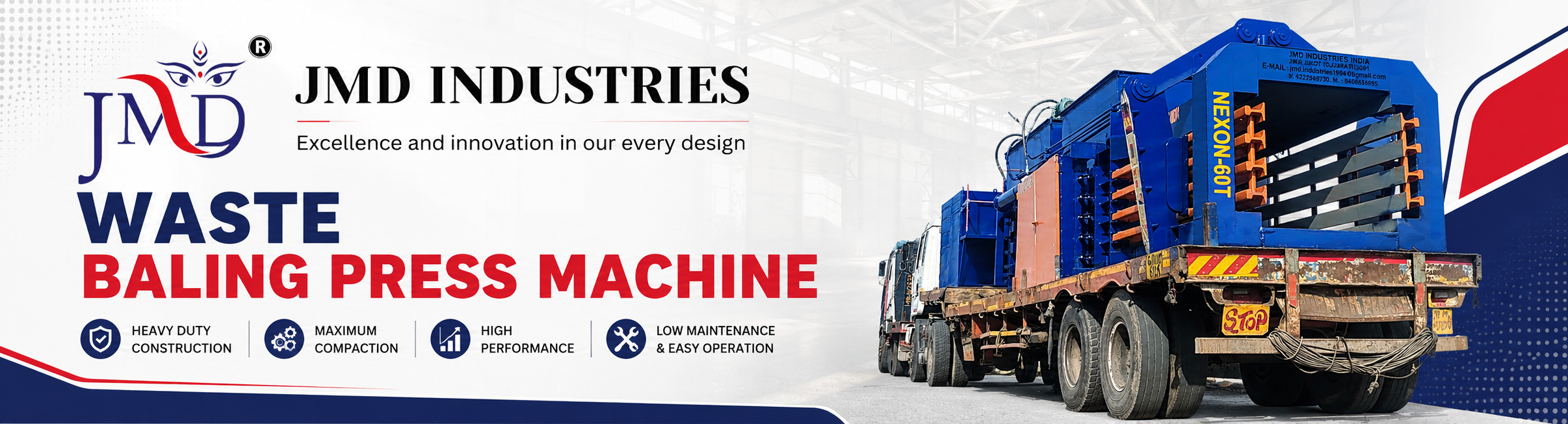
Waste Baling Press Machine
Discover efficient waste baling press machines in Ahmedabad. JMD Industries offers durable, cost-effective solutions for paper, PET, and mixed waste recycling.
What is a Waste Baling Press Machine? — Overview
A waste baling press machine is a piece of industrial equipment designed to compress loose materials, such as paper, cardboard, plastics, textiles, and metals, into compact, dense bales. These machines utilize hydraulic power to apply significant force, reducing the volume of waste material. The process typically involves feeding the waste into a chamber, where it is compressed by a ram. Once the desired bale size and density are achieved, the bale is secured with strapping, usually wire or plastic, before being ejected. Horizontal baling presses, a common type, are particularly suited for high volumes of material and can often be automated for continuous operation.
Key Features and Technical Specifications
When evaluating waste baling press machines, several technical specifications are paramount for ensuring optimal performance and suitability for your specific needs. These features directly impact efficiency, durability, and operational safety.
- Bale Size and Density: Customizable bale dimensions and high compaction ratios are essential for maximizing transport efficiency and market value.
- Hydraulic System: Robust, high-pressure hydraulic systems ensure consistent and powerful compression, even with challenging materials.
- Chamber Size: The dimensions of the feeding chamber dictate the size of materials that can be processed and the overall throughput.
- Motor Power: Sufficient motor horsepower is required to drive the hydraulic system effectively and handle continuous operation.
- Bale Ejection Mechanism: Efficient and safe bale ejection systems, whether manual or automatic, are crucial for operational flow.
- Strapping System: Integrated systems for wire or plastic strapping ensure secure bale formation.
- Safety Features: Interlocks, emergency stops, and guarding are critical for operator safety.
- Material Compatibility: The machine's design should be suitable for the specific types of waste being processed.
Industrial Applications and Use Cases
Waste baling press machines are versatile tools with applications across a wide spectrum of industries, playing a vital role in waste reduction and resource recovery.
- Paper and Cardboard Recycling: Compressing waste paper, corrugated boxes, and paperboard for efficient storage and transport to recycling mills.
- Plastic Recycling: Baling PET bottles, HDPE containers, and plastic films to reduce volume and prepare them for reprocessing.
- Textile Waste Management: Compacting fabric scraps and old garments from garment manufacturing units for recycling or disposal.
- Retail and Warehousing: Consolidating cardboard packaging, plastic wrap, and other waste generated in distribution centers and retail outlets.
- Municipal Waste Management: Processing recyclable materials collected from households and public spaces to reduce landfill burden.
- Manufacturing By-products: Baling production scrap from industries such as automotive, electronics, and packaging.
- Document Destruction: Compressing confidential documents for secure shredding and recycling.
- Agricultural Waste: Baling crop residues or packaging materials from agricultural operations.
How to Choose the Right Waste Baling Press Machine
Selecting the appropriate waste baling press machine requires careful consideration of your operational needs, material types, and site constraints. A systematic approach ensures you invest in a solution that delivers long-term value.
- Material Type and Volume: Identify the primary materials you will be baling and the average daily or weekly volume. This dictates the required capacity and chamber size.
- Bale Size and Weight Requirements: Determine the target bale size and weight based on your storage capacity, transportation logistics, and the requirements of recycling facilities.
- Automation Level: Decide whether a manual, semi-automatic, or fully automatic system best suits your budget and operational workflow.
- Space Availability: Measure the available installation space, considering access for material feeding and bale removal.
- Power Requirements: Ensure your facility has the necessary electrical infrastructure to support the machine's motor and hydraulic system.
- Supplier Reputation and Support: Research manufacturers for their track record, quality of construction, and availability of after-sales service and spare parts.
- Certifications and Compliance: Verify that the machine meets relevant safety and quality standards.
- Customization Options: Assess if the manufacturer can tailor the machine to specific operational needs or material characteristics.
Quality Standards and Compliance
Adherence to quality standards and regulatory compliance is non-negotiable when selecting industrial machinery like waste baling press machines. These standards ensure the equipment is safe, reliable, and performs as expected. In India, relevant certifications and standards often include those set by the Bureau of Indian Standards (BIS) for general industrial equipment safety and performance. Manufacturers committed to quality will often adhere to ISO certifications, such as ISO 9001 for quality management systems, demonstrating a structured approach to production and customer satisfaction.
When procuring a waste baling press machine, inquire about the materials used in construction, the welding quality, and the electrical and hydraulic component sourcing. Reputable manufacturers will readily provide documentation regarding compliance with safety directives and quality control processes. Verifying these aspects ensures you are investing in a durable and safe piece of equipment that will serve your waste management needs effectively and reliably for years to come.
Why JMD Industries' Experience and Capability Matters
With over 15 years of dedicated experience in manufacturing baling solutions, JMD Industries has cultivated deep expertise in designing and producing high-performance waste baling press machines. Our manufacturing process is grounded in a commitment to engineering excellence, utilizing robust materials and advanced hydraulic technology to ensure durability and operational efficiency. Our technical team comprises skilled engineers and technicians who bring a wealth of knowledge to every project, enabling us to offer both standard and custom-engineered solutions.
At JMD Industries, quality control is integrated throughout our production cycle, from raw material inspection to final machine testing. This rigorous approach ensures that each horizontal baling press machine leaving our facility meets stringent performance and safety benchmarks. Our proven track record, evidenced by over 250 successful installations and a growing base of satisfied customers, speaks to our capability in delivering reliable, cost-effective, and productive waste management equipment tailored to the diverse needs of industries in Ahmedabad and beyond.
Installation, Maintenance, and Care Tips
Proper installation, regular maintenance, and diligent care are essential for maximizing the lifespan and operational efficiency of your waste baling press machine. Following these guidelines will help prevent downtime and ensure consistent performance.
- Installation: Ensure the machine is installed on a level, stable surface capable of supporting its weight and operational vibrations. Connect electrical and hydraulic systems according to the manufacturer's specifications and local safety codes. Allow adequate clearance around the machine for operation and maintenance.
- Daily Checks: Before operation, visually inspect the machine for any leaks, loose parts, or obstructions. Check hydraulic fluid levels and ensure all safety guards are in place.
- Regular Lubrication: Lubricate all moving parts, including pivot points, rollers, and rams, as per the maintenance schedule. This reduces friction and wear.
- Hydraulic Fluid Maintenance: Regularly check the hydraulic fluid for contamination or degradation. Change the fluid and filters according to the manufacturer's recommendations to maintain system performance and prevent component damage.
- Cleaning: Keep the feeding chamber, bale ejection area, and surrounding floor clean of debris. Accumulated waste can interfere with operation and pose a safety hazard.
- Strapping System: Inspect and maintain the strapping mechanism, ensuring it is clean and functioning correctly for secure bale formation.
- Scheduled Inspections: Conduct periodic thorough inspections of the hydraulic system, electrical components, and structural integrity. Address any signs of wear or potential issues promptly.
- Operator Training: Ensure all operators are thoroughly trained on the machine's operation, safety procedures, and basic maintenance tasks.
Frequently Asked Questions
Horizontal baling presses are versatile and can effectively process a wide range of recyclable materials. This typically includes paper, cardboard, newspapers, mixed paper, plastic films, PET bottles, textiles, and some light metals. The specific material compatibility often depends on the machine's design and power.
The space requirement varies significantly based on the machine's size and capacity. Smaller semi-automatic models might need a footprint of a few square meters, while larger, fully automatic systems, including space for material feeding and bale handling, can require considerably more area. It's crucial to consult the manufacturer's specifications for precise dimensions.
Bale weights can range from a few hundred kilograms to over a ton, depending on the machine's specifications and the material being baled. Denser materials and higher compaction forces generally result in heavier bales. The target bale weight is often determined by transportation logistics and the requirements of recycling facilities.
These machines significantly improve efficiency by reducing the volume of waste, which lowers storage space needs and transportation costs. They also streamline the recycling process, making materials easier to handle and more valuable for sale to recyclers, thus contributing to a more organized and cost-effective waste management system.
Essential safety features include emergency stop buttons, safety interlocks on doors and access panels, robust guarding around moving parts, and clear operational signage. A well-designed machine will incorporate multiple layers of safety to protect operators from potential hazards during operation and maintenance.
Reputable manufacturers like JMD Industries typically offer comprehensive after-sales support. This can include installation assistance, operator training, routine maintenance services, readily available spare parts, and troubleshooting support. This ensures your baling press operates reliably and efficiently throughout its lifespan.
Conclusion
For businesses in Ahmedabad seeking to optimize their waste management processes, a horizontal waste baling press machine represents a strategic investment. It offers a tangible solution for reducing operational costs, reclaiming valuable space, and contributing to environmental sustainability. By carefully considering material types, volume, space constraints, and essential technical specifications, you can select a machine that aligns perfectly with your operational needs. Partnering with an experienced and capable manufacturer like JMD Industries ensures you receive not only a high-quality, durable machine but also the technical expertise and support necessary for long-term success in your waste reduction efforts.
Get In Touch
Jmd Industries