
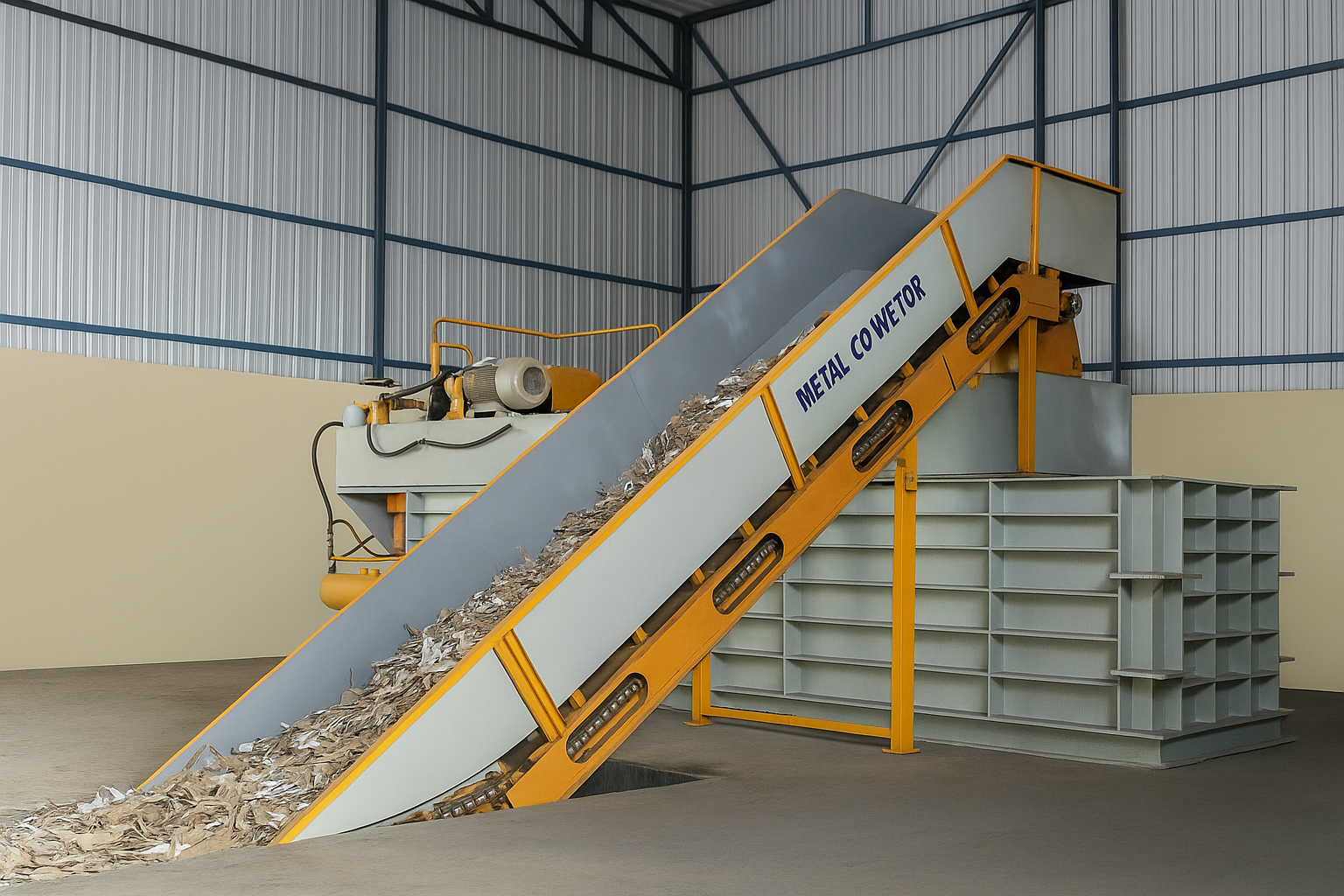
Waste Paper Baling Machine in India
Introduction
Searching for a dependable waste paper baling machine in India? Modern balers compress OCC, mixed paper, magazines, and trim into dense, market-ready bales—cutting freight costs, improving housekeeping, and unlocking better recovery value. From compact vertical presses to high-throughput auto-tie horizontals, Indian manufacturers offer proven, service-friendly systems tailored to your feed pattern and floor space.
Why Choose Indian-Made Waste Paper Balers
Leading Indian suppliers deliver rugged fabrication, PLC automation, and quick after-sales support at competitive pricing. Shorter lead times, local spares, and operator training translate into faster commissioning and higher OEE—ideal for MRFs, corrugators, printers, warehouses, and paper mills managing continuous loads.
Types of Waste Paper Baling Machines
- Vertical Baling Press – Space-saving, economical solution for shops, warehouses, and small recyclers handling intermittent OCC and cartons.
- Closed-Door Horizontal (Manual-Tie) – Higher throughput with manual wiring; suitable for converters and distribution centers.
- Open-End Channel Baler (Auto-Tie) – Continuous operation with automatic wire tying for MRFs and mill trim recovery lines.
- Twin-Ram Auto-Tie – Consistent, high-density bales and flexible handling of mixed paper and other recyclables.
- Conveyor-Fed Systems – Integrate with sorting belts, pneumatic trim, and fluffers to maintain steady feed and cycle cadence.
Key Features Offered by Indian Suppliers
- Heavy-gauge frames with replaceable wear liners and shear blades for bulky OCC.
- PLC-HMI controls: recipe memory, auto bale length, jam detection, and interlocks.
- Energy-smart hydraulics with soft starters/VFDs and oil cooling for continuous duty.
- Auto-tie or manual-tie options; compatible with steel wire or PP strap.
- Turnkey integration: infeed conveyors, rufflers/fluffers, chutes, and trim suction.
- Safety guarding, e-stops, and door interlocks aligned with best practices.
Industries & Applications
- MRFs and scrap merchants producing export-grade OCC/mixed paper bales.
- Paper mills & corrugators recovering roll ends and trim via conveyor/pneumatic feed.
- Printers, e-commerce hubs, and DCs compacting cartons and packaging waste.
- Municipal & commercial recycling programs consolidating dry waste streams.
Benefits of Waste Paper Baling Machines
- Higher bale density – Lower freight per tonne; better container/truck utilization.
- Throughput & uptime – Auto-tie cycles synchronize with continuous infeed.
- Labor & safety – Reduced manual handling, guarded access, and interlocks.
- Quality & revenue – Uniform bale geometry and tie patterns improve buyer acceptance.
- Lower lifecycle cost – Energy-efficient hydraulics and standardized consumables.
Notable Waste Paper Baler Suppliers in India
Jmd Baler (Ahmedabad) offers vertical presses, manual-tie horizontals, and conveyor-fed auto-tie channel balers engineered for continuous duty. Buyers typically evaluate bale density on OCC, structural build, hydraulic capacity, tie reliability, and service footprint before finalizing the model and line layout.
Maintenance & Operational Tips
- Track hydraulic oil health, filter changes, and cooler performance; log temperature/pressure trends weekly.
- Inspect wear liners, shear blades, and chamber clearances; maintain settings for density and fewer jams.
- Keep conveyors aligned and tensioned; use rufflers/fluffers to avoid bridging in the hopper.
- Optimize bale length, number of ties, and wire gauge for each grade and buyer spec.
- Ensure housekeeping near infeed and wire stations; enforce lockout-tagout and e-stop drills.
FAQs – Waste Paper Baling Machine in India
1. Which baler type should I choose for OCC vs mixed paper?
+
For high OCC volumes, open-end channel (auto-tie) balers deliver density and speed. For intermittent loads or tighter budgets, vertical or closed-door manual-tie horizontals work well. Twin-ram balers add flexibility for mixed recyclables.
2. What bale weights are typical in India?
+
Common cross-sections are ~900×750 mm with programmable lengths; bale weights generally range from 250–900+ kg depending on model, material, and compression force.
3. Can I integrate the baler with trim suction and sorting lines?
+
Yes—most horizontal systems integrate with pneumatic trim, conveyor belts, and chutes, and their PLCs synchronize cycles with upstream equipment.
4. What electrical and civil works are required?
+
Three-phase power with adequate transformer capacity, ventilation for oil coolers, and foundations/pits for conveyors are typically specified during layout engineering.
5. What consumables should I stock?
+
Tie wire or PP strap, hydraulic oil and filters, and wear items (liners, blades). Keeping these on hand minimizes downtime and maintains bale consistency.
Contact Details
Talk to our specialists today for tailored solutions and fast assistance.
Company:
Jmd Baler
WhatsApp:
Chat on WhatsApp
Email:
jmdindustries9412@gmail.com
Website:
www.jmdbaler.com
Address:
PLOT NO 71/72 Avdhesh industrial hub, Bhavda - Bakrol, Bhavda patiya, Ahmedabad, Gujarat.