
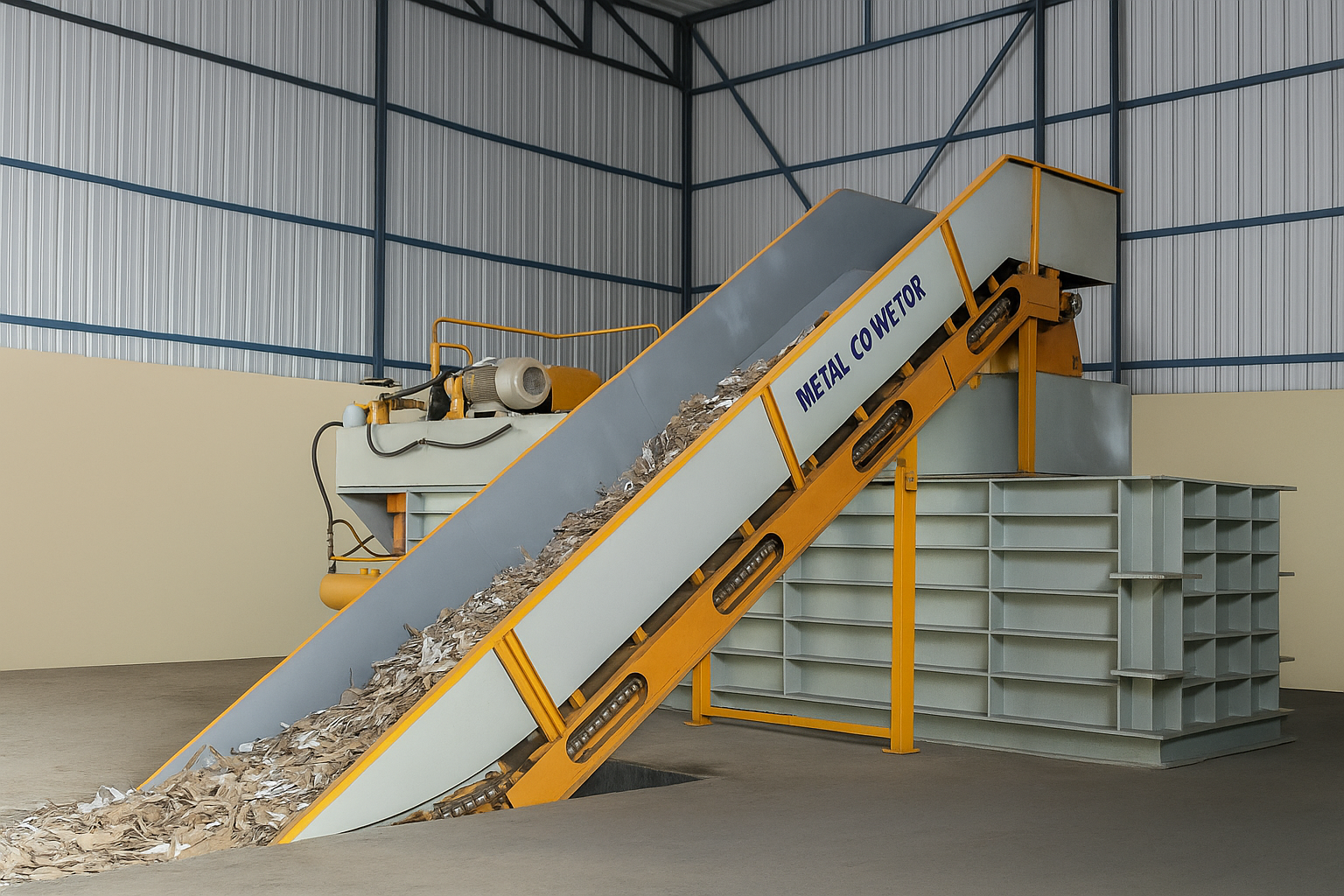
Waste Paper Horizontal Baler Machine Supplier in India
Introduction
Looking for a dependable waste paper horizontal baler machine supplier in India? This page outlines horizontal baling solutions engineered for high throughput, continuous feeding, and compact bale density—ideal for recycling plants, warehouses, printing houses, corrugators, and e-commerce hubs. Get guidance on types, features, applications, and best-practice maintenance to help you select the right machine for your load profile and budget.
Why Choose a Horizontal Baler for Waste Paper
Horizontal balers deliver higher output, reduced manual handling, and uniform bale size compared to vertical presses. They integrate seamlessly with conveyors, shredders, and sorting lines, enabling continuous operations, lower labor costs, and improved logistics efficiency. A reliable supplier ensures correct sizing, on-time commissioning, operator training, and responsive after-sales service.
Types of Waste Paper Horizontal Balers
- Semi-Automatic Horizontal Balers — manual tying with powered bale ejection; economical for mid-volume recycling lines.
- Fully Automatic Channel Balers — auto tying, continuous feed, and high cycle speeds for large MRFs and corrugation units.
- Closed-Door Horizontal Balers — compact footprint with dense bales; suitable for printers, warehouses, and logistics centers.
- Conveyor-Integrated Systems — matched infeed conveyors, rufflers, and hoppers to streamline material flow from sorting/shredding.
Key Features to Look For
- High-pressure hydraulics with efficient pumps for fast cycle times and consistent bale density.
- Touchscreen controls with recipes, jam detection, auto bale length, and alarms for safe operations.
- Wear-resistant liners, heavy-gauge frames, and replaceable shearing blades for long service life.
- Auto-tying (steel or PP strapping) and adjustable bale dimensions to match mill and transport specs.
- Energy-saving modes, soft-start motors, and sensor-based feeding to lower kWh/ton.
Applications — Where Horizontal Balers Excel
- Material Recovery Facilities (MRFs) and recyclers consolidating OCC, mixed paper, and printed trims into mill-ready bales.
- Printing presses and corrugation plants capturing edge trims, roll ends, and offcuts for efficient back-haul and resale.
- Warehouses/e-commerce hubs compacting carton waste to free floor space and cut disposal costs.
- Municipal solid waste programs adding paper streams to existing recovery lines with conveyor-fed baling.
Benefits of a Waste Paper Horizontal Baler
- Higher throughput with continuous feed, auto tying, and optimized cycle times.
- Uniform bale density improves transport efficiency and mill acceptance.
- Lower labor and handling effort compared to vertical/manual systems.
- Safer operations via interlocks, e-stops, guarding, and jam detection.
- Scalable configurations and conveyor integration to future-proof capacity.
Maintenance & Operating Tips
- Check hydraulic oil level/quality and filters on schedule; log temperatures and pressures per OEM guidance.
- Grease bearings, guides, and ram slides; inspect wear plates and shearing edges for timely replacement.
- Keep photo-eyes/sensors and conveyor infeed clear; remove twine and debris to prevent jams.
- Train operators on safe clearing procedures, LOTO, and correct strapping techniques.
- Stock seals, straps, filters, and critical spares to minimize downtime during peak volumes.
FAQs — Waste Paper Horizontal Baler Machine Supplier
1. Semi-auto vs fully automatic — which should I choose?
+
Choose semi-auto for moderate volumes and budget control; pick fully automatic channel balers when you need continuous feed, auto tying, and maximum throughput.
2. What bale sizes are typical for paper mills?
+
Common cross-sections are ~750–1100 mm with adjustable lengths; confirm specs with your mill and transport partner to optimize density and load planning.
3. Can one baler handle OCC and mixed paper?
+
Yes. Recipe-based controls and adjustable tying allow quick changeovers. Throughput will vary by material bulk density and moisture content.
4. What site provisions are needed?
+
Ensure adequate power, floor space for the baler plus infeed conveyor, safe bale handling aisle, strap storage, and easy access for maintenance.
5. How do I estimate capacity?
+
Assess peak hourly infeed (kg/hr), material mix, desired bale density, and available staffing. Suppliers can simulate cycle time and tying frequency to recommend ton/hr capacity.
Contact Details
Talk to our specialists today for tailored solutions and fast assistance.
Company:
Jmd Baler
WhatsApp:
Chat on WhatsApp
Email:
jmdindustries9412@gmail.com
Website:
www.jmdbaler.com
Address:
PLOT NO 71/72 Avdhesh industrial hub, Bhavda - Bakrol, Bhavda patiya, Ahmedabad, Gujarat.