
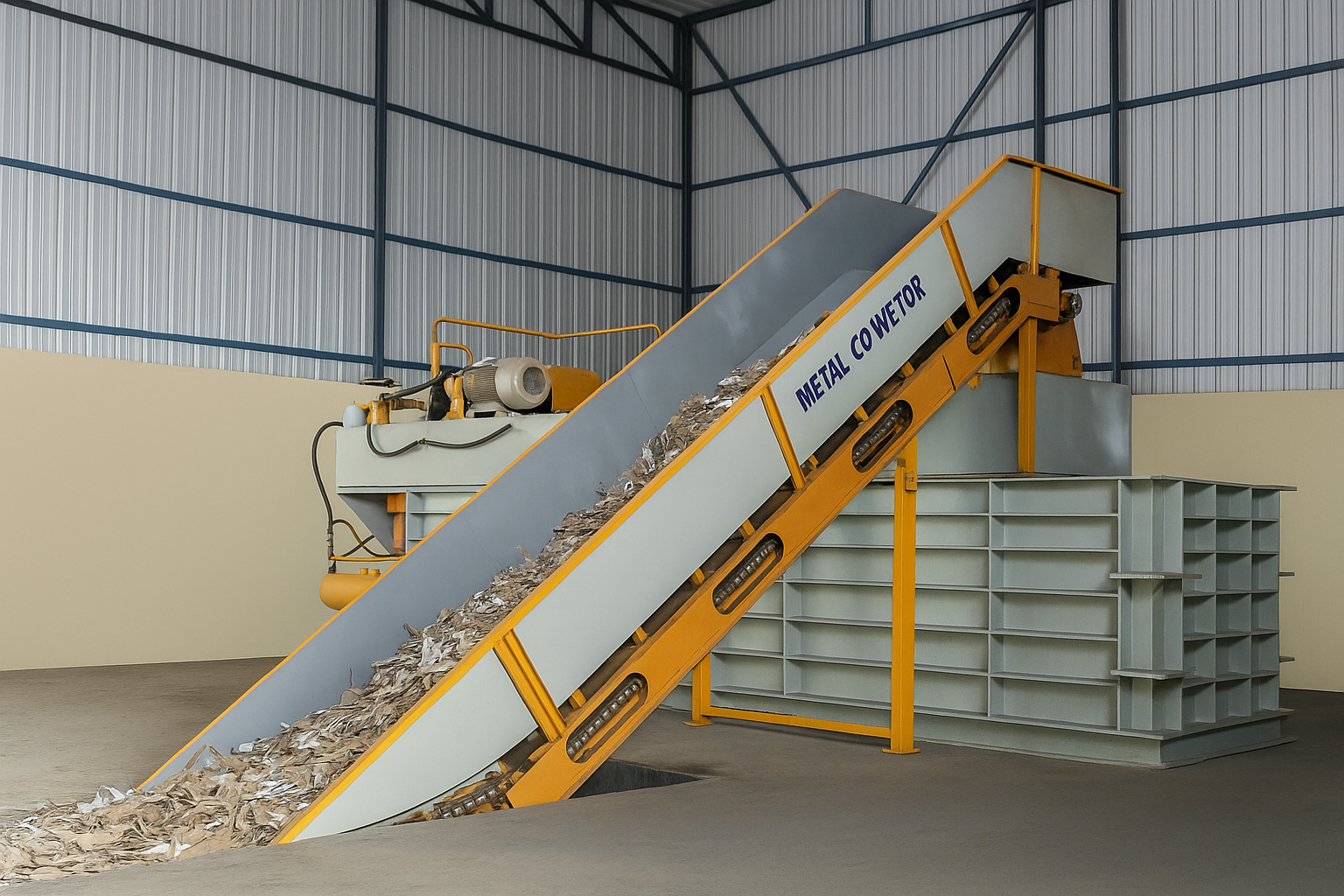
Waste Paper Press Machine Price
Searching for waste paper press machine price usually means finding the right balance of build quality, bale density, throughput, and after-sales support. While exact figures vary by configuration and location, you can estimate your investment by mapping your daily tonnage, feed method, and automation needs to the right machine class.
Key Cost Drivers That Influence the Final Quote
Instead of chasing a single figure, evaluate the components that shape total ownership cost—structure thickness, hydraulic capacity, motor sizing, safety systems, and service coverage. A well-matched baler lowers handling time, keeps floors uncluttered, and improves bale value, helping your investment pay back faster through operational efficiency.
Machine Types & Their Typical Use Cases
- Vertical paper baler – compact footprint, manual loading, suitable for small to mid-volume waste rooms.
- Horizontal paper baler – higher throughput with conveyor/air feed options for busy docks and warehouses.
- Channel/auto-tie baler – automated tying and ejection for large recycling facilities with continuous flow.
- Semi-automatic baler – balanced choice for growing operations transitioning from vertical to higher output.
Specifications That Affect Pricing
- Hydraulic pressure & ram force – determines achievable bale density and cycle consistency.
- Steel thickness, liners & guides – influences durability and long-term maintenance intervals.
- Motor & pump configuration – impacts cycle time and energy usage per bale.
- Feed opening, chamber size & bale dimensions – define compatibility with cartons, sheets, and mixed paper.
- Safety interlocks, sensors & HMI – enable safer operation and operator training efficiency.
Where a Waste Paper Press Delivers Value
- Recycling yards converting loose paper and corrugated scrap into uniform bales for dispatch.
- Warehousing & e-commerce consolidating packaging waste to free floor space and speed pickups.
- Printing, corrugation & converting units recovering production offcuts with traceable bale counts.
- Municipal/commercial collections organizing dry waste for structured recycling programs.
How the Right Spec Saves Money Over Time
- Higher bale density reduces trips and material handling, improving logistics efficiency.
- Reliable hydraulics and guarded design minimize downtime and safety incidents.
- Optimized power packs control energy use per bale for better running costs.
- Local spares & service shorten maintenance windows and protect uptime.
- Scalable options let you add automation when volumes grow.
Practical Buying Checklist
Document your daily/peak tonnage, available footprint, and loading style (manual, conveyor, or air-duct). Define target bale size and density, electrical provisions, and guarding preferences. Review warranty terms, operator training, installation support, and preventive maintenance plans to ensure smooth commissioning and predictable performance.
Care & Usage Tips for Better Lifecycle Value
- Track bale counts, average weight, and cycle time to benchmark real output.
- Schedule hydraulic oil and filter checks as per OEM hours to keep cycles consistent.
- Keep feed material free from metal contamination to protect wear parts.
- Train operators on interlocks and emergency stops; refresh before shift rotations.
- Plan spares for seals, strap/steel wire, and routine lubricants to avoid long halts.
FAQs – Waste Paper Press Machine Price (Without Listing Prices)
1. Why do quotes for the same “capacity” vary?
+
Structural thickness, hydraulic components, electricals, and safety features differ across makers; these change durability and operating cost, not just throughput labels.
2. How can I estimate my budget band?
+
Map daily tonnage, target bale density, and automation level (manual, semi, auto-tie). Share these with the supplier to receive a configuration-based quote.
3. What reduces total cost of ownership?
+
Energy-efficient power packs, robust wear surfaces, and strong service coverage. Operator training also prevents misuse and extends component life.
4. Can the same press handle cardboard and mixed paper?
+
Yes. Select chamber and feed opening suitable for your largest carton size and choose tying medium (PP strap or wire) per bale density goals.
5. How quickly can I get a configuration proposal?
+
Share floor size, electricals, expected throughput, and bale size targets. This helps the supplier propose a matched configuration and timeline promptly.
Contact Details
Talk to our specialists today for tailored solutions and fast assistance.
Company:
Jmd Baler
WhatsApp:
Chat on WhatsApp
Email:
jmdindustries9412@gmail.com
Website:
www.jmdbaler.com
Address:
PLOT NO 71/72 Avdhesh industrial hub, Bhavda - Bakrol, Bhavda patiya, Ahmedabad, Gujarat.